“Nature is the greatest designer."
"Some people call me an artist, others a designer, and some a weirdo.”
— Marlène Huissoud
Marlène Huissoud builds a practice from overlooked intelligence. Raised close to beekeeping, she developed an early fascination with insects—not as pests or symbols, but as makers. Her work repositions design as collaboration with living systems rather than domination over them..
Across furniture, vessels, and sculptural objects, Huissoud transforms biological byproducts into rare contemporary materials. The result is a language of forms that feels both primitive and futuristic: crafted matter carrying the memory of another species.
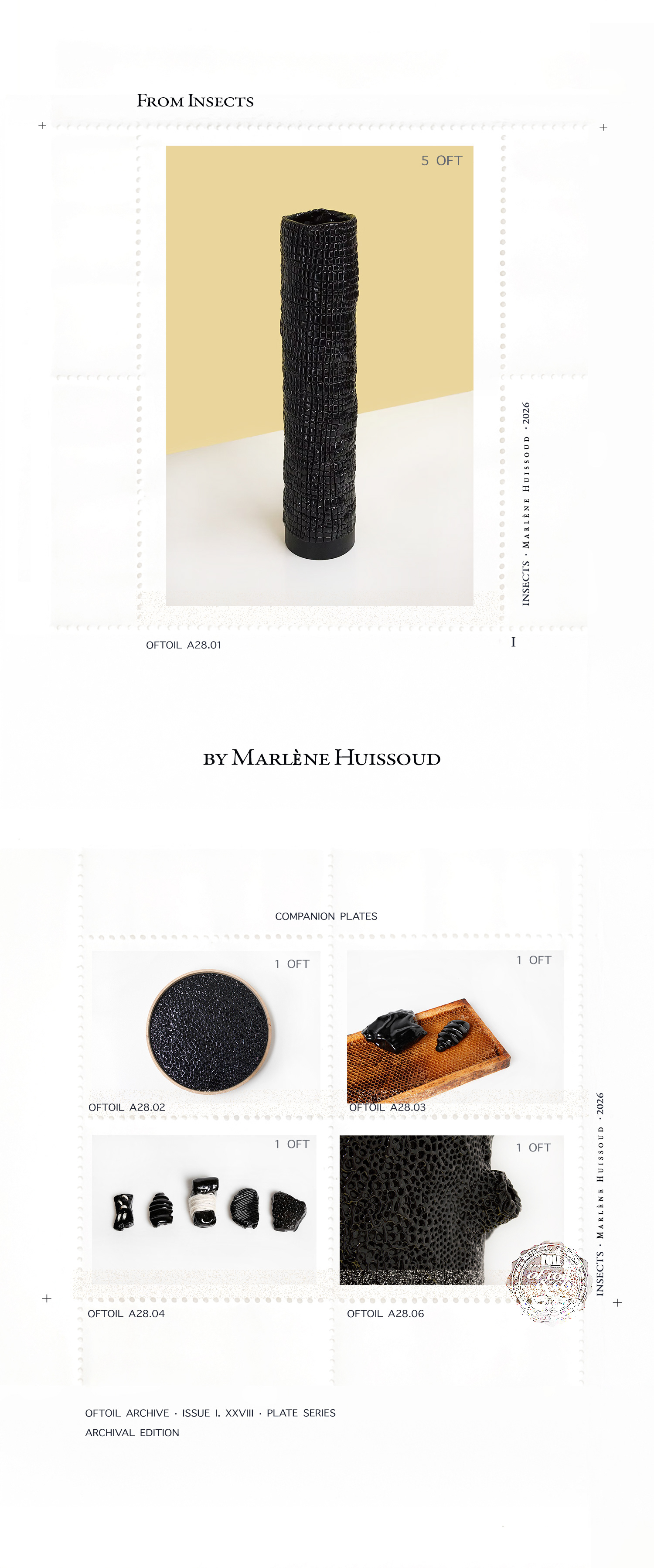
From Insects explores how insect-made substances might enter the future of design. The collection draws primarily from two cultivated species: honey bees, producers of propolis—a dark biodegradable resin—and silkworms, whose cocoons are discarded after maturity. These materials are not substitutes for conventional matter, but carriers of distinct textures, behaviors, and cultural meaning.
Using traditional craft methods, Huissoud developed vessels and objects from propolis through processes adapted from glassmaking, engraving, and blowing. Because propolis melts at far lower temperatures than glass, techniques required reinvention. Its responses revealed unexpected qualities: rich color, tactile surfaces, and intricate textures recalling the miniature architectures of the insect world.
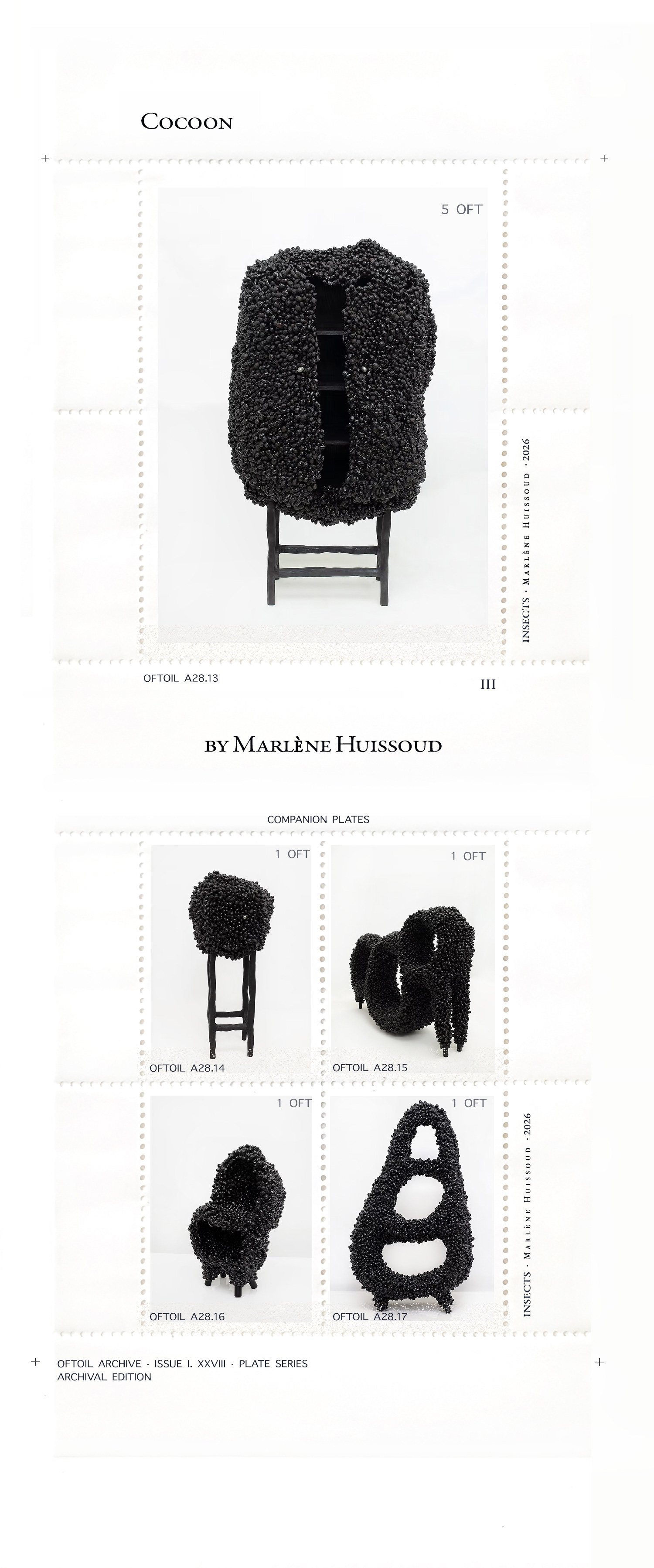
COCOON is looking at new ways of using silkworm’s cocoons without killing the worm generally killed in the silk production. The silkworm is one of the most iconic insect experiencing a morphosis during his entire evolution. He is born as a worm but then morph in a butterfly arrived at maturation. Within the silk industry most of the Bombyx Mori are killed in order to extract the silk from the cocoon, what if we let the worm become a butterfly?
How can we use this material differently and celebrate the morphosis of the insects? The piece has been made by an accumulation of thousands of silkworm’s cocoons and are then varnished with a thin layer of a natural honeybee bio resin. The slow process of the making of the piece underline the beauty of the insect world and defend a slow process in the making of those alien look pieces.
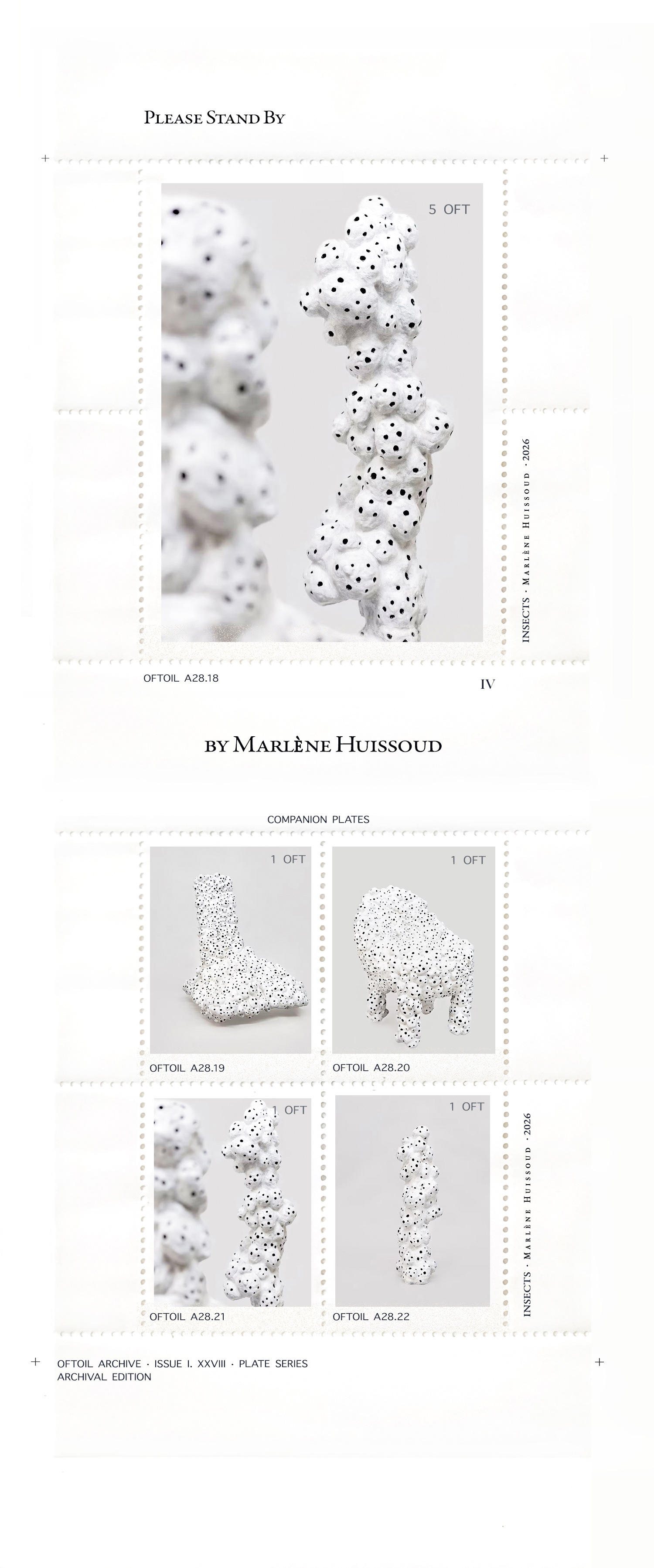
We have been selfish. We all have used resources of our dear planet. But it is not a time to cry, it is a time to act.
‘Please stand by’ is looking at giving back to nature, especially the wild insects of London. By creating these habitats for the wildlife of the city of London, the goal of the project is to help insects to find a refuge, nest and hibernate within the city, to protect themselves and find a suitable environment for their needs.
With the help of scientists, Robert Francis and Mak Brandon from King’s College London, we have joined forces to create these new homes for insects who are designed and made in an organic and sustainable way.
The pieces are both sculptural /functional and are made out of natural clay (not fired to keep it as much primitive as possible), and then coated by a natural binder to protect them from the weather. The pieces use materials that the insects like and the colours of the materials are as well chosen to reflect what they are attracted to in nature generally. They like for example light colours like white/grey and dark tones.
These hotels are made for pollinators such as solitary bees, wasps, butterfly... These sculptural pieces are encouraging biodiversity in the gardens and increase the ecosystem productivity. They are manmade structures created to provide shelter for pollinators.
More than a material experiment, From Insects proposes a shift in perception. It asks whether value can emerge from what industry ignores, and whether collaboration can replace extraction as a model for making.
Huissoud’s objects remind us that design’s next frontier may not be synthetic or digital, but biological, local, and quietly alive. In honoring the labor of insects, she expands the meaning of craft itself.
Images and words courtesy of