“When I saw the first swimming pool,” she recalled, “I was fascinated by the architecture of this large open space. I prefer pools that are old and without reconstruction. I can see a timelessness.”
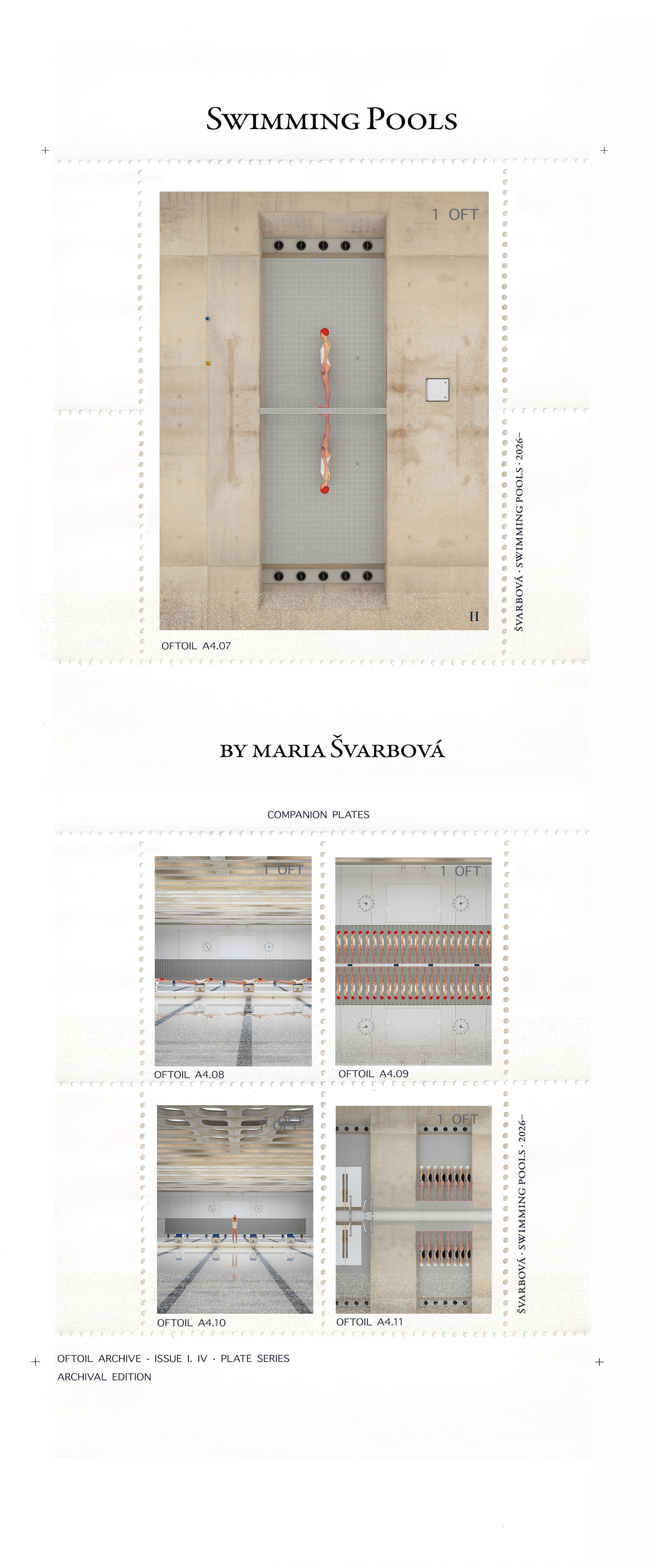
"The photographs of Maria Švarbová unfold within spaces that feel at once familiar and strangely suspended outside time. Her celebrated Swimming Pools series began close to home, when an abandoned school pool in the Slovak town of Zlaté Moravce revealed itself unexpectedly intact — water still in the basin, architecture undisturbed by years of quiet. “When I saw the first swimming pool,” she recalled, “I was fascinated by the architecture of this large open space. I prefer pools that are old and without reconstruction. I can see a timelessness.”
From that discovery grew a photographic exploration spanning thirteen pools across Slovakia, most built between the 1920s and 1970s. Their restrained geometry, muted ornamentation, and long repeating lines belong to the functionalist architecture that shaped public life during the era of Czechoslovakia’s socialist state. Švarbová approaches these spaces not as relics but as stages for a peculiar future. “For me, it’s sci-fi, it’s futuristic,” she has said. “I like to combine old things with modern things… to show people something new, where there is old and new together.”
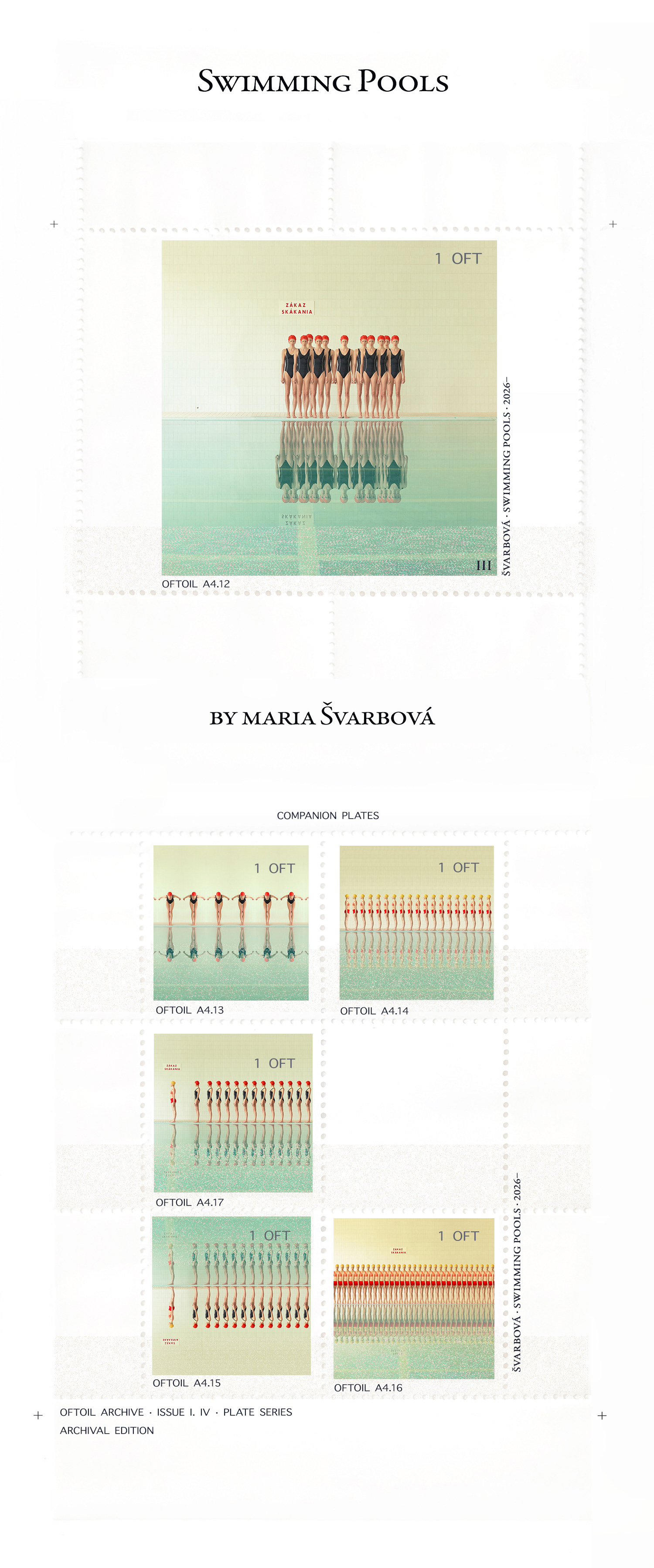
Within these interiors, figures appear arranged with deliberate calm: swimmers in primary colors, bodies held in precise, almost ceremonial poses. The compositions borrow their angular discipline from the mass gymnastic spectacles of the Spartakiads, where thousands once performed synchronized routines before the state. In Švarbová’s images the choreography becomes quieter, more introspective — a handful of individuals inhabiting vast, pastel chambers of water and tile.
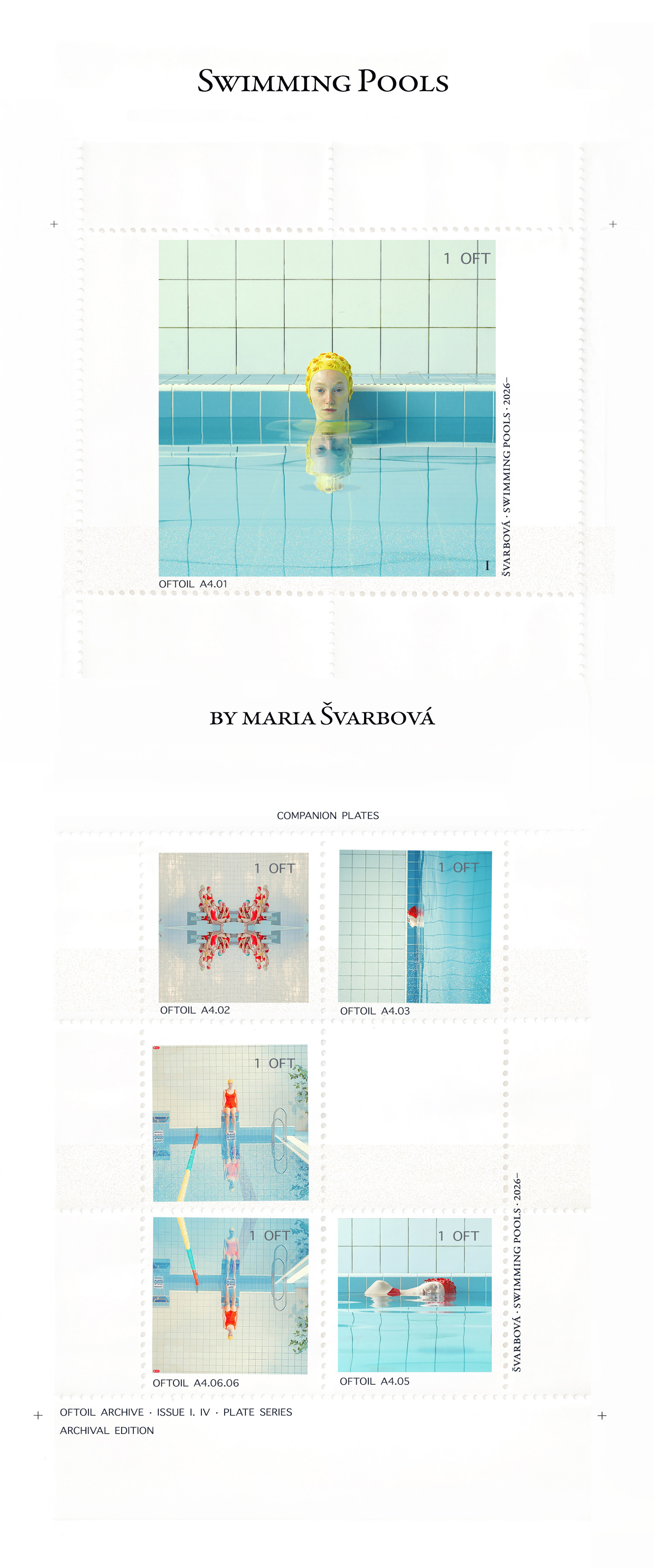
The result is an atmosphere that feels both serene and faintly unreal. Colors are heightened, distractions removed, symmetry sharpened until the spaces approach abstraction. Water, for Švarbová, is more than subject. “I like water because, for me, it’s a mirror or the other side of the world,” she explains. “My photographs are my imaginary world. I would like to show people the other side of normal life.”
Words & images courtesy of Maria Svarbova.