
"Heirloom furniture designed and made from a nature-first perspective."
The Sebastian Cox studio designs and makes for a better future in a forward-thinking, zero-waste, carbon-counting workshop and studio in London, England. They manage woodlands for biodiversity and resources in Kent, England.
The Mission is to double the area of wild land and woodland in Britain by 2040. And to store 100 tonnes of Co2 in the things they make every year.
Below:
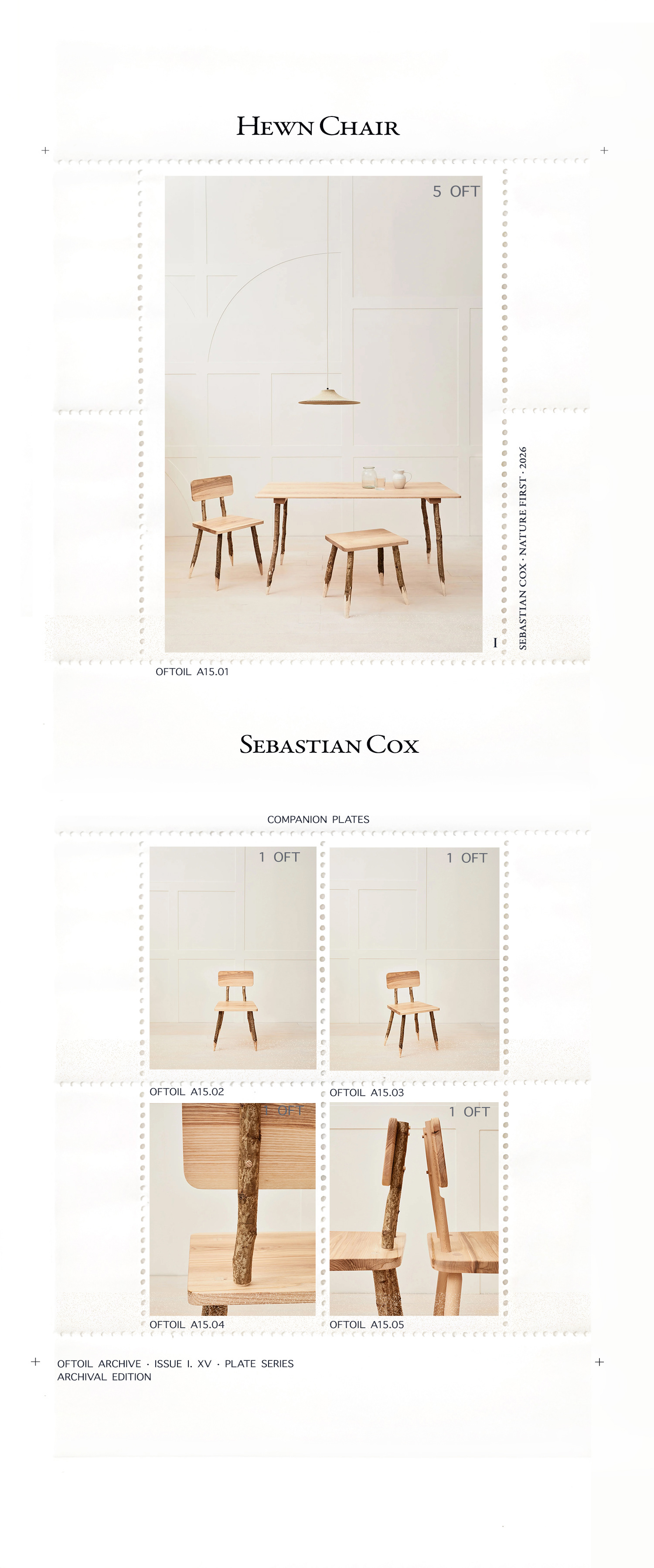
The Hewn Underwood chair joints four legs of hazel coppiced from our woodland into a square English ash seat with neatly wedged tenons. The legs are cut from hazel coppiced in our woodland with an elegantly tapered foot and gently splayed to give a strong footprint, simple silhouette and characterful materiality. The Hewn Underwood chair offers extra comfort in the backrest with a clean and simple silhouette.
The Barker chair is an evolution of our scorched-through chair. It is simple in form, supremely comfortable and made in our workshop from solid English ash. Shown here in Madder red.

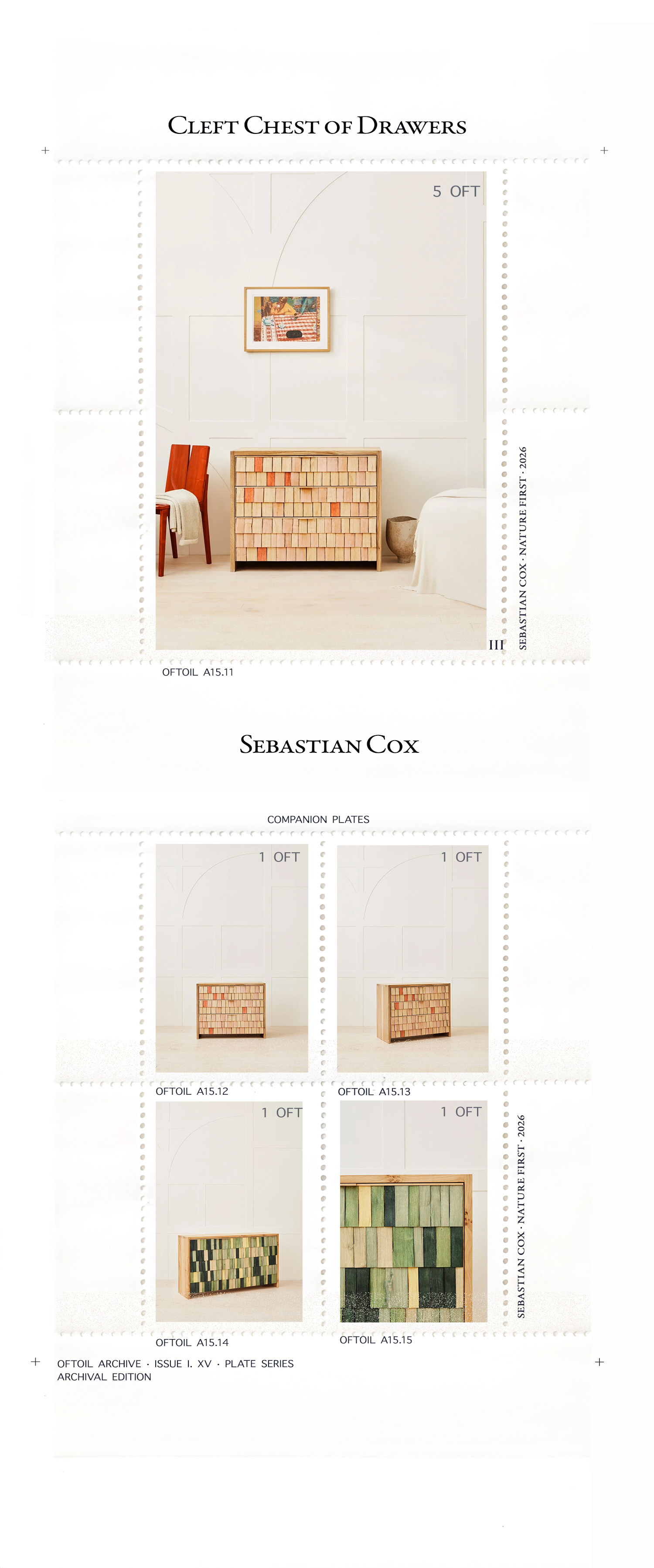
The Cleft chest of drawers is rich in texture, given from the hand of the maker, framed within a handsomely dovetailed solid oak carcass. A tableau of chestnut shakes, harvested from our own woodland, cleft and individually coloured by hand, cover three drawer fronts. We use colour derived from linseed oils to create a sensitive composition unique to each sideboard.
Beyond the objects themselves, the work operates within a wider ecology—one where material, landscape, and time are treated as interdependent rather than separate concerns. Each piece carries the logic of its origin: grown, not extracted; shaped, not imposed.
Forms remain deliberate and restrained, allowing the character of the timber to surface without excess. Joints, edges, and proportions are resolved with a quiet precision that favors longevity over display. These are not statements of style, but continuations of a process that begins in the woodland and extends into use.
In this way, the studio’s output resists the cycle of replacement. It proposes instead a slower permanence—furniture as a vessel for stored carbon, but also for memory, wear, and continued relevance.
What emerges is not only a collection of objects, but a system of making that aligns craft with stewardship, and design with responsibility.


