
“We wanted a simple, primitive mineral building capable of vibrating in the light differently in the morning, noon and evening…
…a house that had in it its soul and its passions for history and archeology.”
A house composed as if recovered.
A restrained volume holds inserted masses of stone and cast material—an assembly that recalls construction not as a moment, but as accumulation. Reused concrete, marble, and travertine carry forward the logic of older walls, where structure and memory were inseparable.
It does not imitate the past.
It continues it.
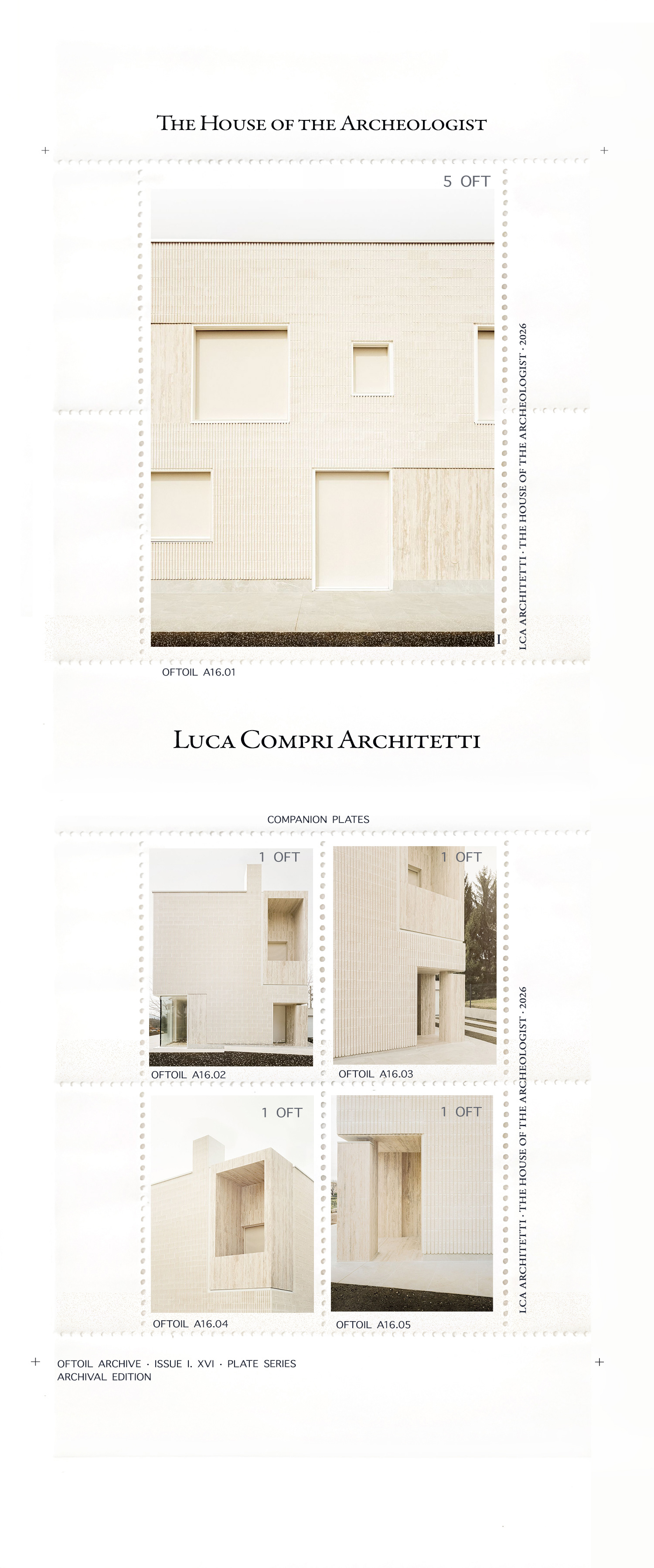
The exterior resists clarity.
Edges are firm, but surfaces shift—light catching ridges, flattening planes, then returning depth as the day declines. The building does not change; perception does.
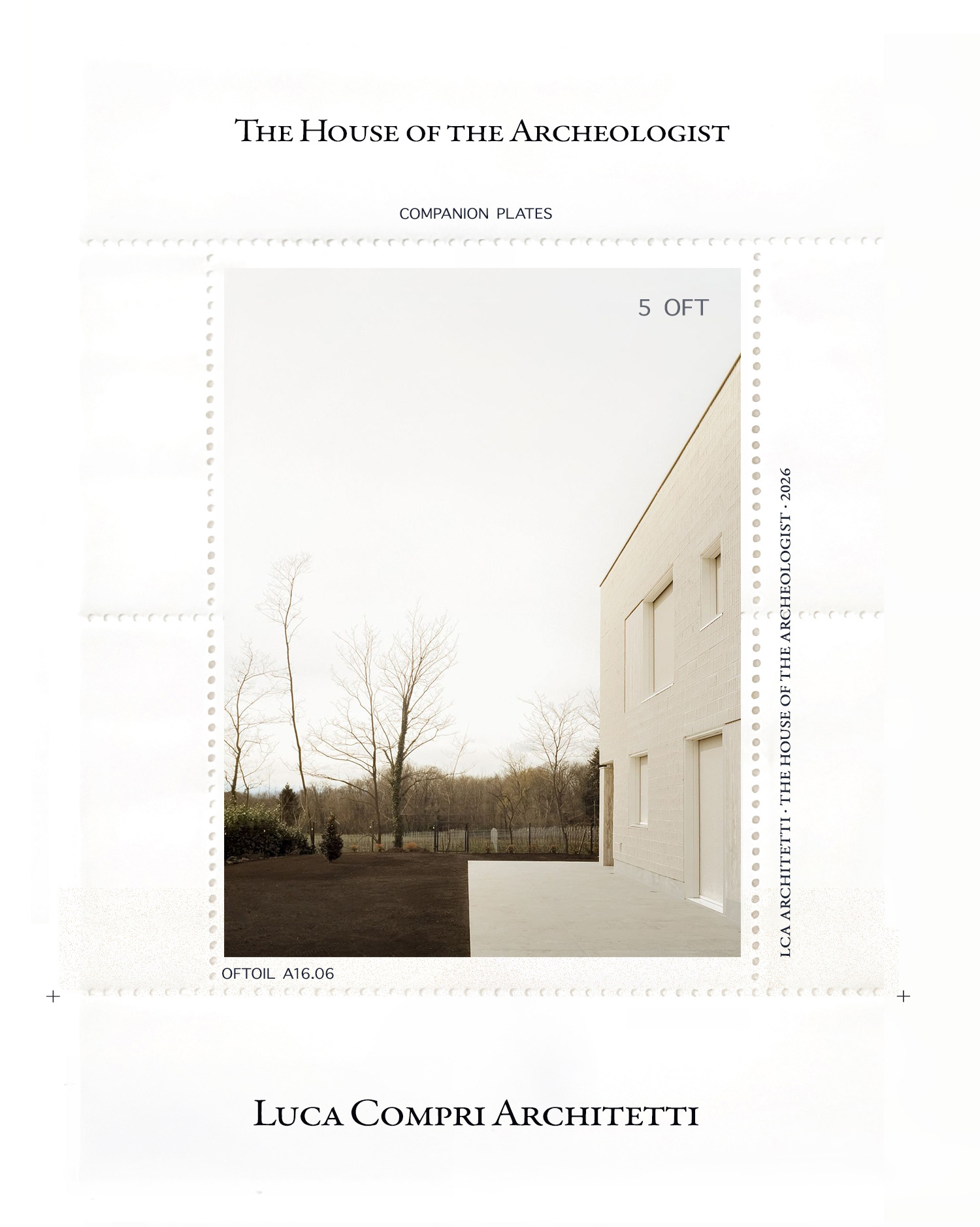
Inside, the mass opens.
Space is continuous below, more contained above—rooms aligned with fields and vineyards beyond. Each aperture is measured, not to frame a view, but to place the interior within a larger, working landscape.


The house begins with a contradiction: it is new, yet already carries the weight of something found.
A simple parallelepiped forms its outer boundary, but within it, denser volumes are set—stone-like insertions that interrupt and stabilize the whole. This interplay recalls a pre-modern logic of construction, where buildings evolved through addition, repair, and reinforcement rather than singular authorship.
That language is not replicated here, but translated.
Fluted concrete block replaces brick, its repetition softened by irregular light. Marble and travertine take the role of stone—not as ornament, but as points of resistance within the structure. These materials, recovered from quarries and construction discard, arrive with prior histories embedded in them. Their reuse is not framed as virtue, but as continuity.
The building engages time most clearly through light.
Across the day, its surfaces register subtle shifts—morning revealing texture, noon compressing form, evening restoring shadow and depth. What appears static becomes perceptual, almost unstable in its reading.
Internally, the house resolves into clarity.
The ground floor remains open and continuous, while the upper level withdraws into more private, enclosed rooms. Openings are placed with precision, establishing a quiet dialogue between domestic life and the surrounding agricultural landscape.
There is no overt reference to archaeology, yet the method is shared.
Fragments are gathered. Materials are repositioned. Meaning emerges through placement rather than invention.
The result is not a house that looks aged, but one that feels already situated within time—as if its present form is only one moment within a longer continuum.


