“Make the commonplace unusual.”
— Rodney Smith
In Rodney Smith photography, the world is ordered to the edge of impossibility. Precision becomes play. Figures—immaculate, composed—step just beyond logic, not to escape reality, but to refine it. What appears surreal is simply discipline carried far enough to bend.
There is no excess here, no noise. Each element is placed, measured, resolved. And within that control, something unexpected begins to surface: a lightness, a wit, a quiet defiance of gravity and certainty. The image does not announce its strangeness—it lets it emerge.
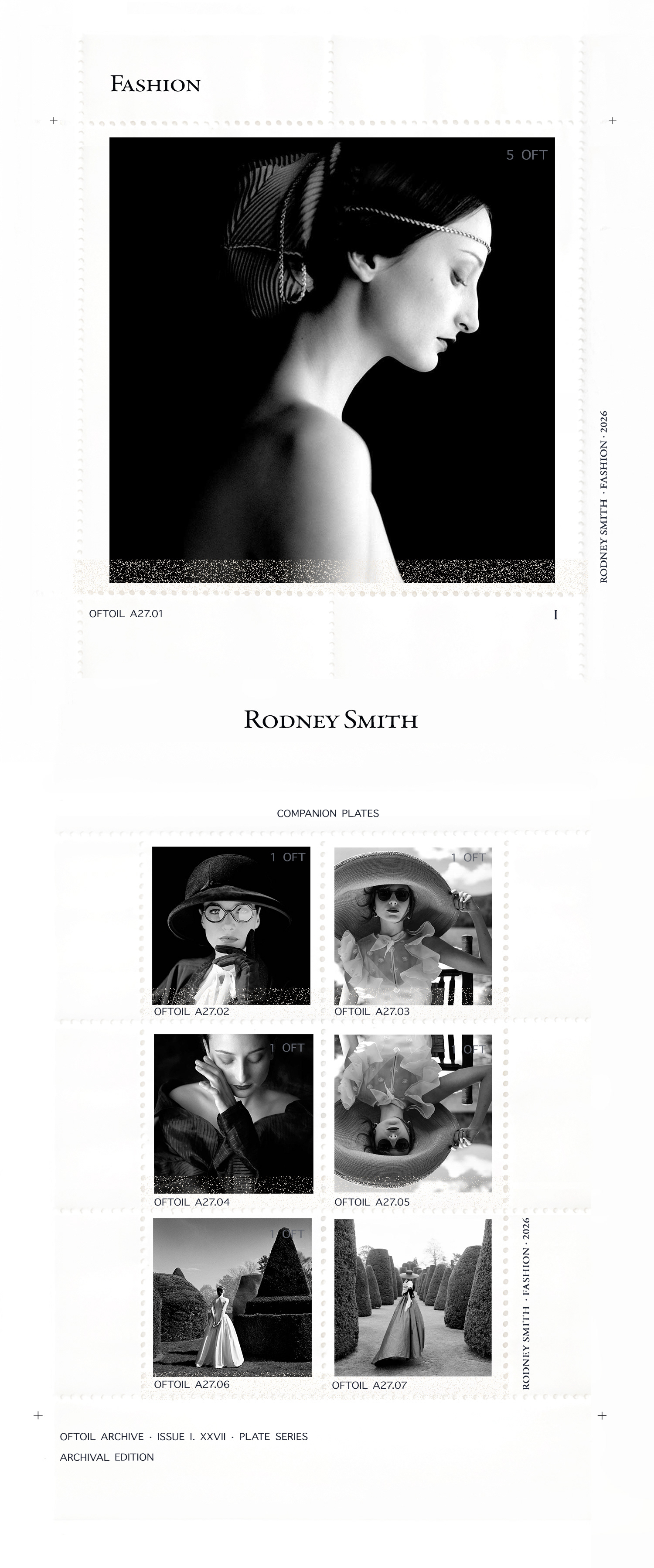
Elegance, held at a distance. The body becomes surface, surface becomes gesture. Fashion, here, is not adornment but restraint—poised between exposure and concealment, where the image breathes through what it withholds.
Fabric falls, light rests, posture settles into a near-perfect equilibrium. Nothing insists, nothing overwhelms. The figure is present, yet slightly withdrawn, as if aware of the frame’s discipline and choosing to inhabit it with care rather than expression.
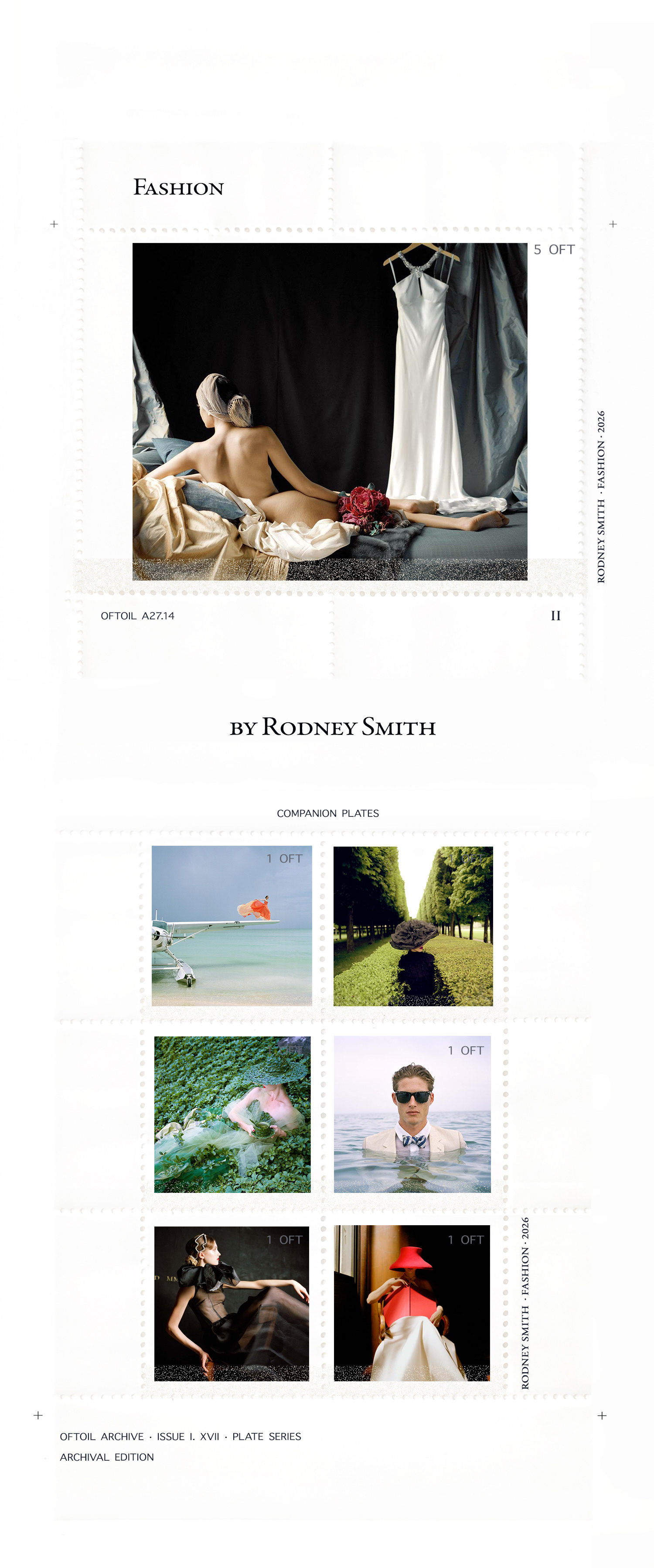
The silhouette repeats, adjusts, resolves. Variations on a single grammar: posture, fabric, air. Identity dissolves into rhythm—style not as expression, but as structure.
Across the sequence, difference becomes subtle, almost internal. A shift of weight, a turn of the head, a recalibration of line. The image is less about who is seen, and more about how form persists—refined, reiterated, made exact.
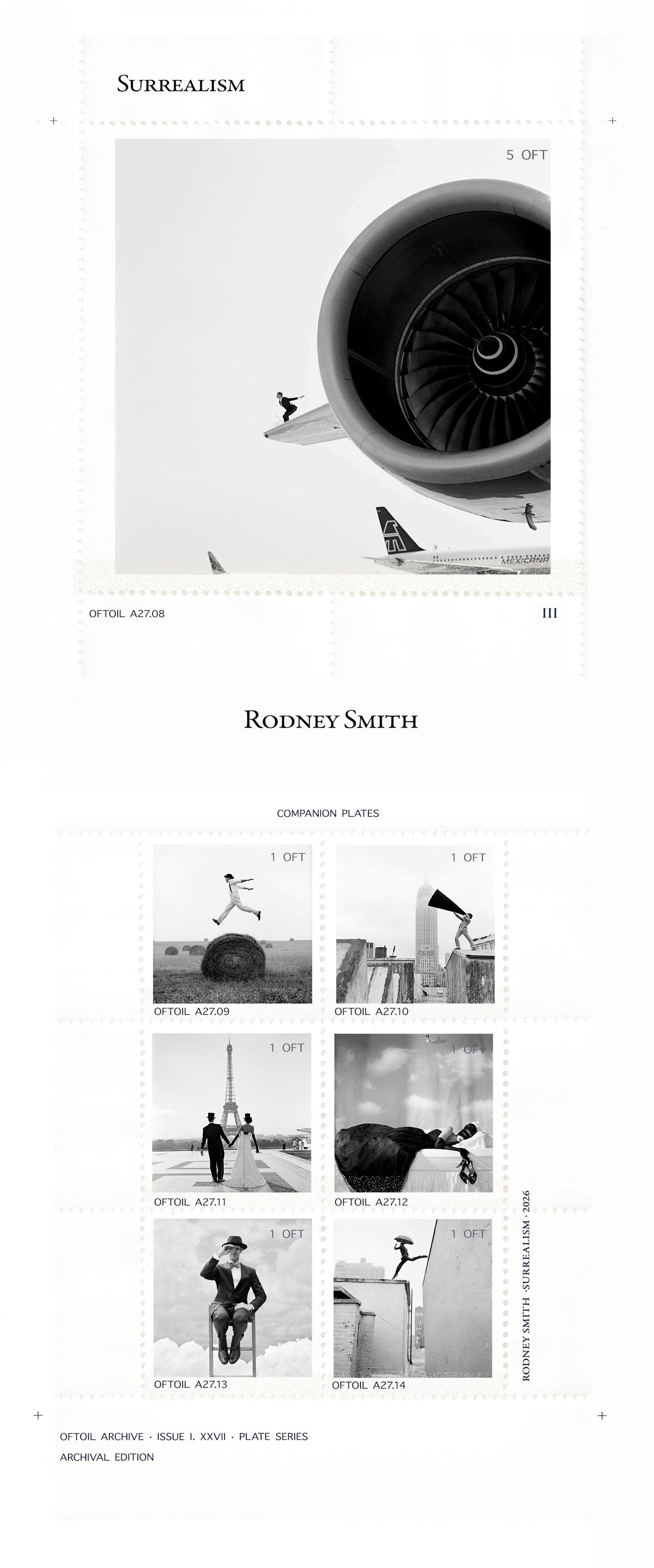
Balance breaks—quietly. A step into air, a pause above ground. The familiar is not disrupted, only shifted a fraction, enough to reveal its instability. The world remains intact, but no longer certain.
There is no spectacle in the gesture. The impossible enters without announcement, held within the same clarity as everything else. And because nothing else changes, the moment carries weight—an interruption so precise it feels inevitable.
Smith’s images are not inventions; they are calibrations. By removing excess, by insisting on clarity, he arrives at something stranger than fantasy: inevitability that feels improbable. His figures do not perform for the camera—they submit to it, becoming part of a larger order where wit, geometry, and grace align. In this space, surrealism is not spectacle. It is consequence.
What endures is not the trick, but the discipline behind it. The patience to reduce, to align, to wait until the image holds. In that stillness, meaning does not expand outward—it settles inward. The viewer is left not with surprise, but with recognition: that the extraordinary was always present, waiting for precision to make it visible.
Images and words courtesy of