“My portraits are more about me than they are about the people I photograph.”
— Richard Avedon
— Richard Avedon
Richard Avedon transformed portraiture into one of the defining visual languages of the twentieth century. With extraordinary economy, he reduced photography to its essential encounter: light, gesture, presence, and the silent tension between observer and observed. Fashion, celebrity, politics, literature, and art entered the same immaculate field, where every face carried equal visual consequence.
Neither documentary nor fantasy, Avedon’s photographs exist in the rare space where precision becomes poetry. Their enduring clarity has made them inseparable from the cultural memory of an era, establishing a body of work whose influence extends far beyond photography into publishing, design, cinema, and contemporary image-making. More than portraits, they have become icons of modern visual culture.
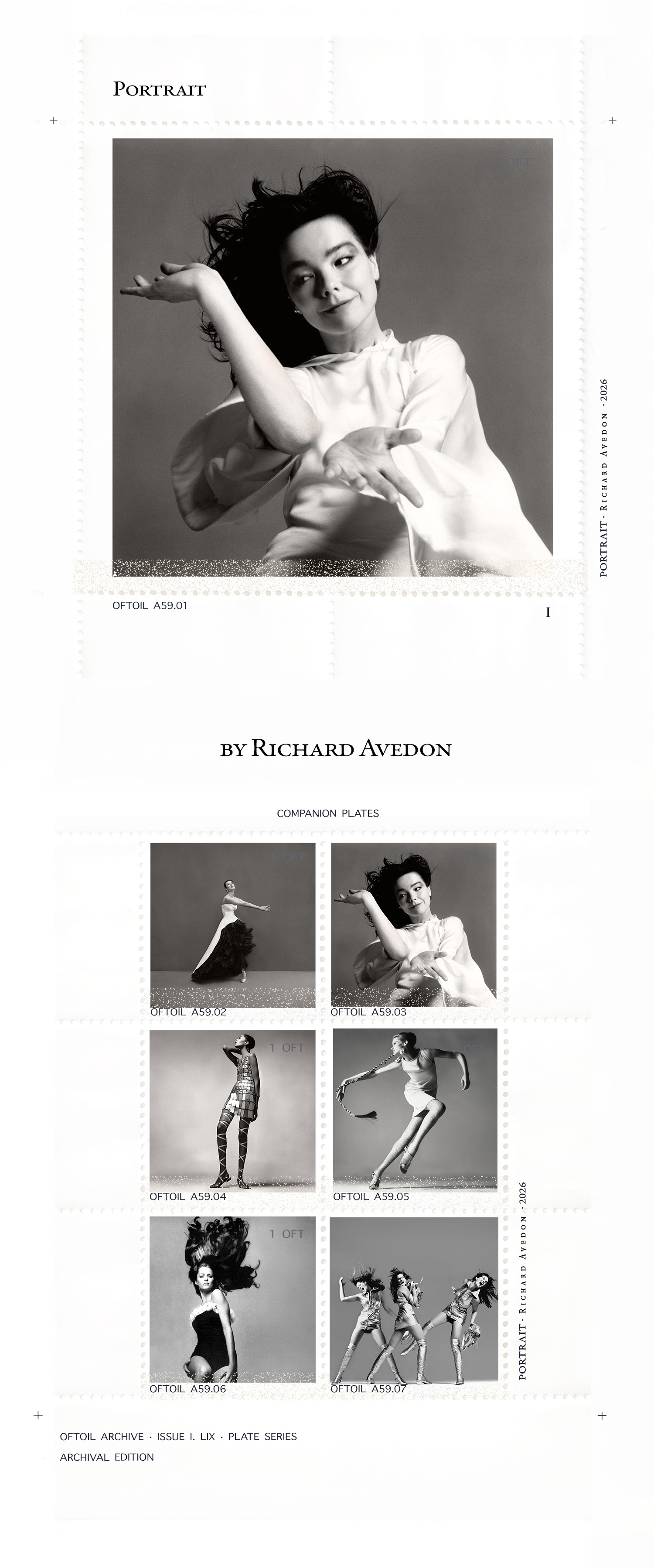
Movement became one of Avedon’s defining artistic signatures. His fashion photographs rejected the sculptural stillness that had dominated mid-century editorial imagery, introducing gesture as an expressive language equal to clothing itself. Bodies twist, hands extend, garments become kinetic forms, suggesting that elegance is experienced through motion rather than pose.
Throughout these photographs, fashion functions not as spectacle but as choreography. The resulting images possess an enduring vitality that transcends seasonal publication, preserving moments in which movement, design, and personality merge into a singular visual expression. They remain among the most influential fashion photographs ever produced, continuing to shape editorial photography long after their original commissions.
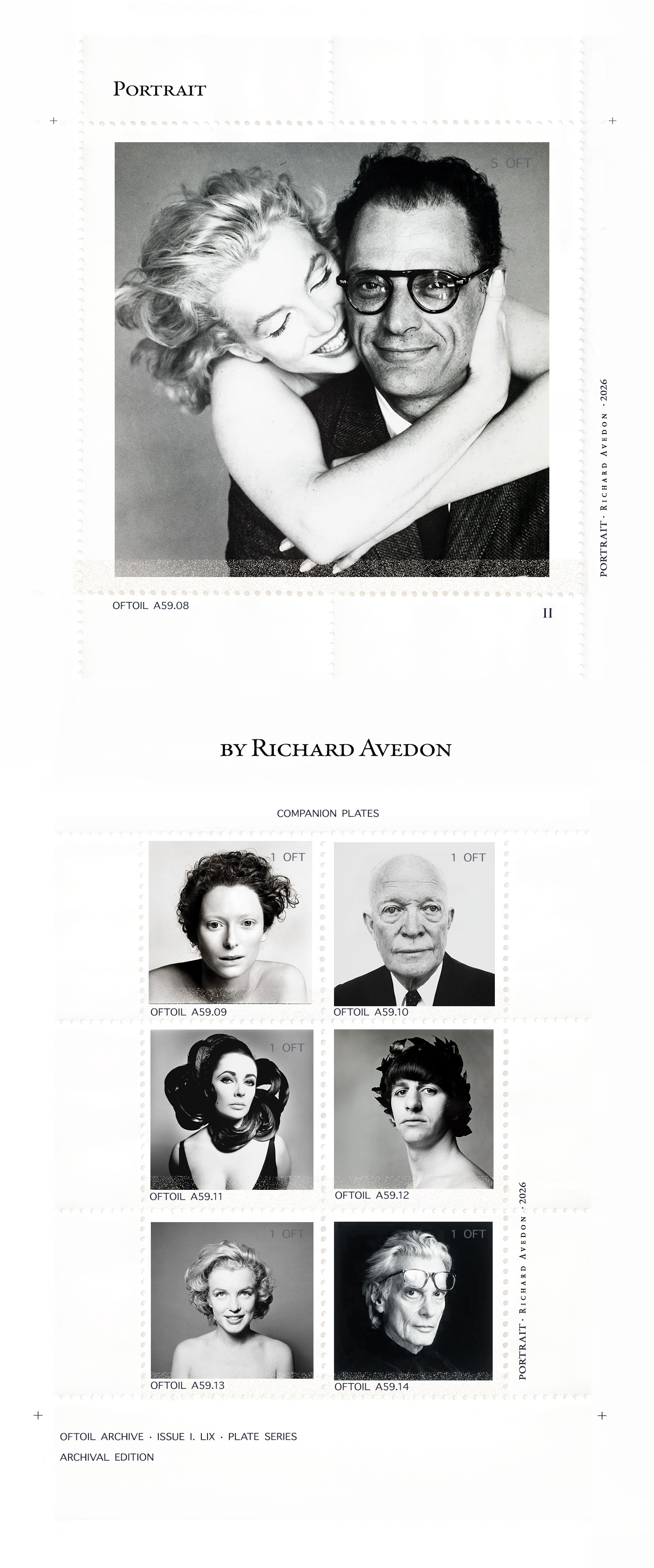
Avedon’s portraits dismantle hierarchy. Artists, writers, actors, politicians, and anonymous sitters are approached with the same visual discipline, occupying identical space before the camera. The absence of elaborate setting concentrates attention upon the smallest variations of expression, allowing character to emerge through restraint rather than narrative.
These portraits have become cultural documents whose significance extends beyond individual fame. Together they form a remarkable cross-section of twentieth-century intellectual and artistic life, preserving not only recognizable faces but the emotional atmosphere surrounding an era increasingly defined through photographic representation.
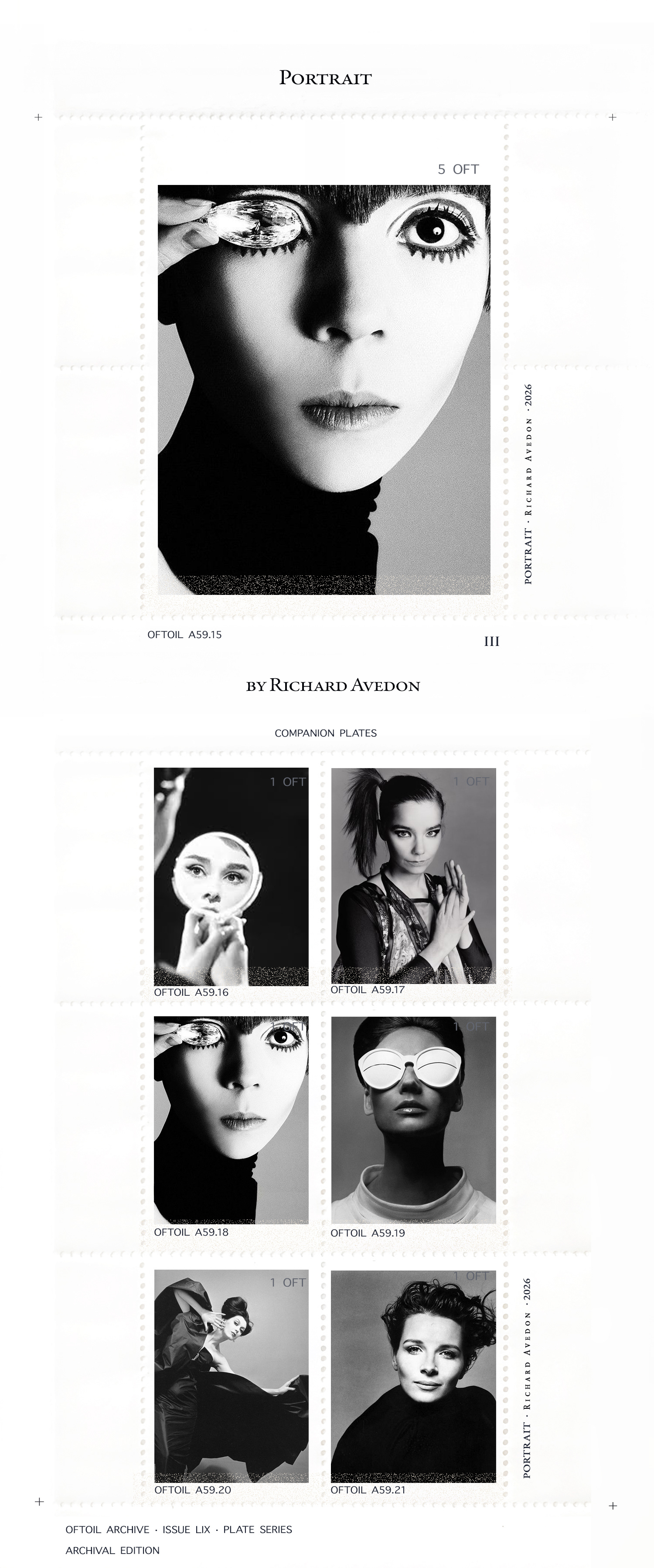
Experimentation remained central to Avedon’s practice even within the apparent simplicity of portraiture. Mirrors, graphic interventions, unexpected framing, and formal abstraction appear throughout his editorial work, demonstrating an artist continually refining the visual grammar of the photographic image. Rather than disrupting clarity, these devices intensify the psychological relationship between viewer and subject.
His willingness to move between commercial commissions and formal investigation dissolved conventional distinctions between applied and fine art. Editorial pages became sites of visual innovation, where photography could simultaneously serve fashion, design, publishing, and artistic inquiry without diminishing any of them.
Richard Avedon’s photographs endure because they resist becoming fixed historical artifacts. Each portrait remains an encounter renewed by every viewing, reminding us that photography is less concerned with preserving certainty than with preserving attention. Within the OfToil Archive, his work stands not simply as an extraordinary body of portraits, but as a foundational language through which modern visual culture learned to see itself—precise, immediate, and perpetually alive.
Words & images courtesy of Richard Avedon.