
“Objects should not only contain flowers, but alter the way we see them.” — Bilge Nur Saltik
The Op-Vase transforms the vase from vessel into optical instrument. Through faceted and patterned glass, flowers fracture into repetitions, distortions, and shifting fields of colour—nature translated through perception rather than preserved in stillness.
Bilge Nur Saltik approaches the object as a mediator between material and illusion. Transparency becomes unstable; the ordinary bouquet dissolves into layered refractions. The work recalls Op Art, early experimental photography, and the chromatic instability of light moving through cut crystal.
Each composition exists between clarity and abstraction. Flowers remain visible, yet never fully fixed. The image trembles between object and mirage.
OP-Vase is a series of vases designed by Bilge Nur Saltik and hand-crafted in collaboration with Turkish artisans in Istanbul.
A signature quality of each glass vase is the illusion created by its complex pattern of cuts.
A kaleidoscopic effect is created within each thick glass form so that when viewed from different angles, a single flower placed within it, dissolves into an entire bouquet.
Every vase boasts a unique pattern of cuts in the glass and extremely precise corners.
The OP-Vase collection comprises of vases in two colors blue and green and three sizes.
The OP-Vase collection comprises of vases in two colors blue and green and three sizes.
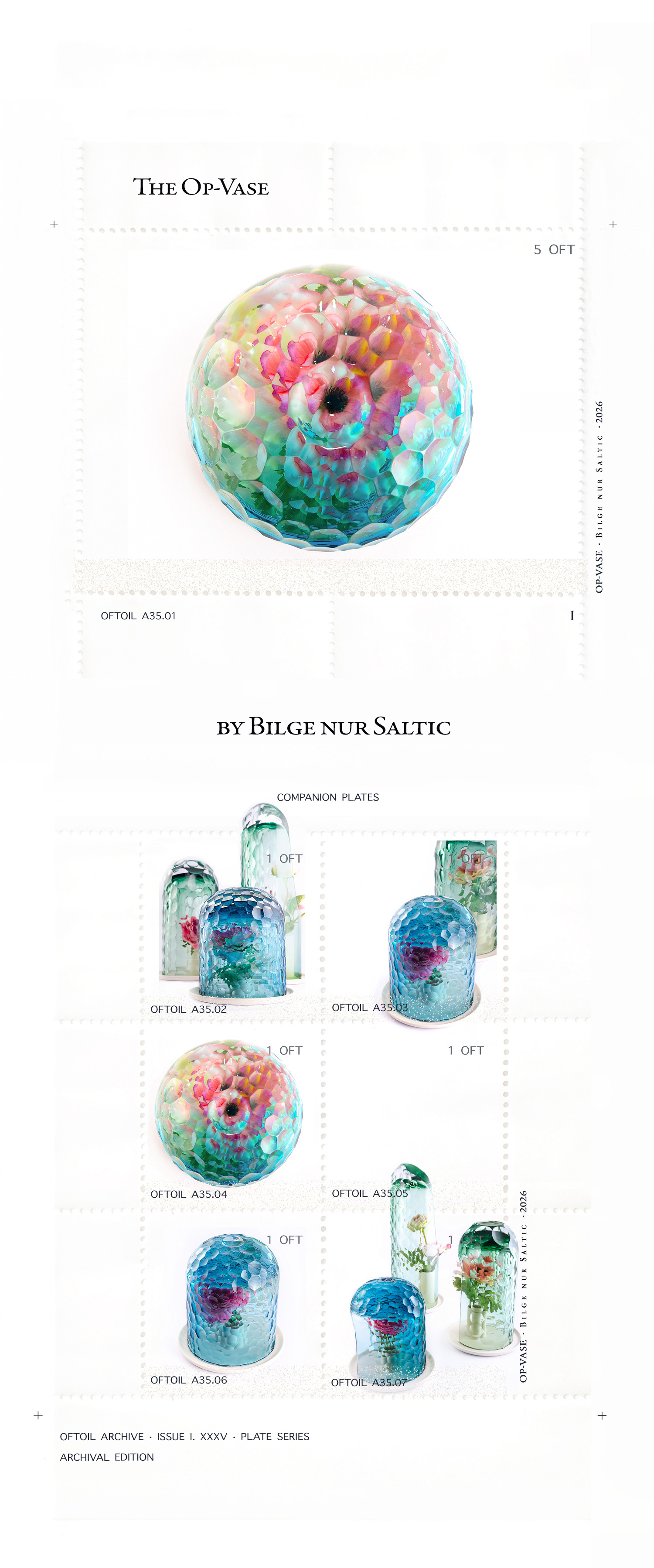
“I do not seek the perfect photograph, but to provoke accidents that create the emotion of an image.”
The spherical form behaves like a lens suspended in space. Petals multiply inward, folding into concentric geometries that resemble microscopic cells, stained glass, or planetary surfaces.
The vase ceases to frame the flower; instead, it reconstructs it. Vision itself becomes part of the composition.

Verticality elongates the bouquet into a sequence of fragmented echoes. Stems dissolve into rhythmic bands while blossoms hover between liquid and solid form.
The glass introduces motion without movement. A static arrangement acquires the instability of a reflection disturbed by water.
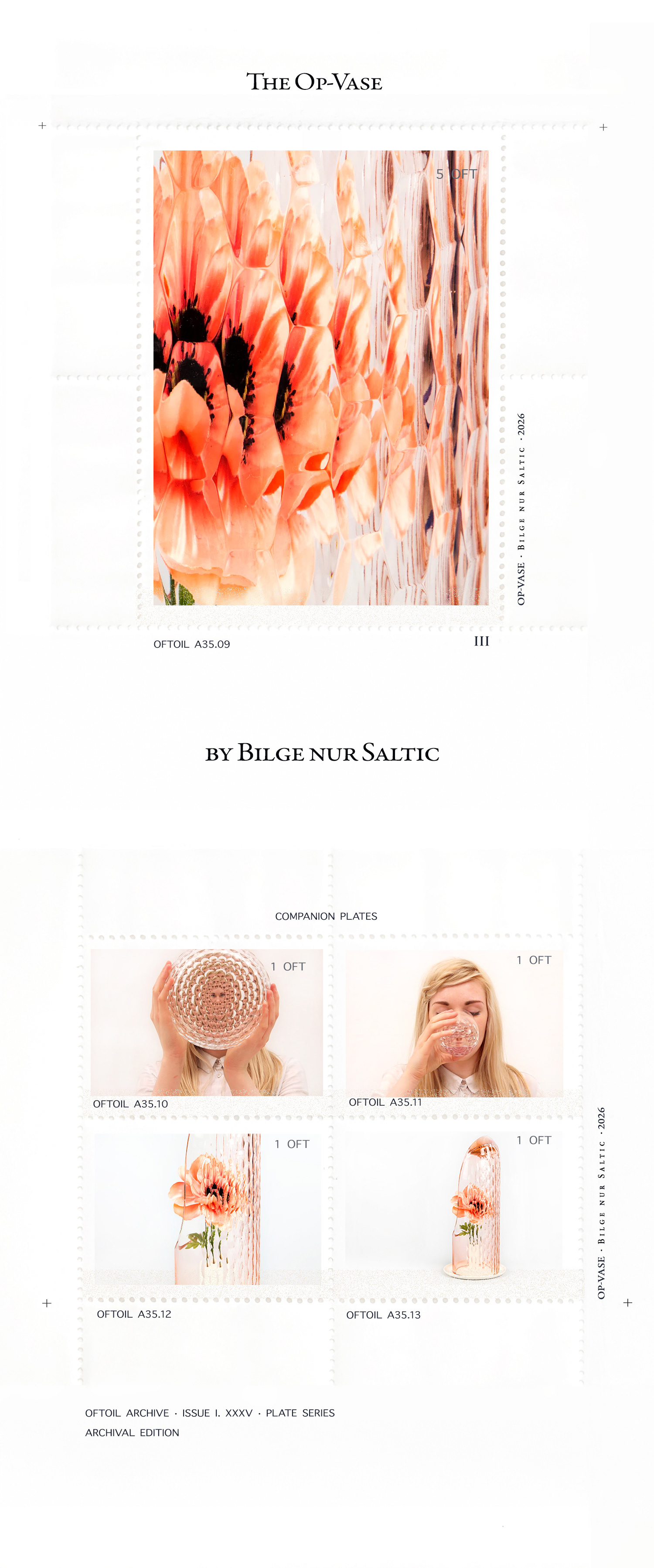
Here the flower presses against the optical skin of the vase, producing a softened field of repetition and blur. The bloom becomes atmospheric rather than botanical.
Surface overtakes subject. Texture itself carries the image, transforming decoration into spatial experience.
The Op-Vase proposes that design can alter perception without abandoning utility. Saltik’s objects retain the familiarity of domestic forms while quietly destabilising the act of looking itself. The flower remains temporary; the distortion becomes the memory that endures.


