“Smile in the mirror. Do that every morning and you’ll start to see a big difference in your life.”
— Yoko Ono
Yoko Ono made art from thought, language, silence, and invitation. Long before participation became common practice, she asked the viewer to complete the work: to imagine, to move, to repair, to listen.
Across performance, text, objects, film, and activism, Ono dissolved the border between art and life. Her gestures are often simple, but simplicity in her hands becomes radical clarity.
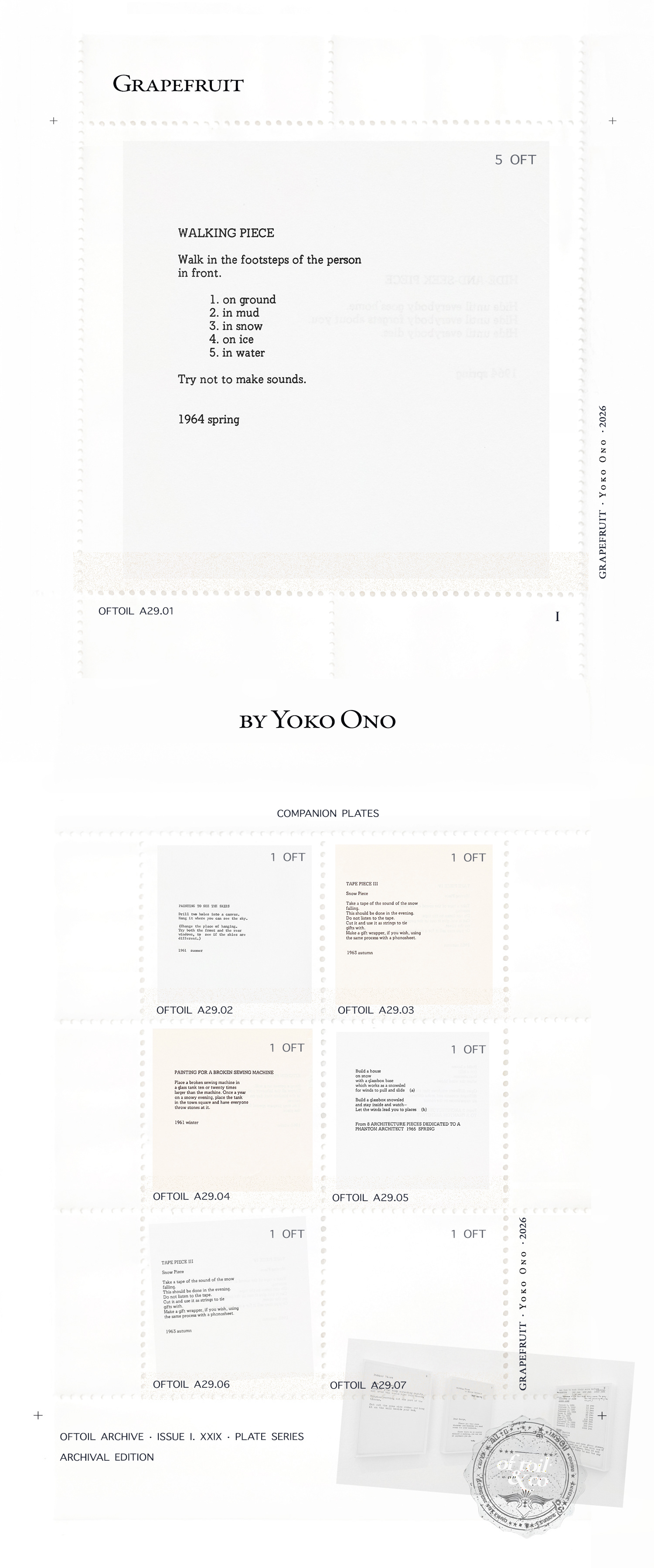
A book of instructions, poems, and impossible tasks first published in 1964. Here language becomes sculpture, score, and open door.
Each sentence is small in scale yet vast in reach. Ono proves that imagination itself can be a medium.
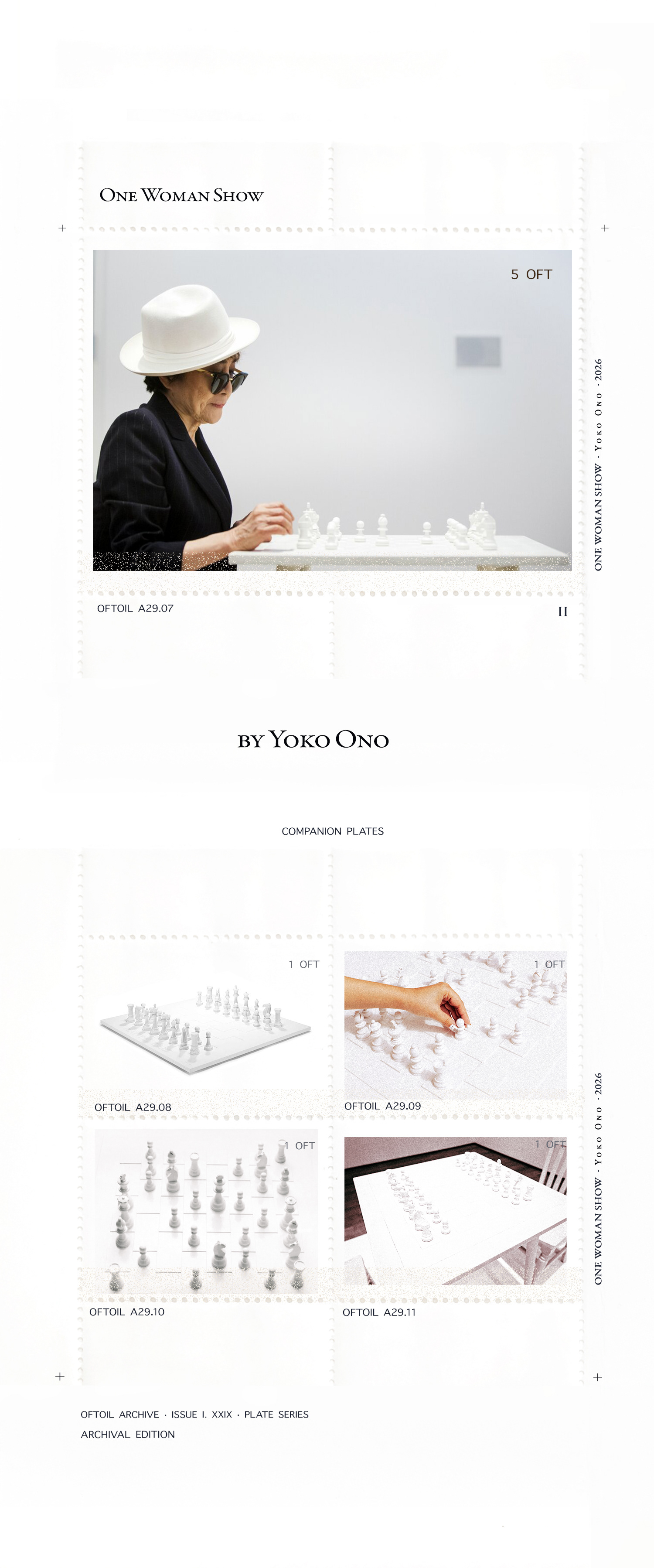
Her white chess set removes certainty from the game. As pieces merge into sameness, rivalry loses its logic.
Conflict here is made visible through confusion. Peace is not declared—it must be practiced.
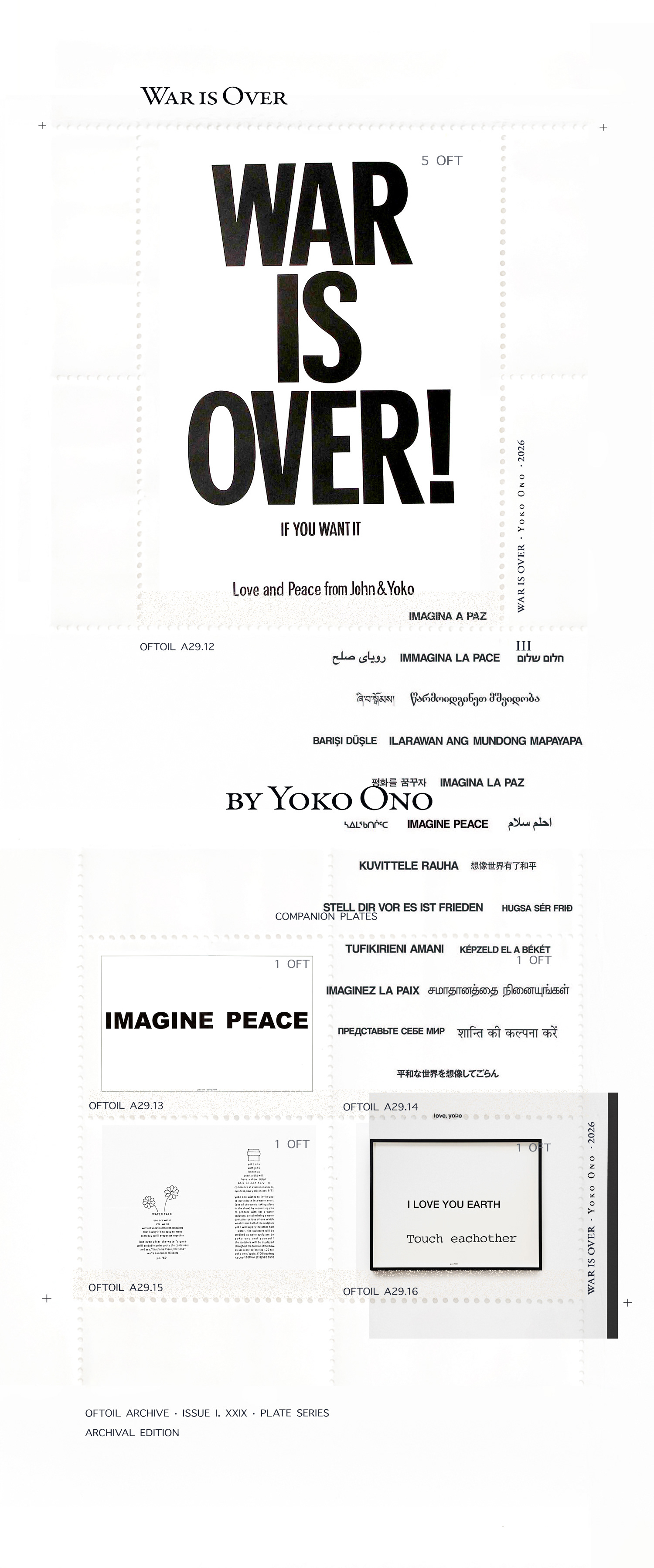
A billboard first launched with John Lennon in 1969, carrying the grammar of hope into public space.
Its power lies in directness. The phrase returns whenever the world forgets that peace begins as choice.
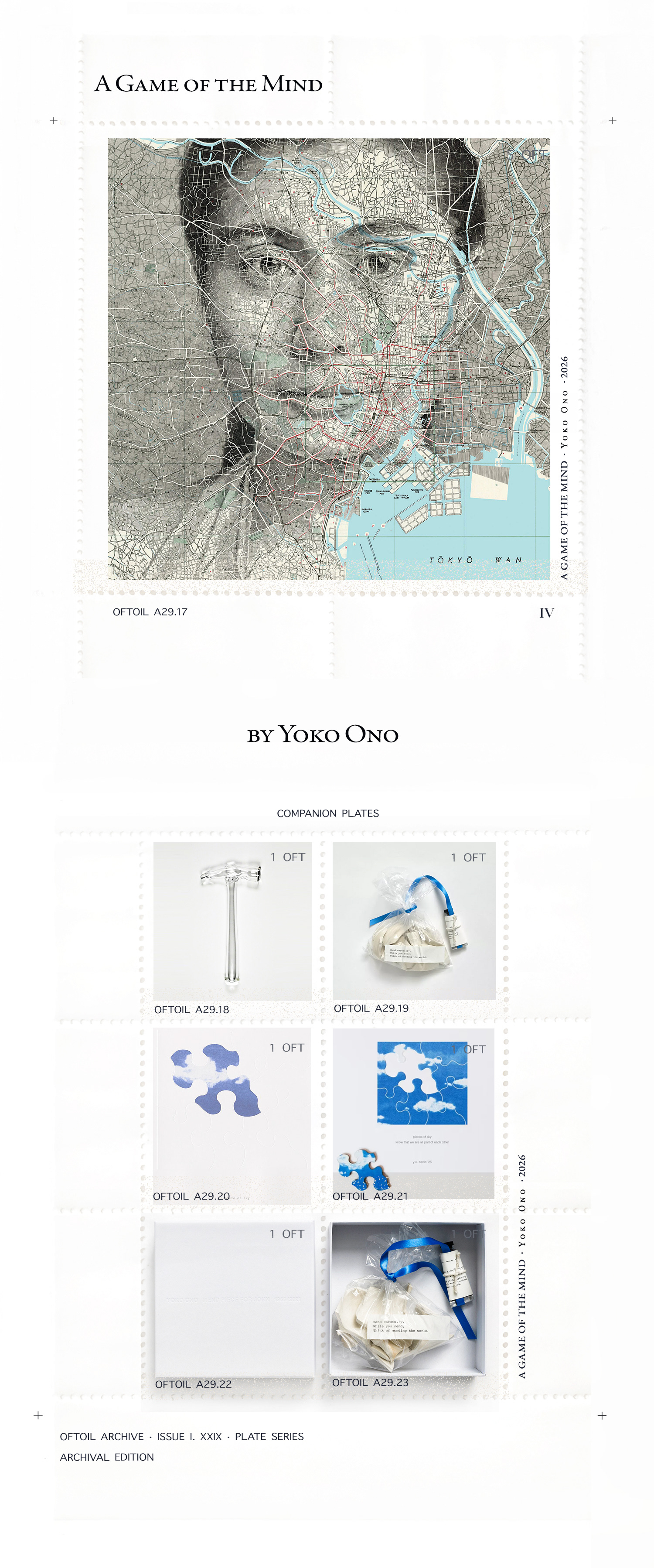
Maps, tools, fragments, sky-shapes, traces. Thought becomes object, then drifts back into thought again.
Ono often treats the artwork as a prompt rather than conclusion. What matters is not possession, but awakening.
Yoko Ono’s art asks for very little: attention, openness, willingness. In return it offers uncommon freedom. Few artists have done more with fewer materials.
These works, gathered across decades and uneven archives, still speak in one clear voice: imagination is an action, and tenderness can be revolutionary.
Images and words courtesy of