“While we destroy the natural world around us, we have become masters of a stage-managed, artificial experience of nature—a reassuring spectacle, an illusion.” — Zed Nelson
In Anthropocene Illusion, British photographer Zed Nelson turns his lens toward one of the defining contradictions of contemporary life: our longing for nature at the very moment of its disappearance. Over six years and across four continents, Nelson documents a world increasingly mediated through replicas, simulations, and curated encounters—where wilderness is reconstructed, landscapes are choreographed, and nature becomes spectacle.
The resulting images are neither documentary nor satire alone. They reveal a civilization attempting to preserve an emotional connection to the natural world while simultaneously transforming it beyond recognition. What emerges is a portrait of the Anthropocene not as catastrophe, but as theatre: a carefully maintained illusion designed to comfort us as the real landscape recedes.
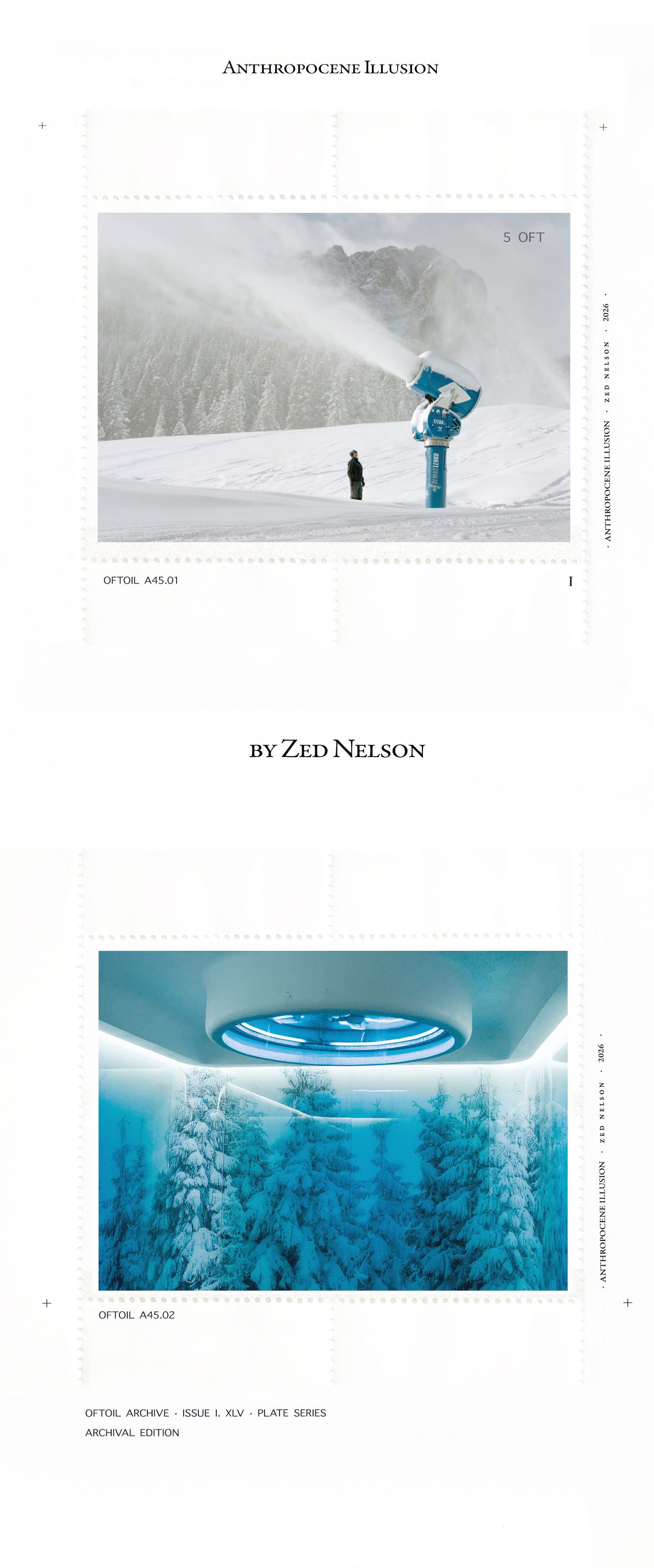
The Anthropocene is not merely an age of environmental transformation, but an age of substitution. As ecosystems disappear, replicas emerge in their place—artificial snow, simulated wilderness, controlled encounters with the natural world. Nelson documents a civilization increasingly surrounded by representations of nature while becoming progressively detached from nature itself. The illusion comforts precisely because the reality has become difficult to face.
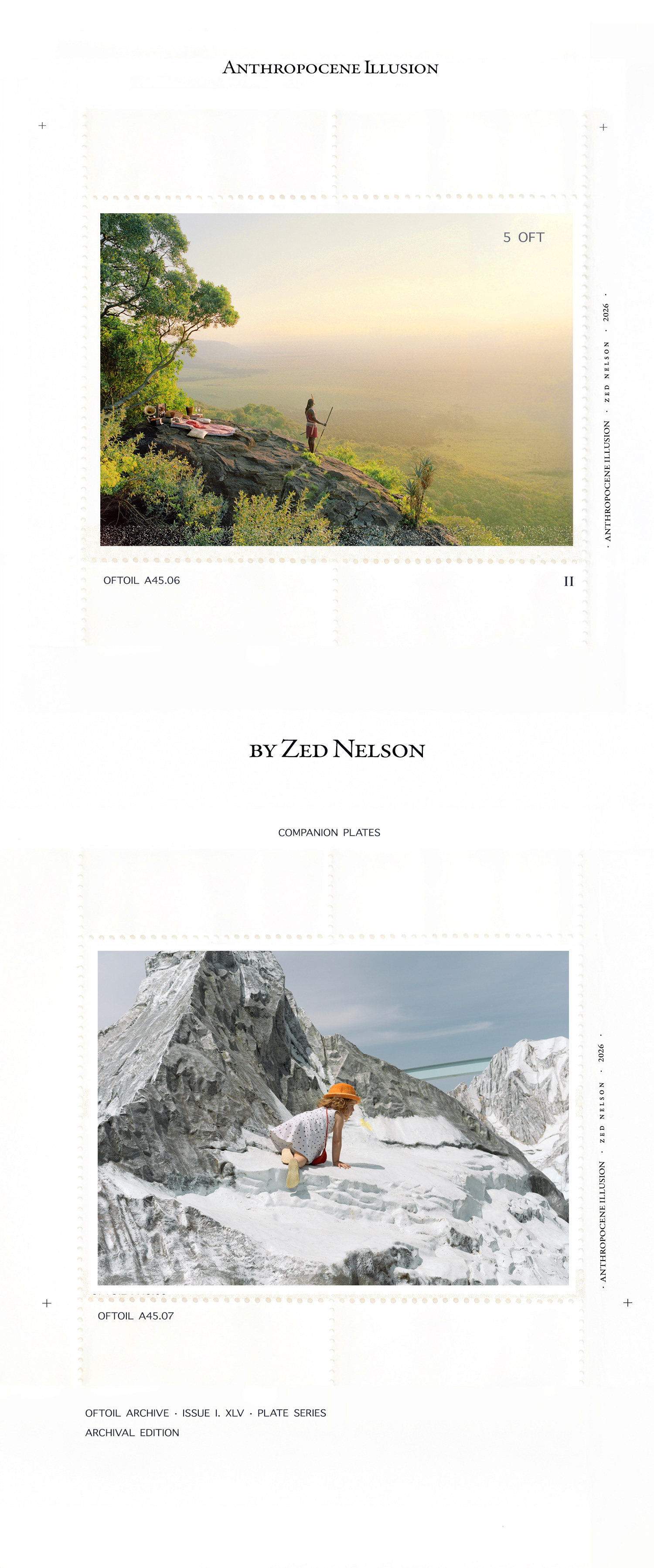
Throughout history, wilderness represented uncertainty, danger, and discovery. Today it is increasingly packaged as experience: managed, accessible, and predictable. Nelson’s photographs reveal landscapes transformed into destinations and ecosystems into attractions. Yet beneath these carefully maintained spectacles remains a persistent longing for something authentic—a desire that no simulation can fully satisfy.
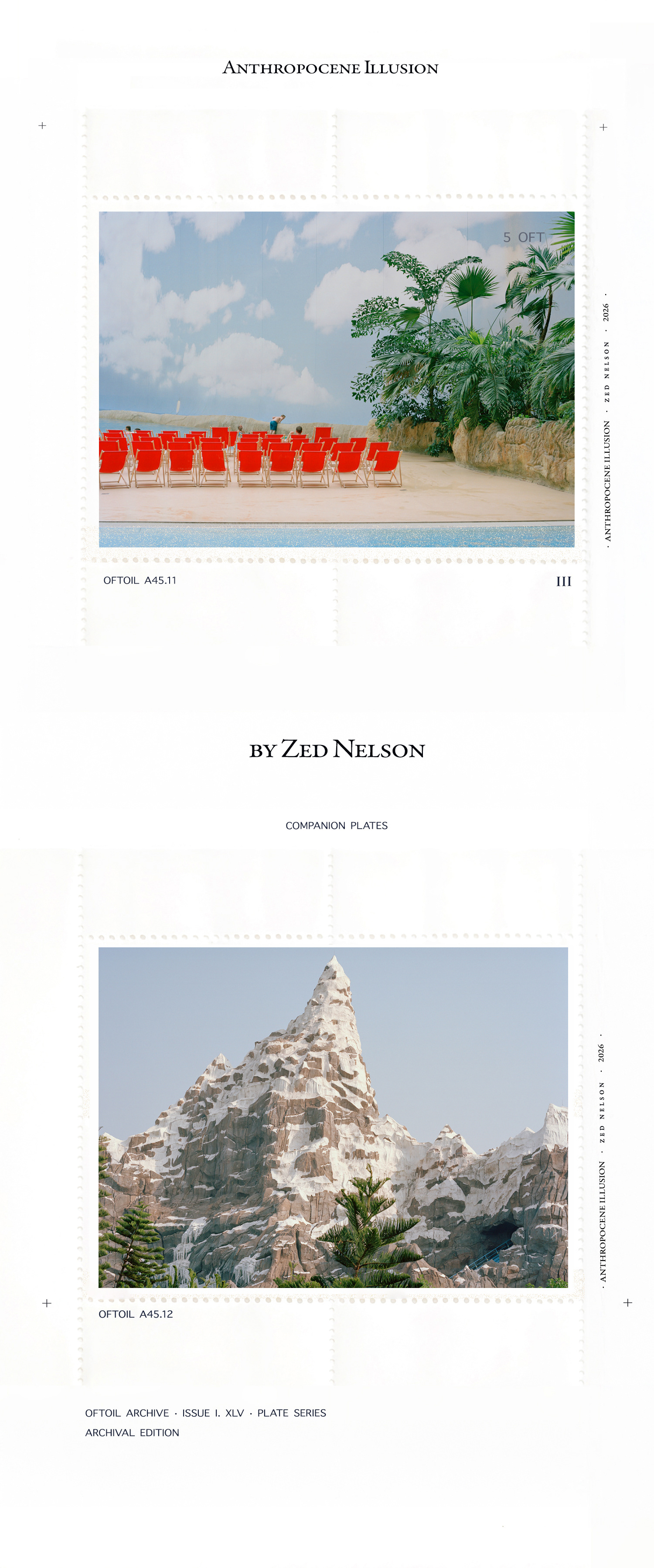
The project ultimately asks whether our relationship with nature has become primarily visual. We photograph it, reconstruct it, consume it, and preserve it as experience. In doing so, we risk mistaking proximity for connection. Anthropocene Illusion is not a condemnation but an observation of a culture attempting to preserve its memory of the natural world while participating in its disappearance.
Nelson’s photographs occupy the uneasy space between wonder and unease. Their beauty draws us in; their implications linger long after. Artificial snow falls beneath warming skies. Mountains are rebuilt. Oceans are replicated. Wilderness becomes a destination, an attraction, an image.
For OfToil Archive, Anthropocene Illusion stands as a visual record of a peculiar human condition: our desire to remain close to nature while increasingly experiencing it through layers of mediation. The work asks a simple question with unsettling clarity—what remains when our memory of nature becomes more vivid than nature itself?
photo credits: Zed Nelson