
“In theater, blood is ketchup; in performance it is real blood”
— Marina Abramović
The body as medium. Time as material. Presence as an act.
Marina Abramovic has spent more than five decades asking how far a body can go—and what remains when everything unnecessary has been stripped away. Hunger, pain, silence, stillness, repetition, endurance: in her work, the body is not merely the subject. It is the instrument, the site, and the measure.
Her performances turn duration into something almost physical. Hours become weight. Stillness becomes tension. A glance can become an exchange; a room full of people can become part of the work. What appears to be nothing—sitting, standing, waiting, looking—is charged by the knowledge that the artist is truly there.
Abramovic has described three selves within her: the Warrior, the Spiritual one, and the Bullshit one. It is an unusually revealing admission from an artist so associated with discipline and control. Beneath the mythology of endurance is someone vulnerable, contradictory, theatrical, funny, frightened, vain, wounded and intensely alive.
Perhaps this is why her work has remained so magnetic. Abramovic does not ask the audience merely to witness an image. She asks them to enter a situation in which something might happen.
And sometimes, nothing happens at all.
That is precisely the point.
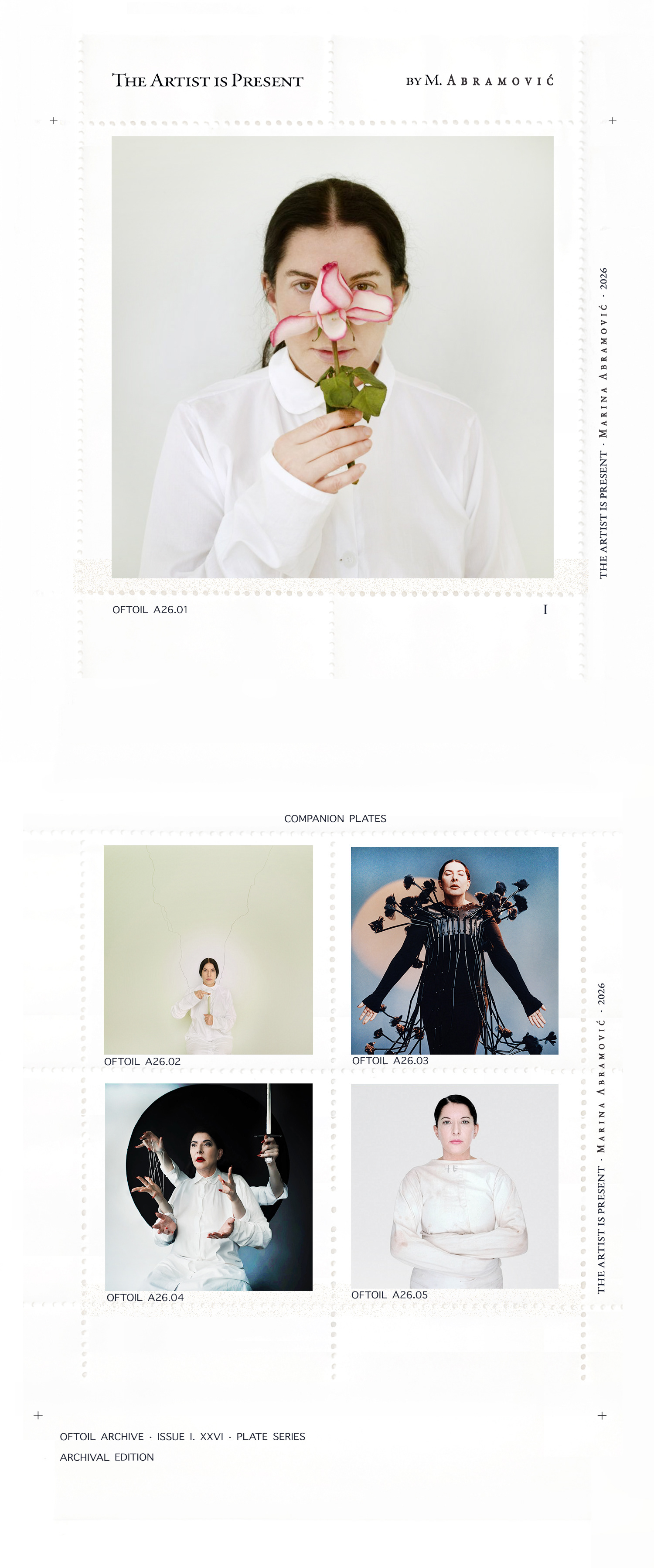
"The more I think about energy, the simpler my art becomes, because it is just about pure presence."
— Marina Abramović
In The Artist Is Present, Abramovic reduced performance to its most elemental exchange: one person sitting opposite another, doing almost nothing but remaining there. For nearly three months at MoMA, she sat in silence, inviting thousands of strangers to take the chair across from her.
The work transformed stillness into spectacle and looking into participation. Nothing could be rehearsed in advance—not the tears, the recognition, the discomfort, or the sudden intimacy between strangers. The performance existed only in the duration of the encounter, and disappeared the moment it ended.
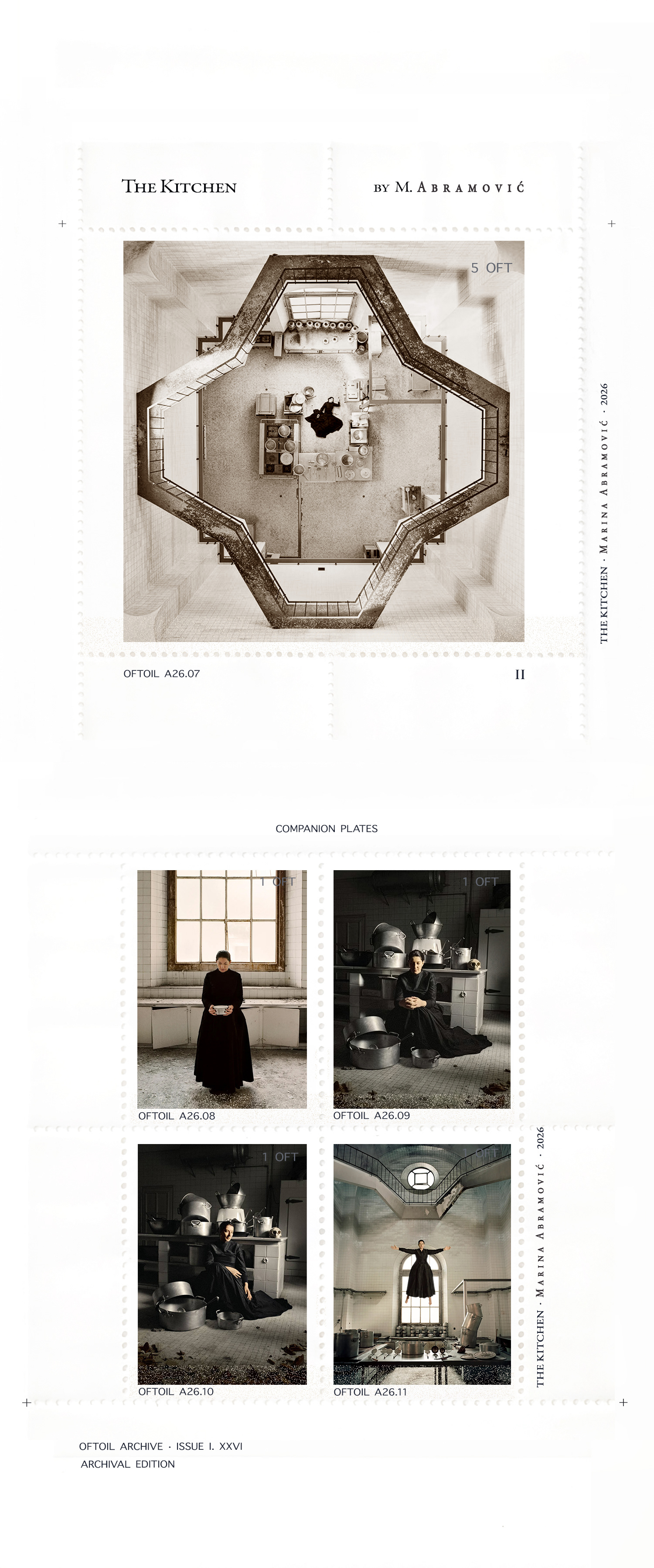
“The kitchen of my childhood was the centre of my world.”
— Marina Abramović
— Marina Abramović
THE KITCHEN
Homage to Saint Therese
In The Kitchen, Abramovic turns an abandoned Spanish kitchen into a place of ritual, memory and apparition. The architecture becomes a vessel for absence, while the artist moves through it with the gravity of someone performing a ceremony whose meaning is only partly visible.
The work takes its title from Saint Teresa of Ávila, whose mystical visions have long occupied Abramovic’s imagination. Here, domestic space becomes spiritual space: a kitchen no longer concerned with nourishment, but with transcendence, solitude and the strange threshold between body and spirit.
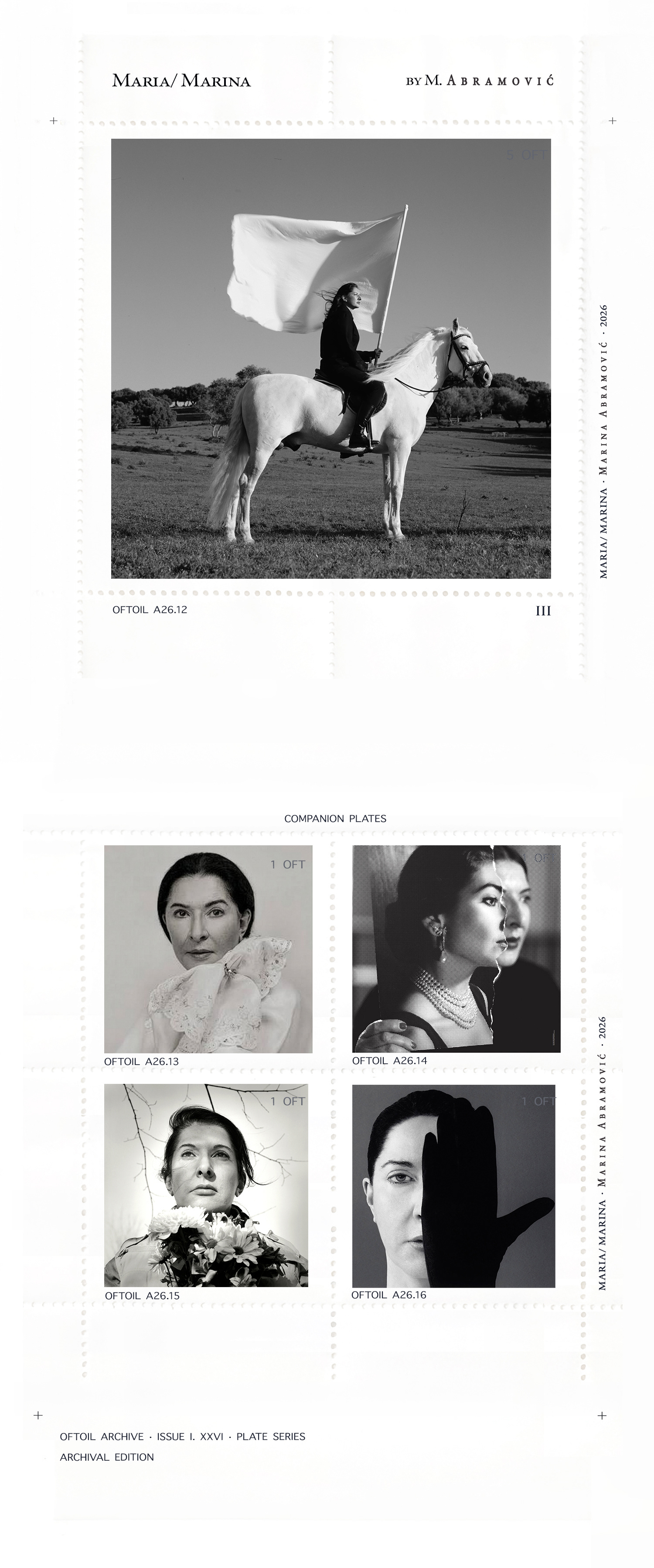
“My father was in love with a Russian soldier called Marina.”
— Marina Abramović
Before Abramovic became the austere figure of contemporary performance, there was Maria: a young woman from Belgrade, raised in the shadow of postwar Yugoslavia, searching for a way beyond the boundaries imposed upon her.
The white horse and flag transform that history into something almost folkloric—a solitary rider carrying an image of herself into another world. Maria/Marina suggests both inheritance and reinvention: the person she was, and the artist she made herself become.

“I am not interested in my body, it is a mere tool.”
— Marina Abramović
— Marina Abramović
Abramovic has always understood the face as a kind of stage. It can conceal pain, manufacture composure, invite intimacy or repel it. In The Mask, the body becomes an arena in which identity is continuously made and unmade.
The snake introduces another register: danger, transformation, seduction, renewal. Abramovic’s performances repeatedly return to this unstable territory, where attraction and fear coexist and the body becomes something simultaneously vulnerable and powerful.

“I am not standing in front of the wall, I am walking through it, and I never give up.”
— Marina Abramović
— Marina Abramović
To walk through walls is to refuse the boundary simply because it is there. Abramovic’s memoir takes its title from the impossible act as a metaphor for a life built around exceeding limits—physical, emotional, cultural and artistic.
Yet the wall is never truly absent. It is the thing that gives endurance its meaning. Every performance begins with resistance: the body against pain, the artist against time, the individual against fear. To cross the boundary is not to destroy it, but to discover what lies on the other side.

Marina Abramovic made duration visible.
She turned the body into material, silence into sound, endurance into choreography and the audience into an active element of the work. Her performances can appear austere from a distance, yet up close they are charged with risk: the possibility that something real might break through the ritual.
Her great subject is presence—the stubborn, fleeting fact of being here.
And perhaps that is why her work belongs so naturally in The Issue of Time. A photograph can preserve a moment. A sculpture can outlive its maker. A book can carry a memory forward. But performance asks something more precarious of time:
to be there while it passes.
Images and words courtesy of
“The more I think about energy, the simpler my art becomes, because it is just about pure presence”
— Marina Abramović


