“Nothing is holier, nothing is more exemplary than a beautiful, strong tree.” — Hermann Hesse
Valentin Loellmann creates furniture that feels less designed than grown. Raised on the edge of forests and shaped by a life of manual making, he approaches objects as living presences rather than functional products. Wood is stretched beyond expectation, metal softens into liquid form, and familiar typologies dissolve into something more instinctive and uncertain.
His work occupies the territory between architecture and dream, where German precision meets Japanese restraint, and where the discipline of craft is balanced by risk, intuition, and wonder. Each piece appears suspended between permanence and transformation, carrying the quiet tension of something still becoming.
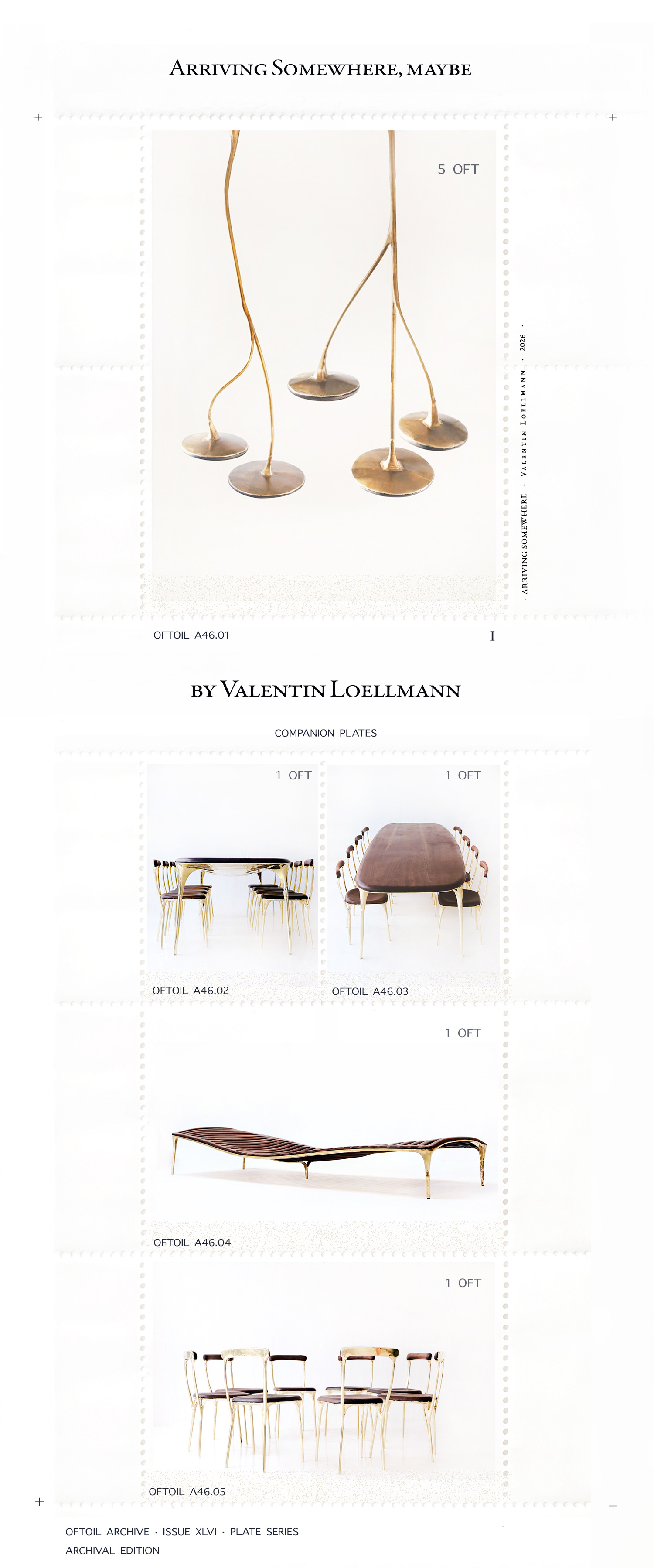
Plate I —
Arriving Somewhere, MaybeSuspended between sculpture and ritual, these works reveal Valentin Loellmann’s belief that furniture should possess the quiet dignity of living things. Bronze rises like stems, wood flows without interruption, and chairs gather with the grace of figures awaiting conversation. Nothing feels imposed; each form appears to have arrived naturally, as though discovered rather than designed.
The collection speaks of home as an evolving condition rather than a fixed destination. Tables become landscapes for gathering, lamps resemble delicate flowers reaching toward light, and the language of function gives way to something gentler and more poetic. In Loellmann’s world, arrival remains uncertain, yet beauty resides precisely within that uncertainty.
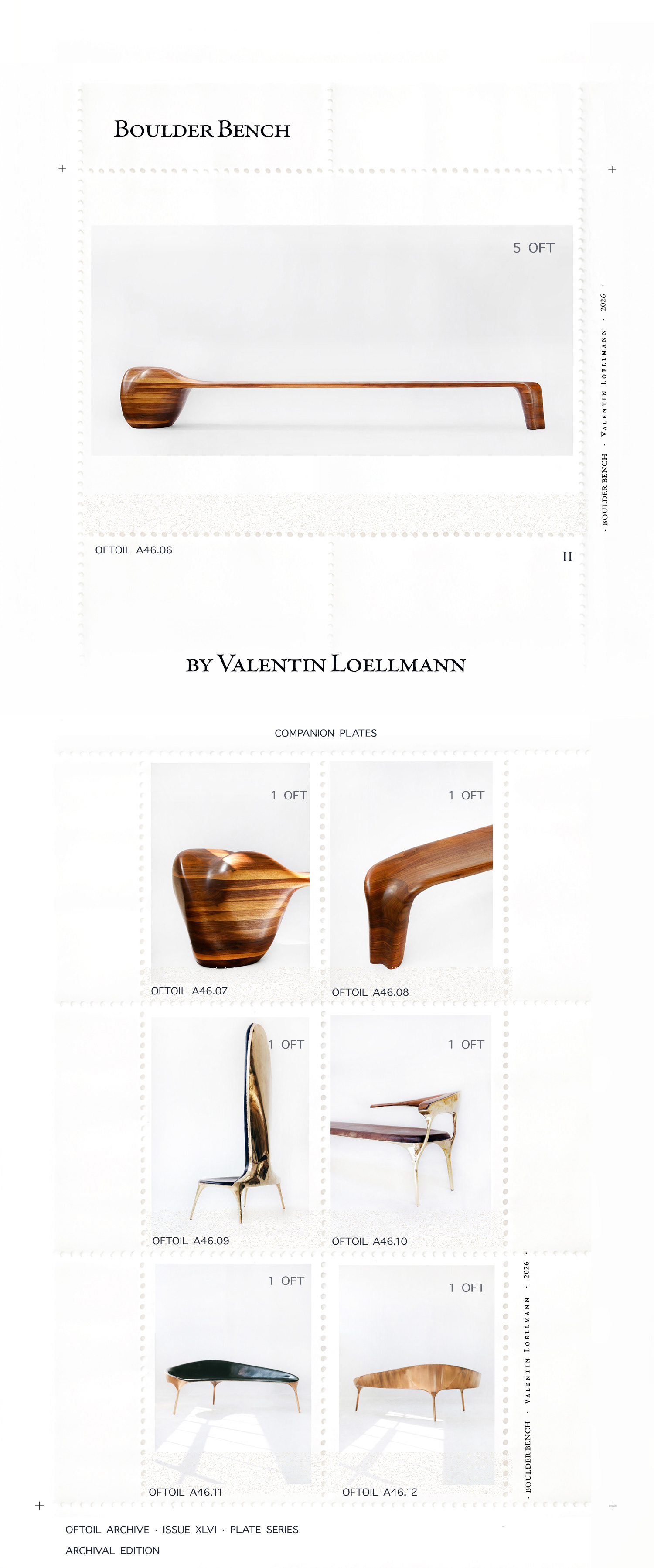
Plate II —
Boulder BenchReduced to its essentials, the bench stretches between weight and delicacy. One end gathers into a dense organic mass while the other extends outward in a gesture of improbable lightness, creating a tension that feels almost impossible.
Like many of Loellmann’s works, it evokes natural processes rather than industrial manufacture. It recalls driftwood shaped by water, roots extending through soil, or a branch bending under years of growth. Strength is present, but never announced. The object exists in a state of quiet equilibrium, where gravity and grace negotiate their terms.
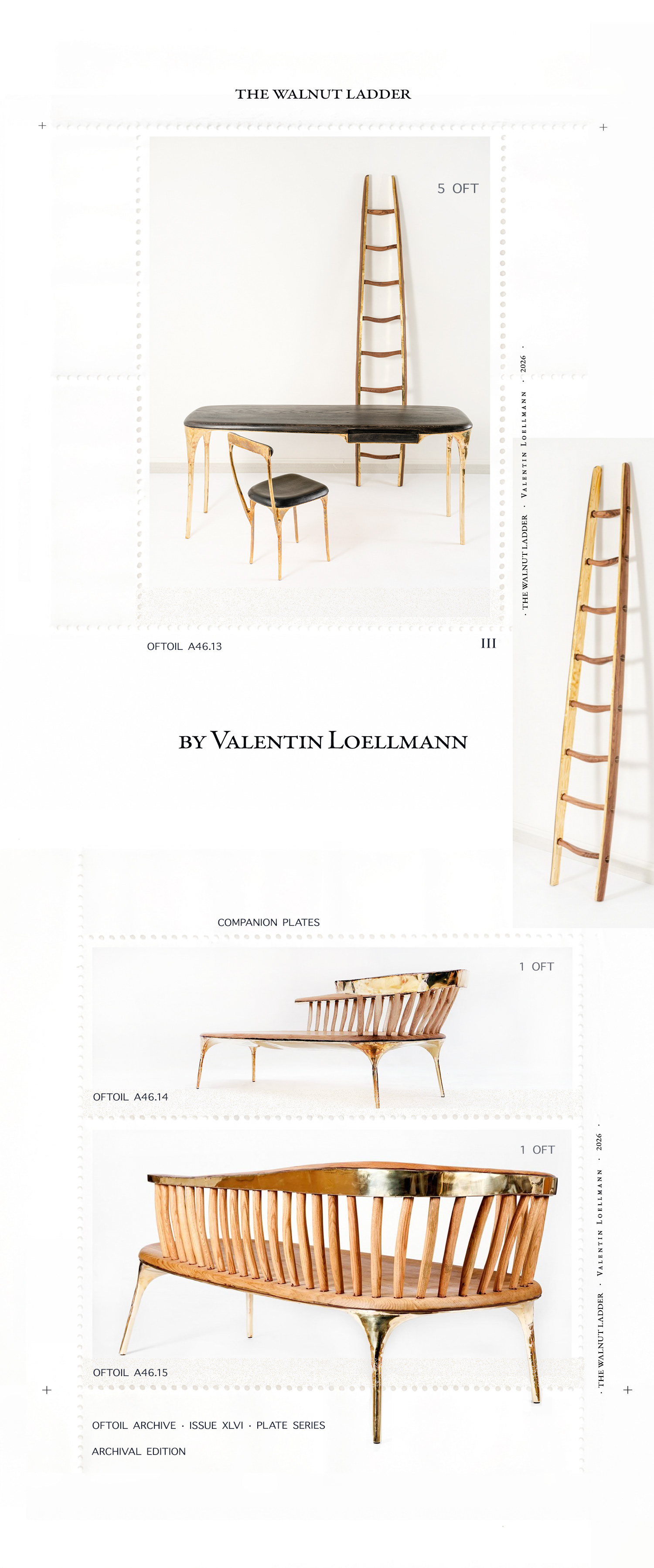
Plate III —
The Walnut Ladder
In this series, Loellmann returns to archetypal forms—the ladder, the desk, the bench—and transforms them into objects of quiet reverence. Walnut and bronze meet with the tenderness of handcraft, allowing every curve and imperfection to remain visible. The ladder rises not merely as a tool, but as a symbol of aspiration and memory, recalling the simplicity of rural life and the intimacy of manual work.
The accompanying furniture carries the same spirit. Slender bronze legs seem to melt into the floor while wooden spindles evoke branches gathered from the forest. Familiar forms are slowed down and reconsidered, acquiring the calm presence of heirlooms. What emerges is not nostalgia, but a meditation on growth—on the enduring human desire to build, to climb, and to create places of refuge amidst the passing of time.
Across these works, Valentin Loellmann proposes an alternative relationship with objects—one rooted not in efficiency, but in attention. His furniture carries the memory of forests, workshops, fire, and handcraft, resisting the speed and certainty of contemporary production.
Like the solitary trees admired by Hesse, these pieces stand according to their own laws. They remind us that beauty often emerges not from perfection, but from patience, individuality, and the courage to follow a form wherever it wishes to grow.
Images courtesy of Valentin Loellmann