“Imagination is not an escape from reality—it is another method of observing it.”
Daniel Mróz occupies a singular place in twentieth-century illustration. Working primarily in pen and ink, he constructed worlds where mechanical precision and dream logic coexist with effortless conviction. His images appear meticulously rational at first glance, yet each quietly abandons certainty in favour of wit, paradox, and philosophical play.
Best known for his collaborations with Stanisław Lem, Mróz transformed speculative fiction into visual language without merely illustrating narrative. His machines possess personality, landscapes acquire memory, and ordinary objects become improbable inventions. Every line contributes to a universe governed less by physics than by imagination disciplined through extraordinary draftsmanship.
The works gathered here reveal an artist whose greatest instrument was curiosity. They invite prolonged observation, where every return uncovers another hidden mechanism, unexpected symbol, or silent joke embedded within the composition.
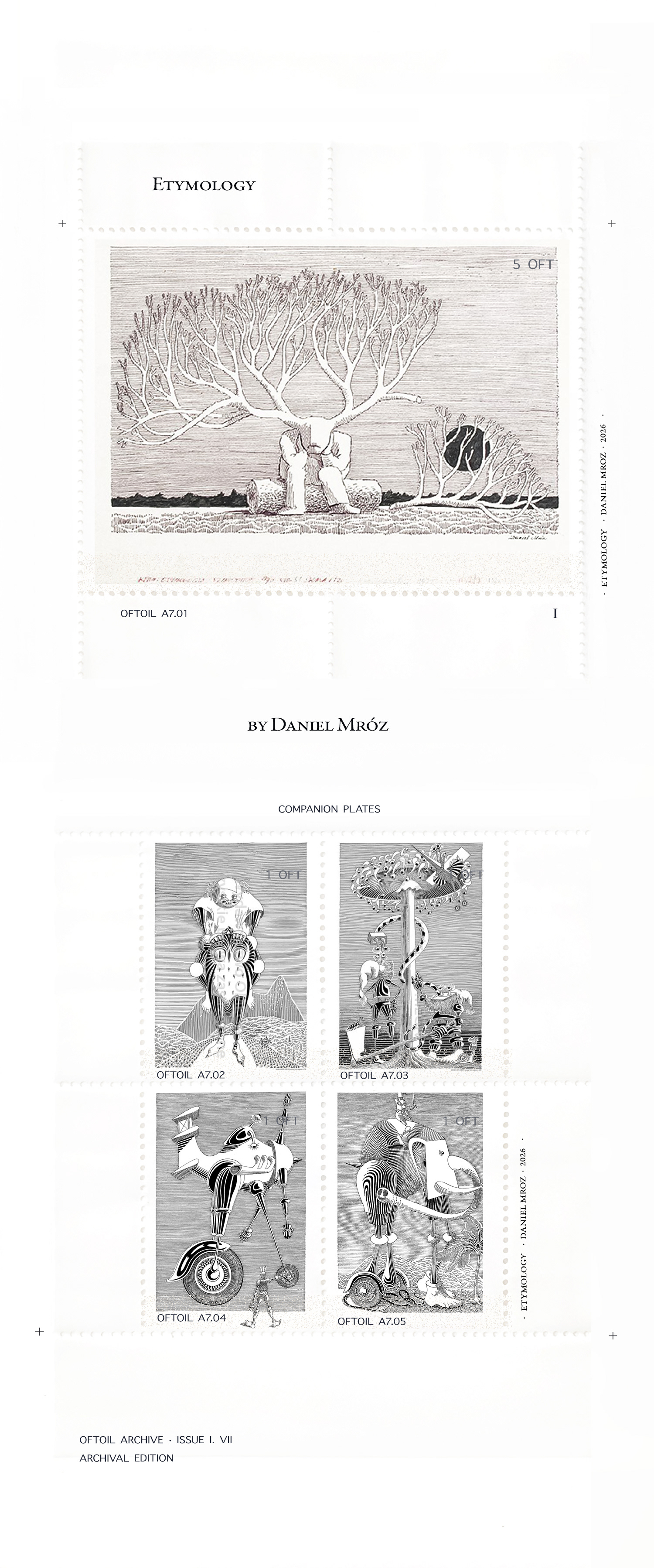
A meditation on origins and transformation. Organic forms branch into impossible structures, suggesting that language, nature, and imagination emerge from the same invisible root.
Rather than illustrating a story, Mróz visualizes an idea. Growth becomes metaphor, and every branching line proposes that meaning itself evolves—quietly, unpredictably, and without final definition.
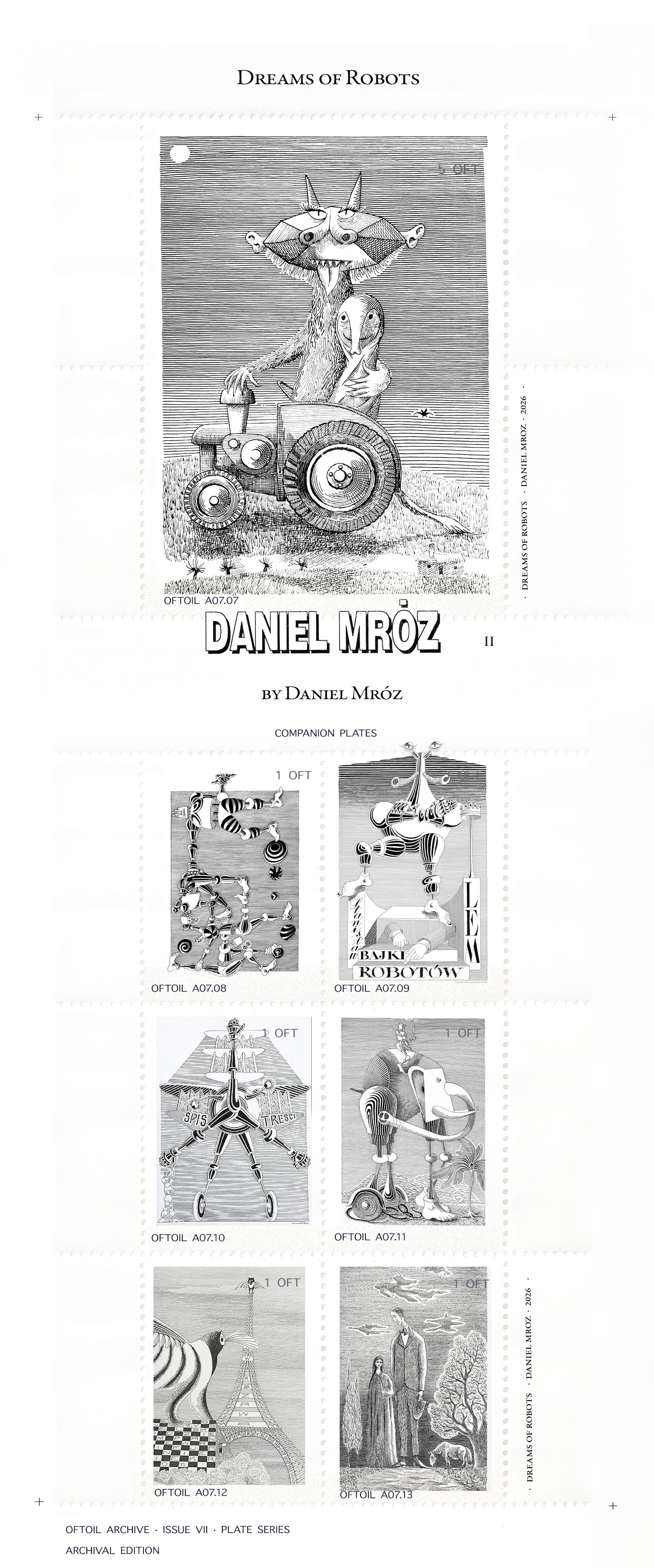
Mechanical beings abandon utility for poetry. Here, invention becomes character, and technology discovers humour, melancholy, and the peculiar tenderness of dreams.
Long before artificial intelligence entered everyday discourse, Mróz imagined machines capable of absurdity, vulnerability, and contemplation. Their mechanical anatomy conceals unmistakably human questions about identity, purpose, and consciousness.
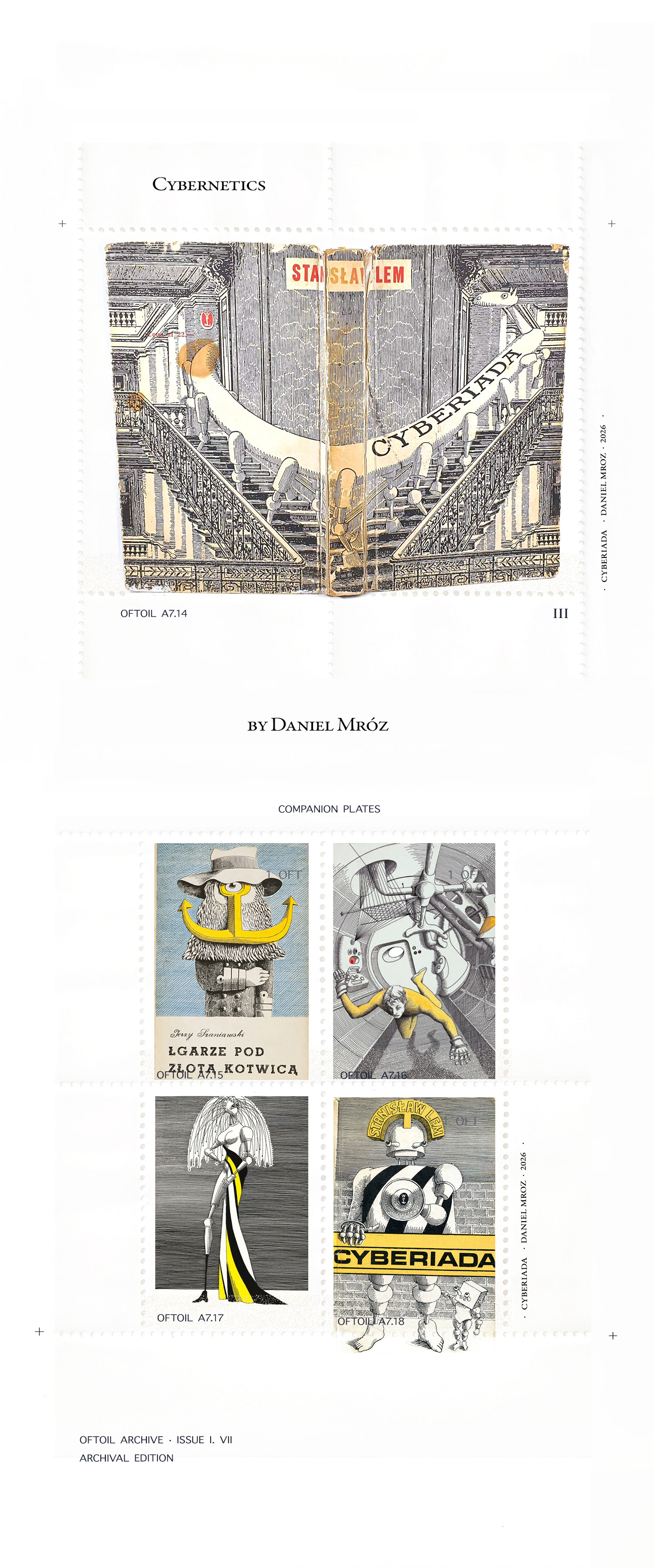
Reason and fantasy converge within an architecture of intricate line. Scientific imagination is rendered with playful elegance, dissolving the boundary between engineering and myth.
The composition reflects Mróz’s enduring fascination with systems—whether technological, social, or philosophical. Every mechanical element appears logically constructed, yet together they produce a reality governed less by calculation than by imagination, where invention becomes a form of visual philosophy.
Daniel Mróz reminds us that illustration need not explain—it can speculate. His drawings remain timeless because they refuse literal interpretation, inviting viewers into worlds where intellect and imagination operate as equals.
Within the ofToil Archive, these plates preserve one of the twentieth century’s most distinctive graphic voices: precise in execution, inexhaustible in invention, and enduring in its capacity to reward every careful look.
Images & words courtesy of Daniel Mroz