“Elegance is a refusal.”
— Coco Chanel
Chanel distilled modernity into a discipline of subtraction. Ornament gives way to line; excess yields to precision. In her world, style is not accumulation but decision—what remains after everything unnecessary has been removed.
Across decades, that principle holds: the body liberated, the silhouette clarified, the object reduced to its essential gesture. Black, white, gold—materials and tones arranged with architectural restraint—become a language that reads instantly, yet never exhausts itself.
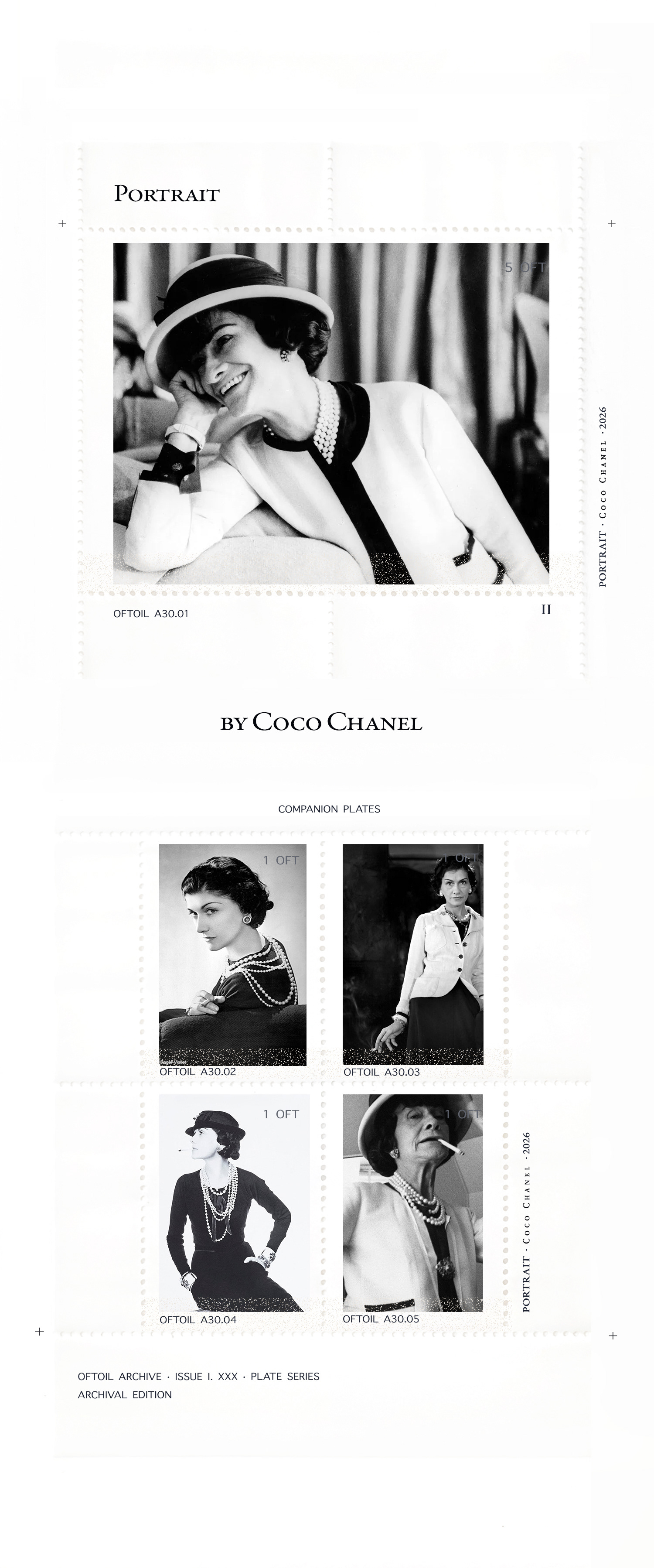
A study in authorship: the figure as origin and code. The hat’s curve, the strand of pearls, the poised hand—each element rehearses a vocabulary that would later define a house.
he portrait is less likeness than manifesto. Composure becomes structure; attitude becomes design. The image fixes a presence that is at once intimate and untouchable.
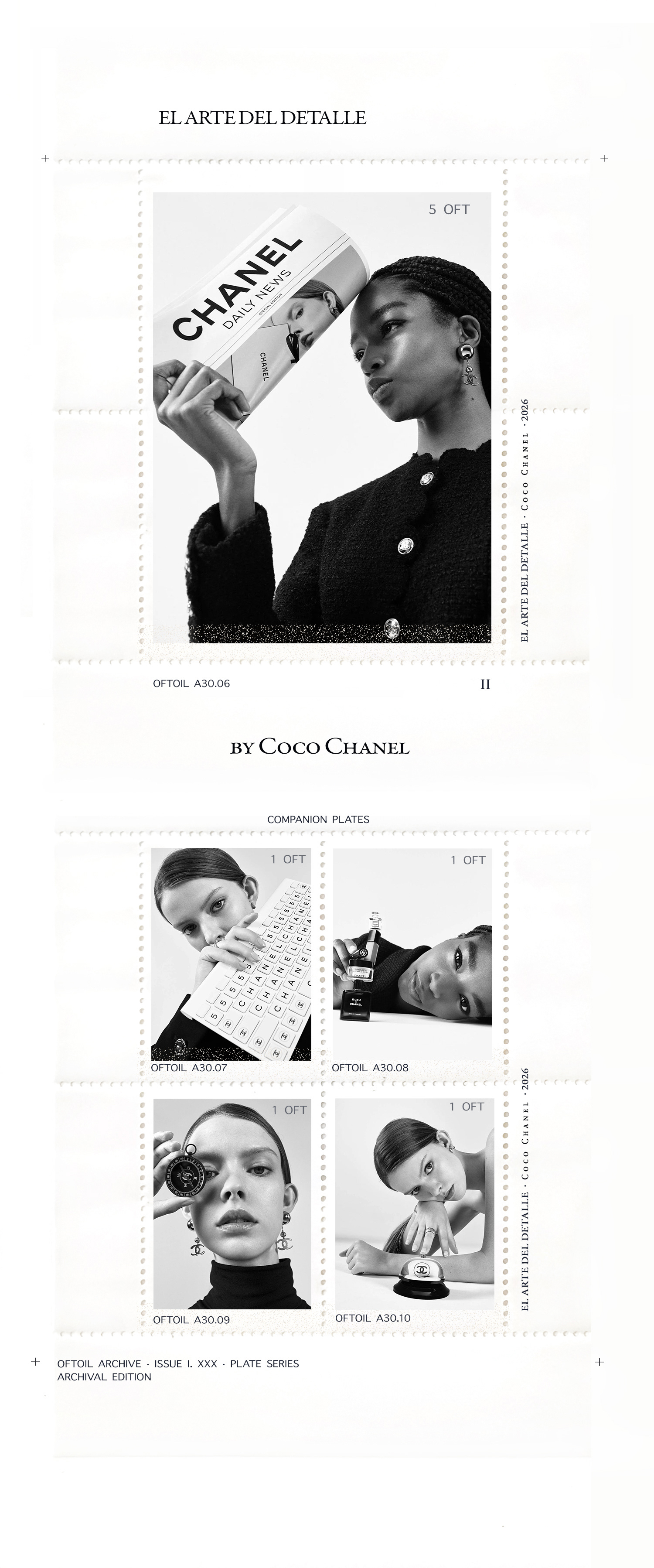
Detail here is not decoration but calibration. Buttons, stitching, surface—each resolves the whole with quiet authority.
Precision accumulates invisibly. What appears effortless is the result of exacting control, where every small decision reinforces the larger order.
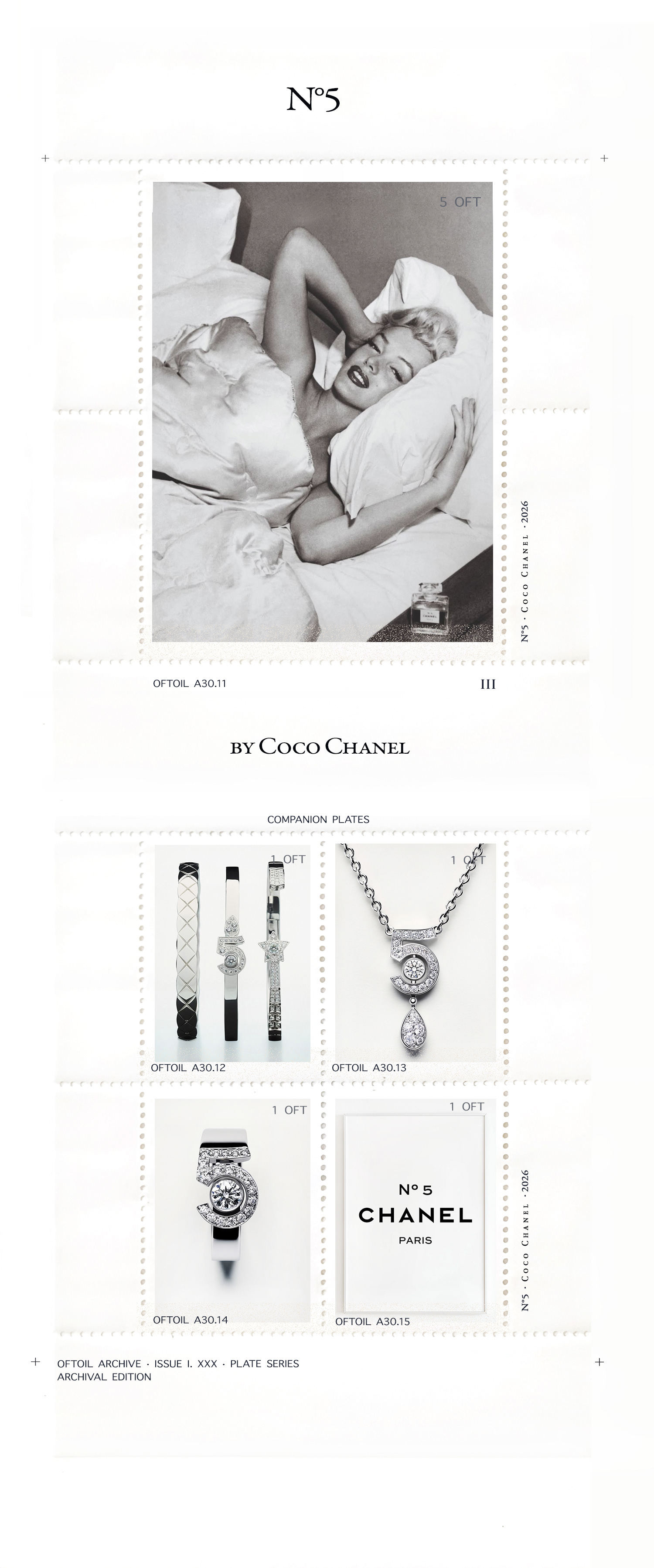
The bottle: geometry as identity. A clear vessel, a measured label—form pared down until it becomes inevitable.
Desire is abstracted. The fragrance is unseen; the object carries its aura. Minimalism, here, is not absence but concentration.
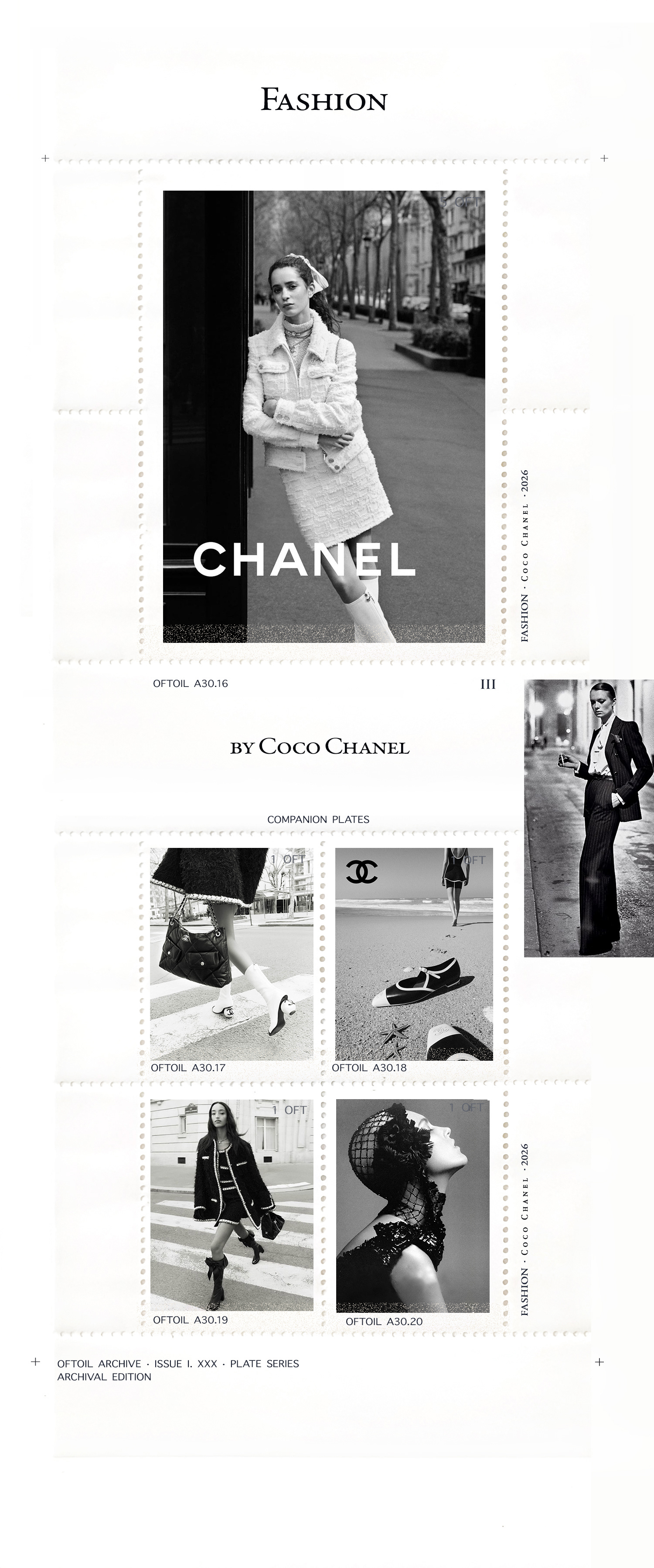
Movement completes the garment. The street, the stride, the shifting light—clothes tested in life rather than display.
The codes persist—tweed, contrast, ease—yet adapt without strain. Continuity is achieved not by repetition, but by fidelity to principle.
Chanel’s legacy is a grammar of restraint. It teaches that luxury resides in clarity, that power lies in editing, and that time favors what is decisively made. In a culture of excess, her work endures as a measured line—drawn once, and held.
Images and words courtesy of