"like a crazy dream you just can't shake. At the center of it all, there's a furious little heart that pumps equal parts vitriol and grace."
- Karen Campbell, The Boston Globe
In the work of Zoe Juniper, the body is neither subject nor instrument, but a permeable site through which the world quietly passes. Her practice unfolds across open terrains—shorelines, grasses, exposed ground—where movement is not imposed upon the landscape, but drawn out of it. Gesture emerges as a form of attunement: a listening made visible. Limbs extend into atmosphere, register pressure, yield, recalibrate. What appears composed is in fact contingent, shaped by the subtle agencies of air, gravity, distance—forces that do not declare themselves, yet inscribe every motion.
Her dance resists sequence and culmination. It gathers in states rather than phrases—held only insofar as they can remain legible before dispersing again into the field from which they arise. Form becomes temporary coherence, a fleeting articulation within a larger continuum of change. Across the work, the body does not perform for the environment; it is continuously rewritten by it—its presence thinning, thickening, dissolving—until what remains is not choreography, but a condition: a body briefly made visible within the weather of the world.
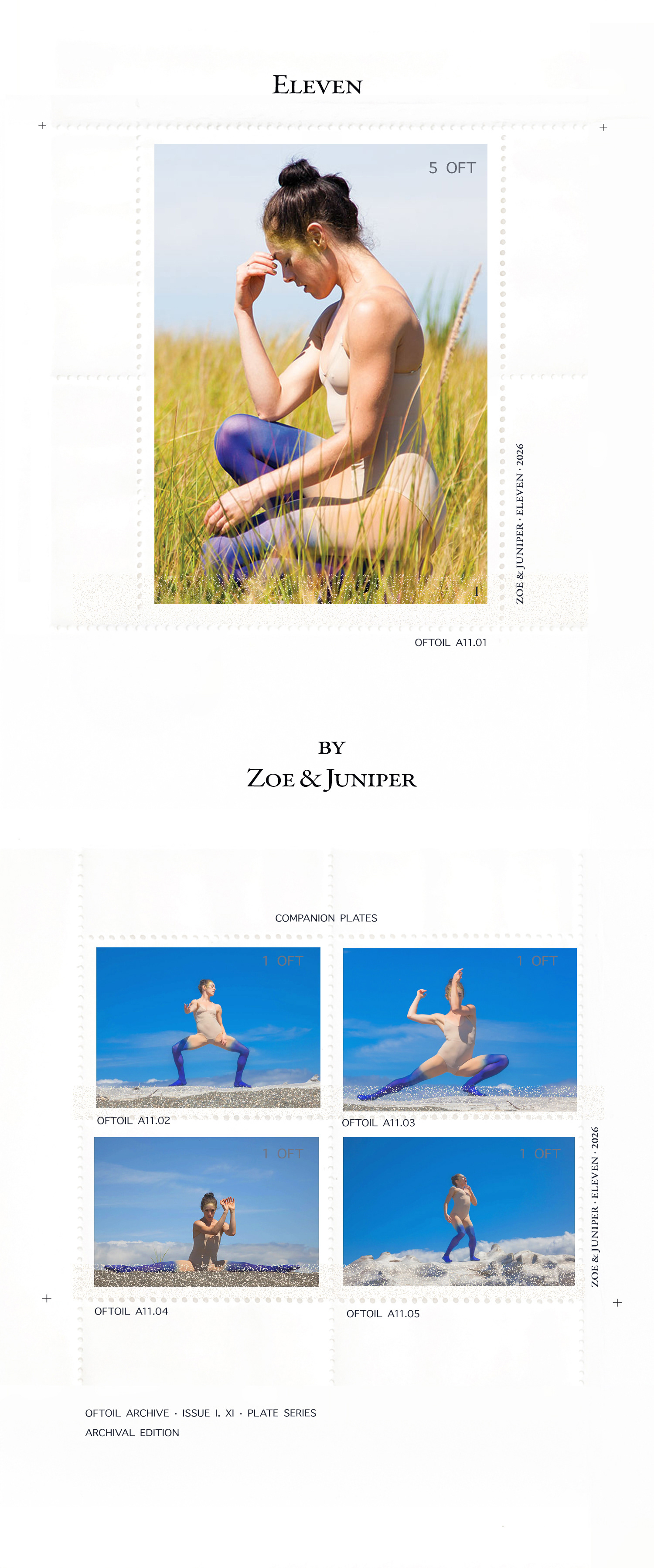
A figure drawn taut against the horizon—
not placed within the field, but attuned to it.
In Eleven, Zoe Juniper composes with air, with distance, with the quiet pressure of ground beneath an extended line. The body becomes a kind of instrument—calibrated, listening—its limbs registering the subtle insistence of gravity, the slight drift of atmosphere.
Balance is not achieved; it is courted.
The gesture does not resolve; it lingers in suspension, a held note thinning into space.
What remains is neither movement nor stillness, but a condition—
a fleeting concord between body and world, already dissolving as it appears.
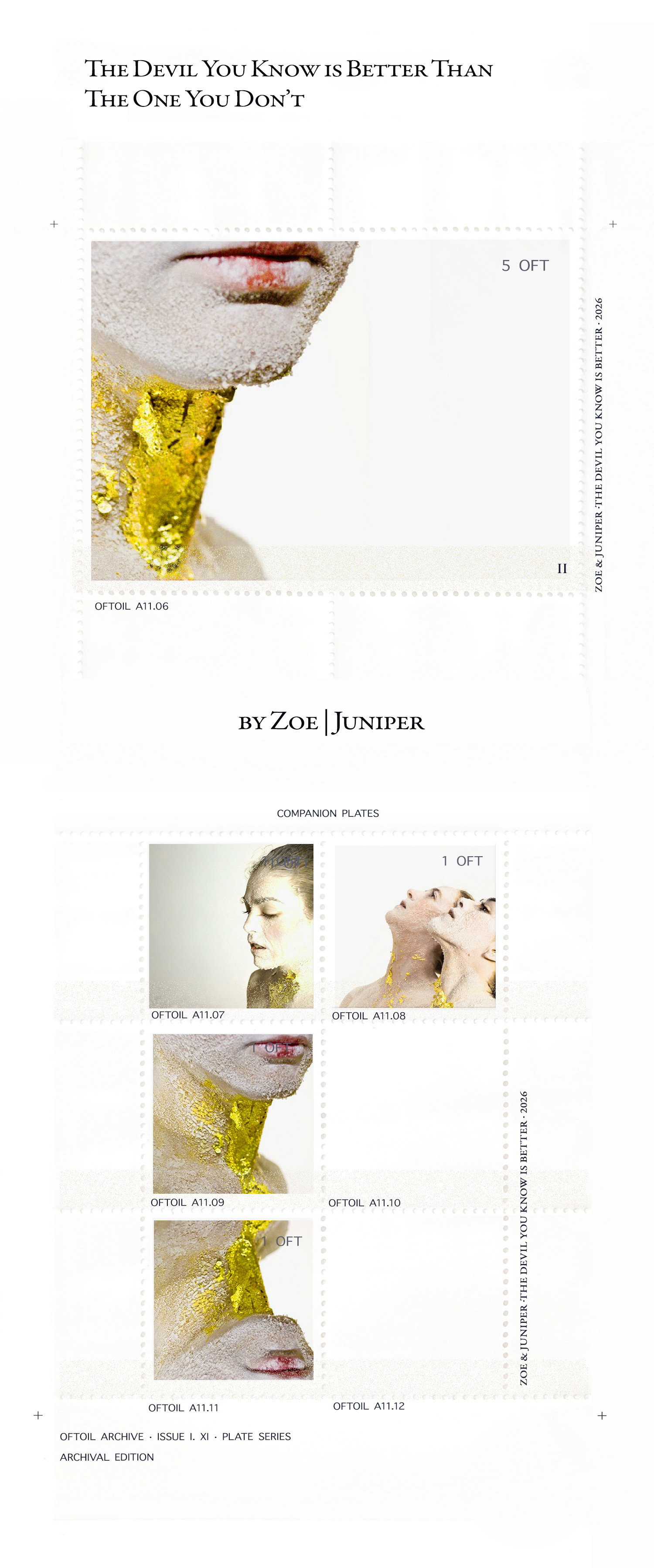
The critically acclaimed the devil… combines Scofield’s disciplined physical distortion of classical technique with Shuey’s distilled visual design to create a heightened sense of reality. Supported by Morgan Henderson’s hypnotic, original score incorporating live sound design by Kamran Sadeghi, and lighting by Jessica Trundy, the devil…. creates a world shaped by accumulating, external forces as the company delves into a haunting physical space shaped by brutality and grace.
The Stranger has called it “a beastly ballet, both harrowing and gorgeous.” -Brendan Killey. the devil… includes a ghost like corps de ballet of ten local pre-professional dancers auditioned and rehearsed in each city, including students at University of Washington, Walnut Hill School for the Arts in Boston, and Barnard in New York.
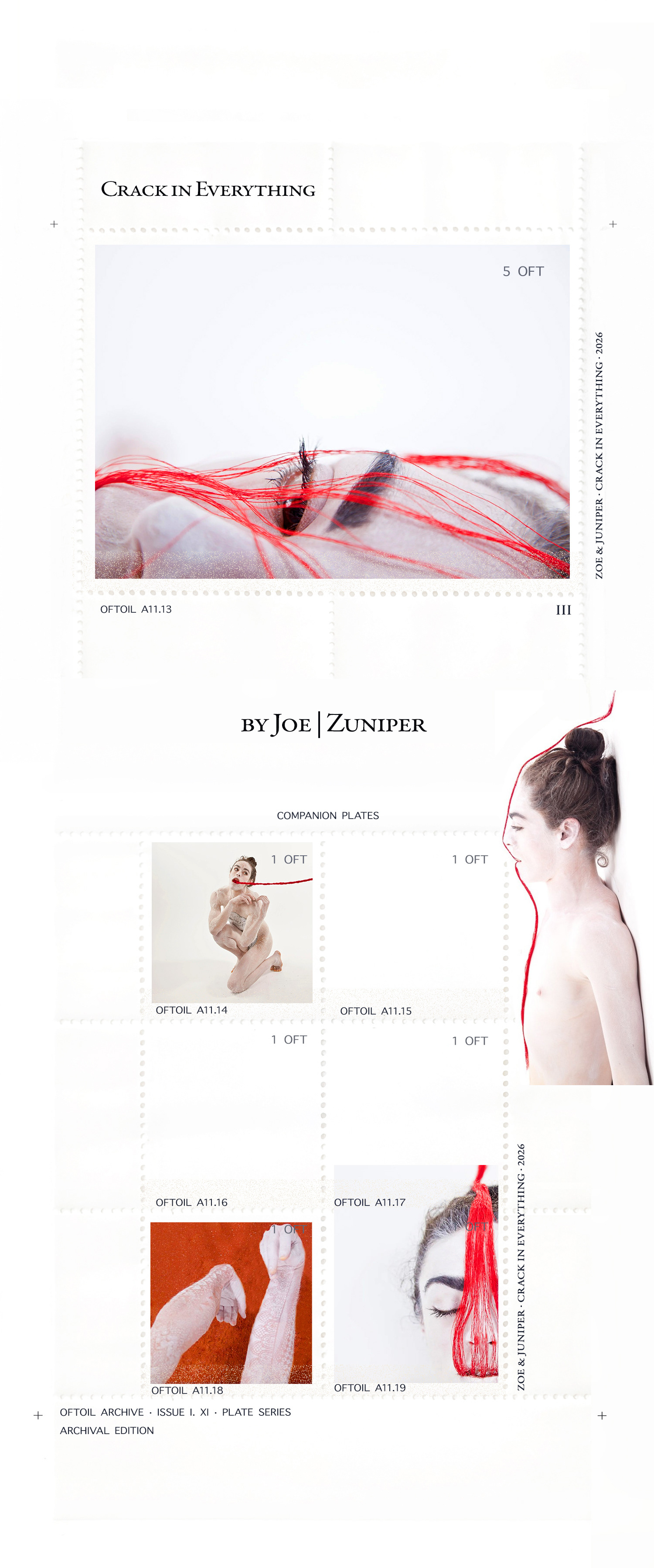
About the Zoe | Juniper:
Zoe | Juniper work at the threshold where body, image, and atmosphere become inseparable. Movement is treated not as choreography alone, but as sculpture in time—flesh crossing light, gesture entering space, emotion translated through surface, breath, and rhythm. Across these plates, the human figure appears by turns elemental, fractured, luminous, and fiercely present.
Their practice resists the old division between dance, theatre, photography, and installation. Instead, each discipline is folded into a single visual language in which vulnerability can become architecture and motion can become memory. What remains after viewing is not a sequence of poses, but a heightened awareness of the body as instrument: fragile, expressive, defiant, and endlessly capable of transformation.