“Made by Forest is a project based on the concept of imprinting the forest atmosphere into the elements of contemporary product and graphic design.”
— Vyrobeno Lesem
— Vyrobeno Lesem
Forests have always supplied materials for human culture, but Vyrobeno Lesem asks a quieter question: can a forest become more than a source of timber? Can its atmosphere, scent, memory and patterns become design material in themselves? Conceived by a collective of Czech designers, artists and makers, the project abandons the industrial logic of extracting resources and instead proposes an intimate dialogue between object and landscape. Rather than representing nature, these works attempt to translate its presence into contemporary design.
The project’s conceptual starting point references Koert van Mensvoort’s observation about a child recognising the smell of pine shampoo before recognising the smell of an actual forest—a reflection on how media increasingly mediates our experience of nature. Against this inversion, Vyrobeno Lesem returns to direct sensory encounters. Wood grain, resin, bark, needles, moss, fungi and glass become not decorative motifs but carriers of memory. Each object becomes an attempt to preserve something inherently impossible to manufacture: the atmosphere of the forest itself.
Vyrobeno Lesem
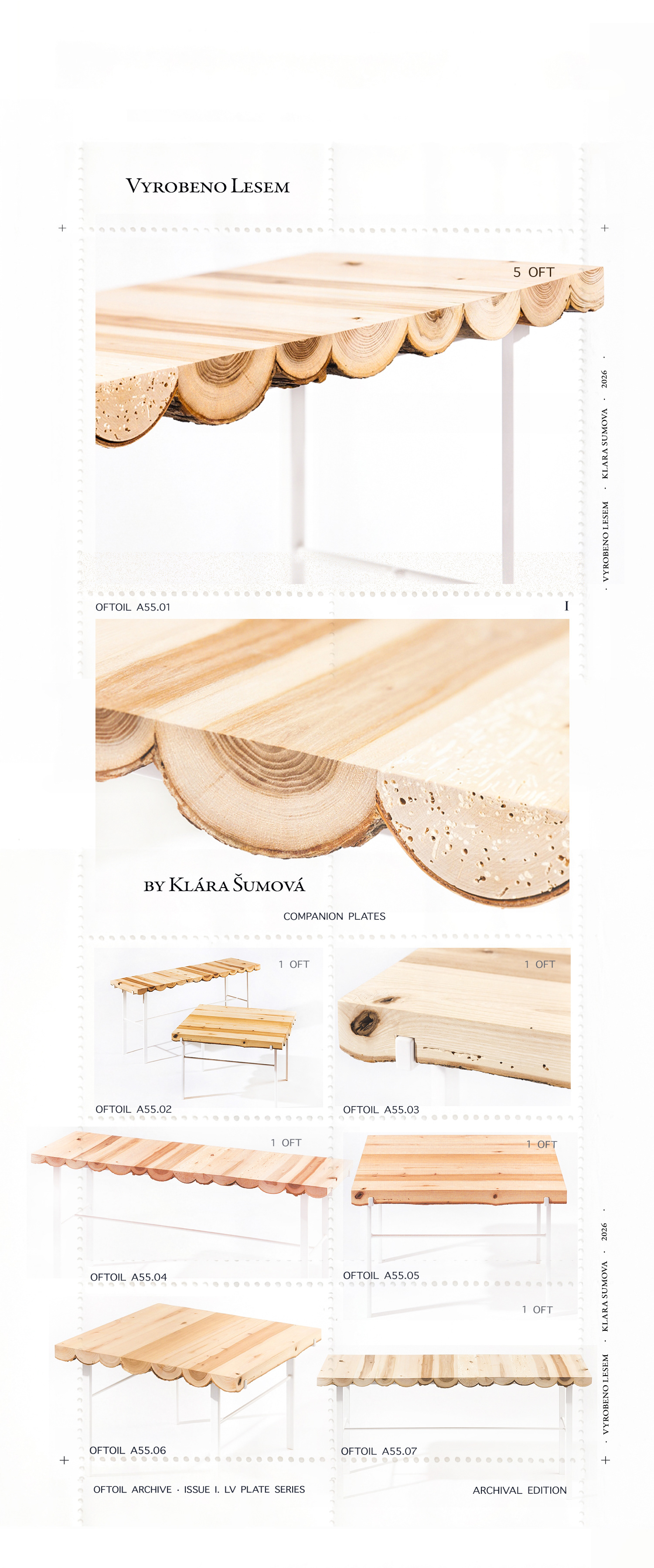
Klára Šumová’s furniture investigates one of the oldest tensions in woodworking: the transformation of a living tree into an ordered, architectural object. Rather than concealing the origin of timber beneath perfect geometry, these tables deliberately preserve the tree’s anatomy. Annual rings, bark edges and natural irregularities remain visible, allowing industrial fabrication and biological history to coexist within a single surface.
Across the series, furniture becomes less a finished product than a carefully framed section of woodland. White steel structures provide deliberate restraint while the timber retains its organic identity. The accompanying studies reveal construction as an act of editing rather than domination, celebrating the quiet dignity of material left recognisable. The resulting works occupy the rare space between contemporary furniture, forestry and landscape documentation.
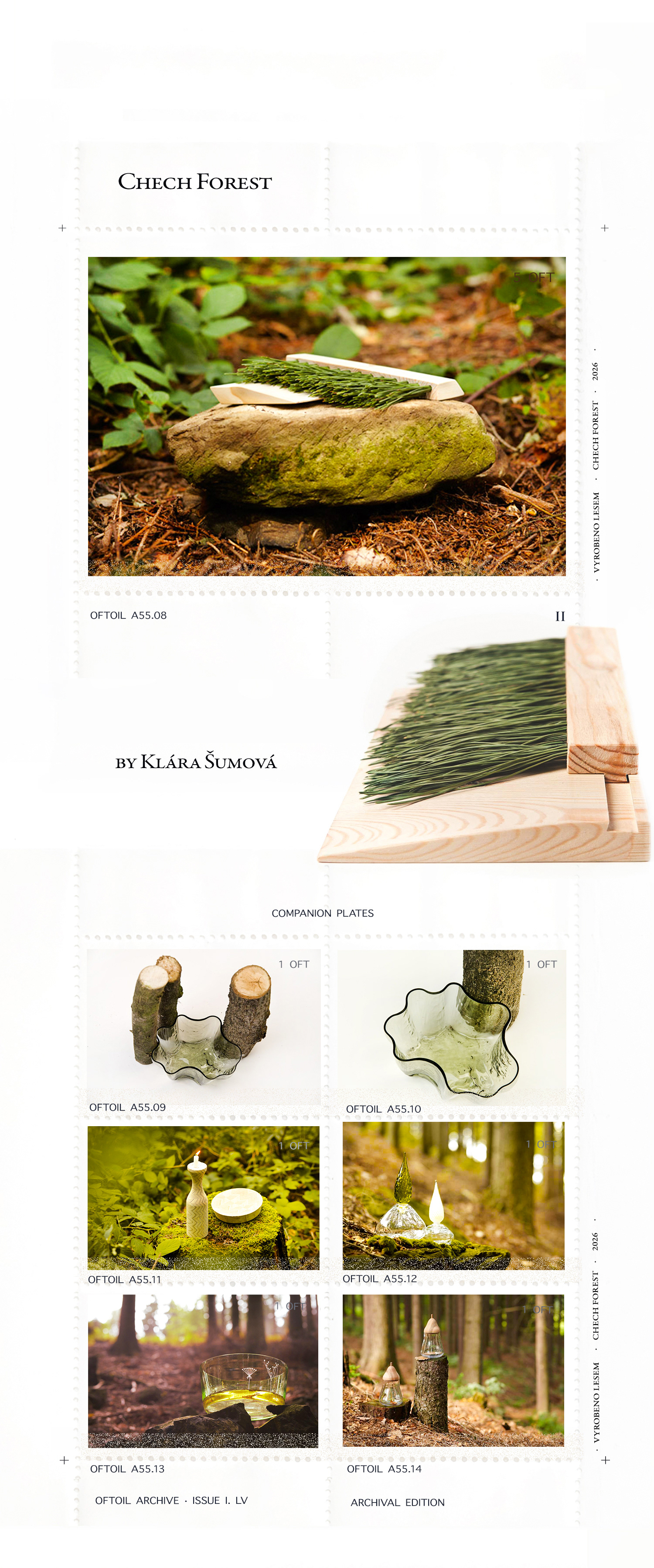
Czech Forest
Michaela Tomišková & Michal Bačák
The second plate shifts from furniture to experience. Designed by Michaela Tomišková and Michal Bačák, these objects seek to preserve the rituals and sensory encounters of walking through a Czech forest. Rather than producing conventional household products, the designers translate fragments of woodland into vessels, lighting, serving objects and poetic instruments that invite observation rather than consumption.
Glass, untreated wood and natural forms remain deliberately understated, allowing the surrounding environment to complete each composition. Several pieces appear almost unfinished until placed outdoors, where moss, bark, stones and filtered light become active participants. The collection quietly dissolves the distinction between designed object and natural setting, suggesting that good design may sometimes consist of knowing when to disappear.
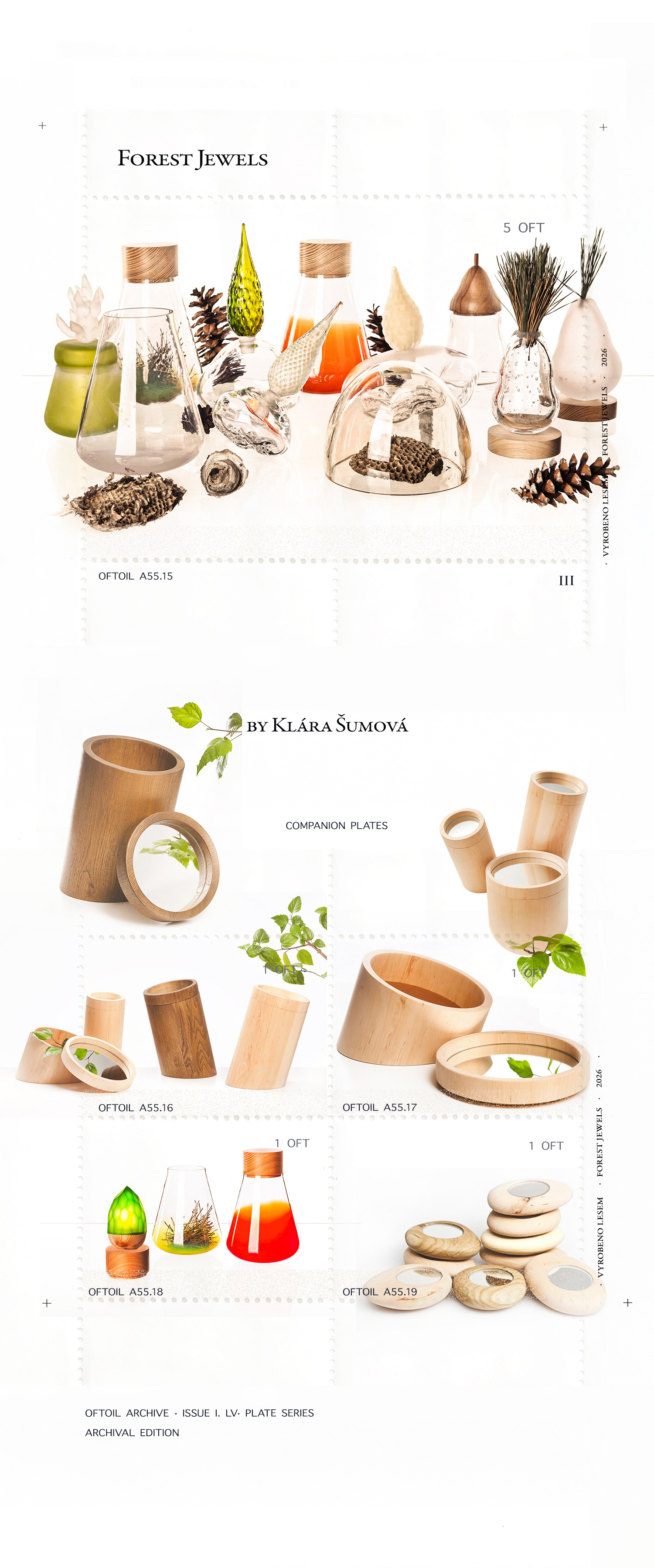
Forest Jewels
Klára Šumová
If the first plate works at the scale of furniture, Forest Jewels turns to the intimate scale of the hand. Klára Šumová assembles vessels, containers and luminous objects that borrow their vocabulary from cones, seeds, fungi, droplets and forest undergrowth. Glass, turned wood and carefully restrained colour evoke specimens collected during a walk rather than products arranged within a catalogue.
Although each object functions independently, the archive preserves them as a unified cabinet of contemporary curiosities. Their restrained forms encourage close inspection, rewarding attention to grain, transparency, texture and proportion. Like botanical collections of previous centuries, these pieces invite viewers to observe familiar natural phenomena anew, revealing how ordinary forest fragments can become objects of lasting contemplation.
Vyrobeno Lesem belongs to a growing movement within contemporary European design that values cultural ecology as highly as technological innovation. Rather than asking how nature can serve industry, the project reverses the relationship, asking how design might learn from the rhythms, imperfections and quiet intelligence already present in the landscape.
Within the Of.Toil Archive, these plates record an important moment in contemporary Czech design: one in which material culture becomes inseparable from environmental memory. Their significance lies not simply in beautifully crafted objects, but in proposing that the forest itself can remain the true author—design acting only as translator.
Words & images courtesy of respective owners and Vyrobeno Lesem