“If photography is my voice, then colour is my language..”
— Teresa Freitas
The photography of Teresa Freitas exists in a suspended state between reality and imagination. Using colour as both atmosphere and structure, Freitas transforms architecture, interiors, coastlines and still life into luminous studies of softness and calm. Her pastel compositions dissolve the noise of contemporary life into something slower, quieter, and deeply cinematic.
Working with natural light and delicate tonal palettes, she constructs images that feel less observed than remembered — fragments of places filtered through emotion, nostalgia, and dream. Across the Pastels series, colour becomes a language of stillness.
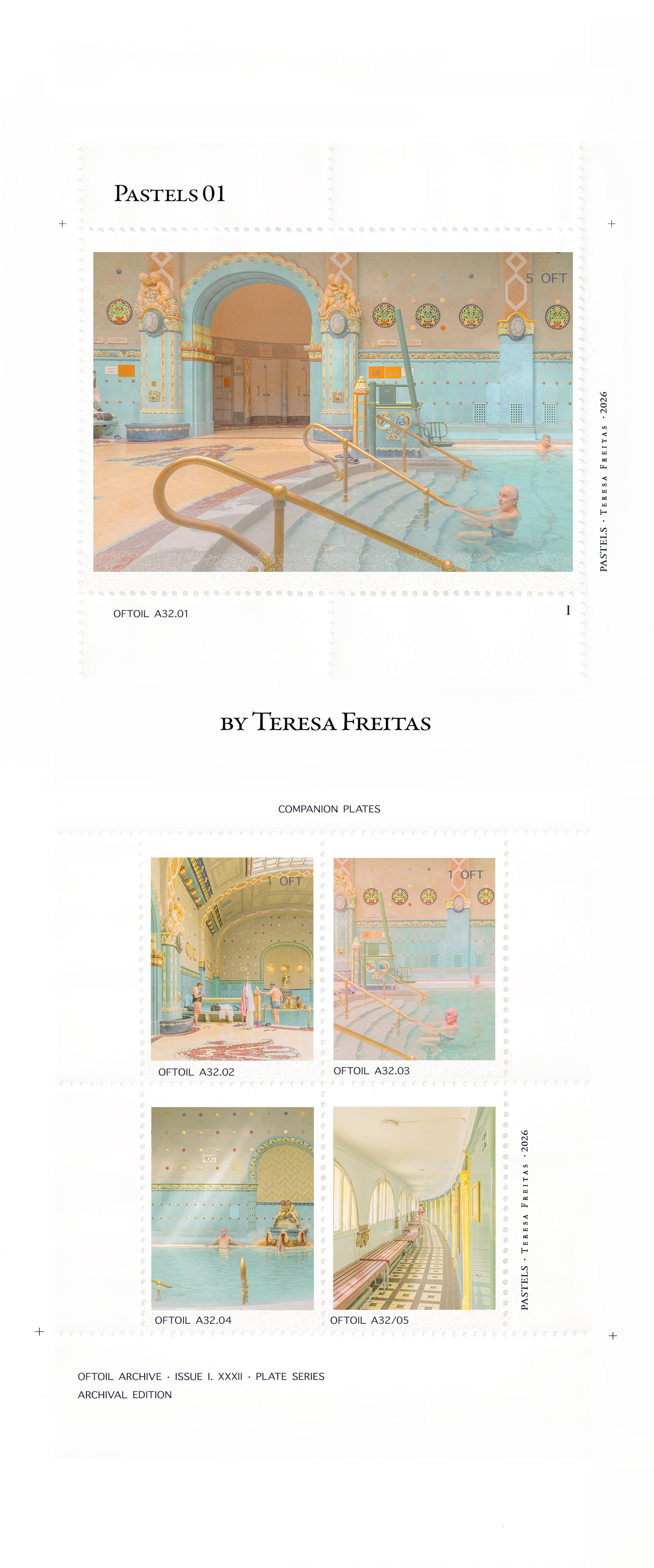
Pastel becomes atmosphere in the work of Teresa Freitas.
Architecture dissolves into memory; water, tile, sunlight and silence soften into a dreamlike register where the world appears almost hand-painted. Her photographs do not document space as much as suspend it — somewhere between cinema, nostalgia, and stillness.
Architecture dissolves into memory; water, tile, sunlight and silence soften into a dreamlike register where the world appears almost hand-painted. Her photographs do not document space as much as suspend it — somewhere between cinema, nostalgia, and stillness.
In this series, colour behaves gently yet deliberately. Powder blues, faded creams, mint greens and pale golds transform ordinary places into emotional landscapes. The images carry the calm of early morning light — transient, quiet, almost fragile — inviting the eye to slow down and remain.
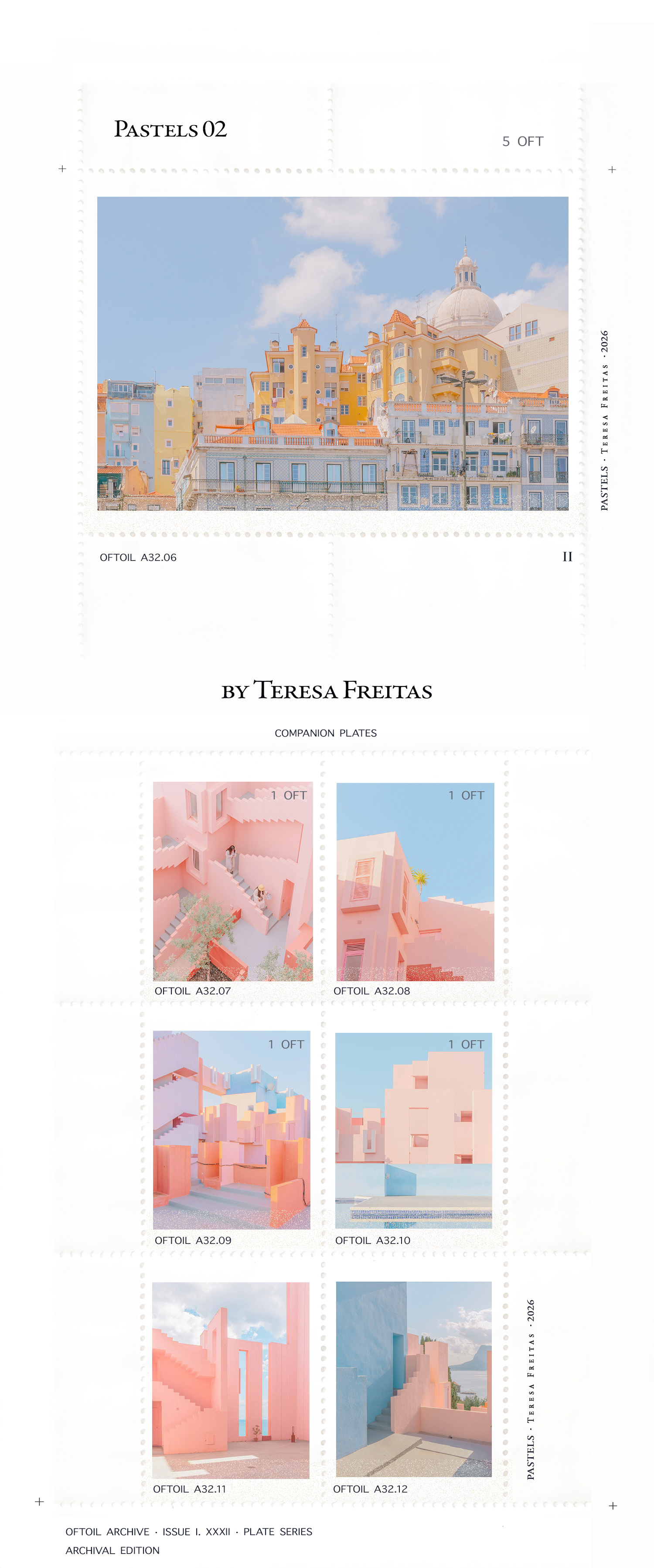
Cities in Teresa Freitas’s work feel reconstructed through memory rather than geography. Buildings flatten into blocks of pink, peach and sky blue, reducing architecture into rhythm, shadow, and colour. The result is both graphic and atmospheric: a modernist postcard softened by light.
Her compositions balance precision with softness. Staircases, windows, rooftops and corridors become geometric arrangements washed in pastel haze, where sunlight erases harshness and replaces it with serenity. These are spaces emptied of urgency — environments designed for wandering rather than arrival.
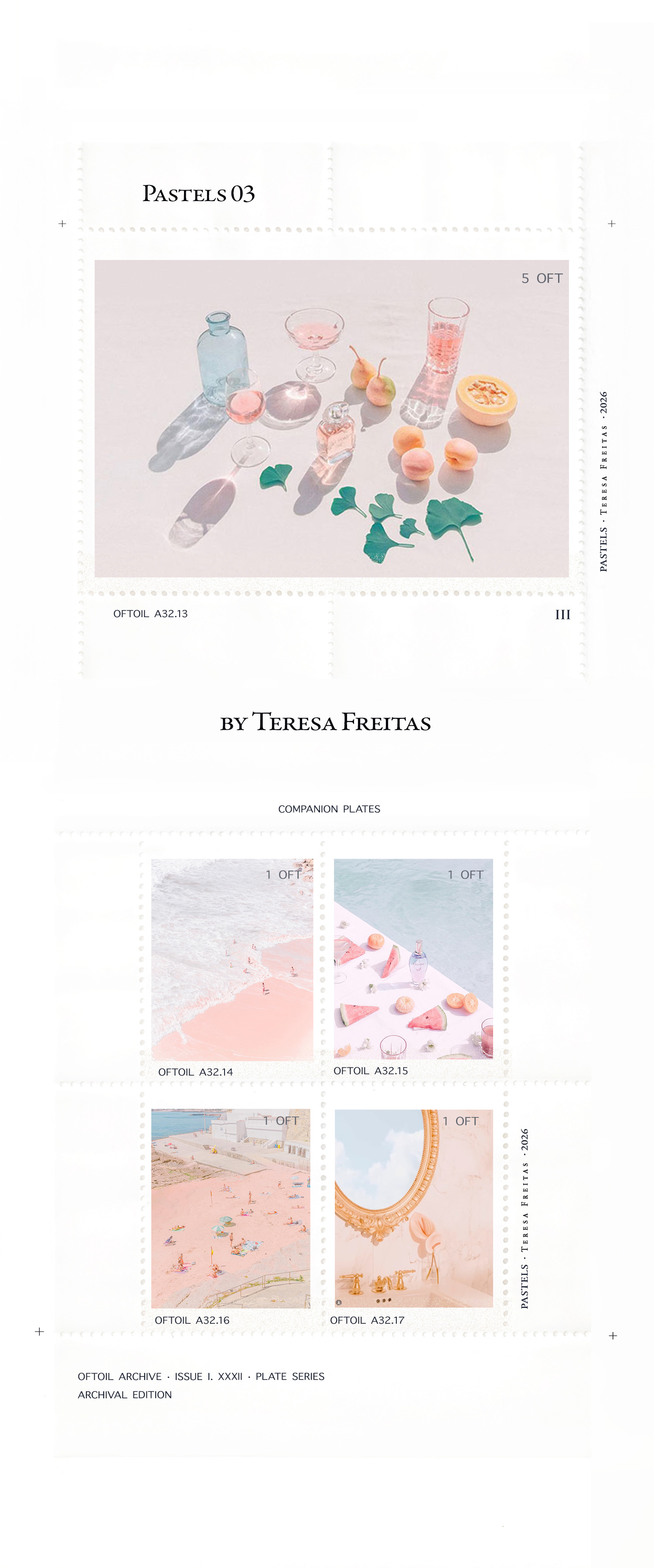
Still life becomes seasonal poetry in the work of Teresa Freitas. Fruit, glass, seafoam and botanical fragments are arranged with painterly restraint, transforming everyday objects into studies of colour and luminosity. Shadows stretch delicately across surfaces like traces of passing time.
Across the series, Freitas treats colour not as decoration but as emotional structure. Pink sand, translucent reflections and pale coastal light merge into compositions that feel simultaneously tactile and distant — photographs suspended between reality and reverie.
In an era saturated by visual excess, Teresa Freitas offers restraint. Her photographs do not demand attention through spectacle, but through atmosphere — inviting the viewer into spaces shaped by light, silence, and tenderness.
The Pastels series reveals how colour alone can alter perception: turning ordinary architecture into abstraction, everyday objects into reverie, and fleeting moments into enduring visual memory.