“The world is very, very beautiful if you look at it, but most people don’t look very much.”
— David Hockney
Few artists have devoted themselves so completely to the act of seeing.
Across six decades, David Hockney transformed ordinary subjects—swimming pools, country roads, hedgerows, sunlight, water, and trees—into enduring studies of attention. His work rejects cynicism in favor of observation, revealing beauty not as fantasy, but as something already present in the world.
Whether depicting California pools or the changing seasons of Yorkshire, Hockney’s images remain unmistakable: luminous, immediate, and alive with color. They remind us that looking carefully is not passive—it is an act of participation.
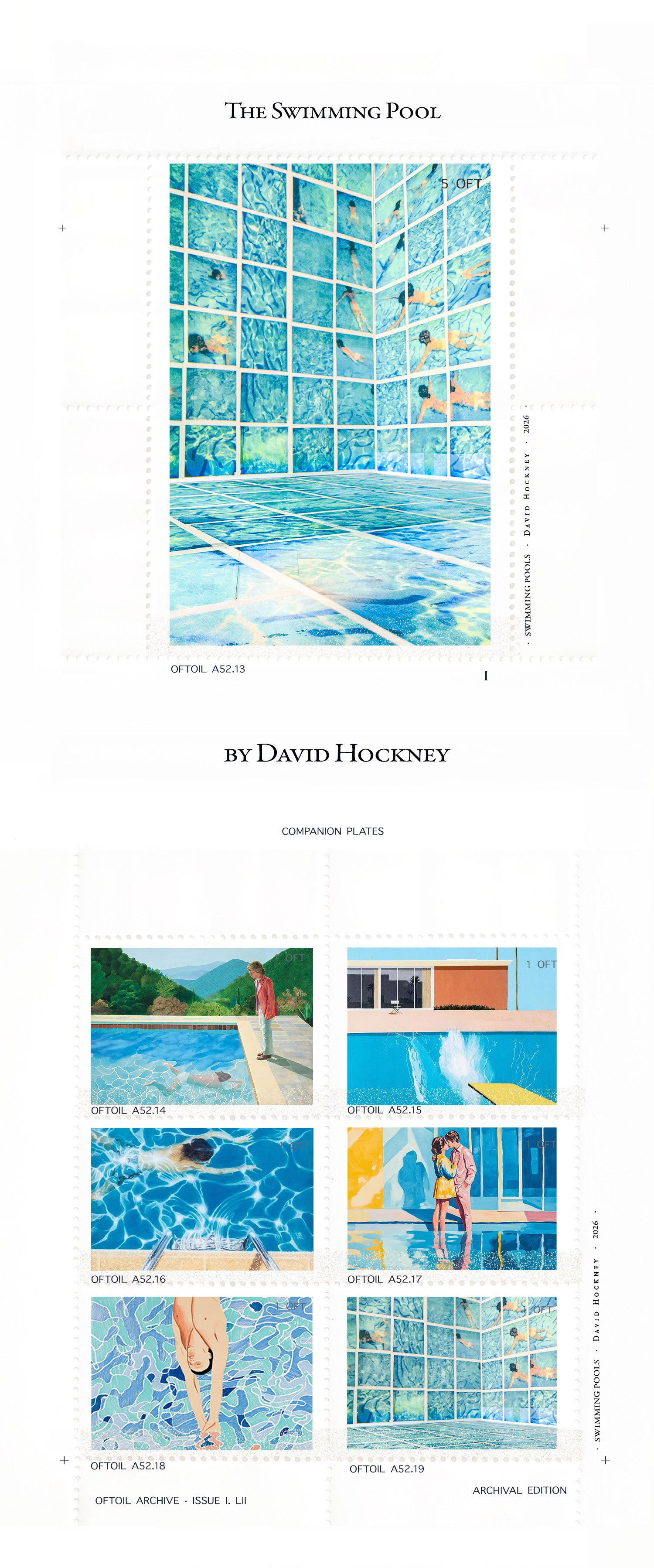
Perhaps Hockney’s most recognizable subject, the swimming pool became a laboratory for studying light, reflection, and movement. Water offered a paradox: a surface constantly changing yet endlessly observable. Through it, Hockney found a visual language for modern life, leisure, and California’s radiant atmosphere.
The pool paintings endure because they capture something more than water. They preserve a fleeting moment where light, geometry, and human presence become perfectly balanced.
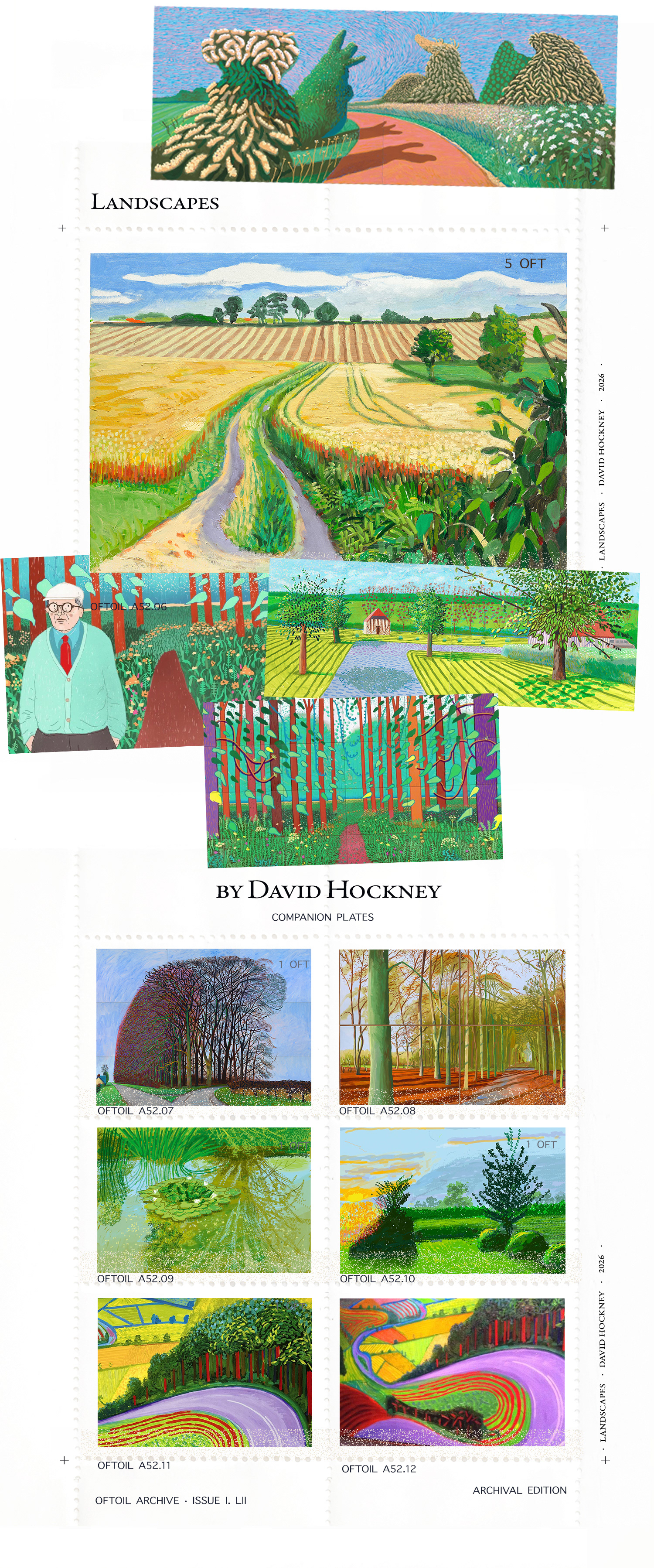
For Hockney, landscape is not scenery but structure—a living arrangement of color, rhythm, and space. Roads curve like brushstrokes, fields become geometric compositions, and forests unfold as patterns of movement. The familiar countryside is reimagined through sustained observation.
These works reveal a landscape that is both real and remembered, filtered through a lifetime spent studying how the eye travels through the world.
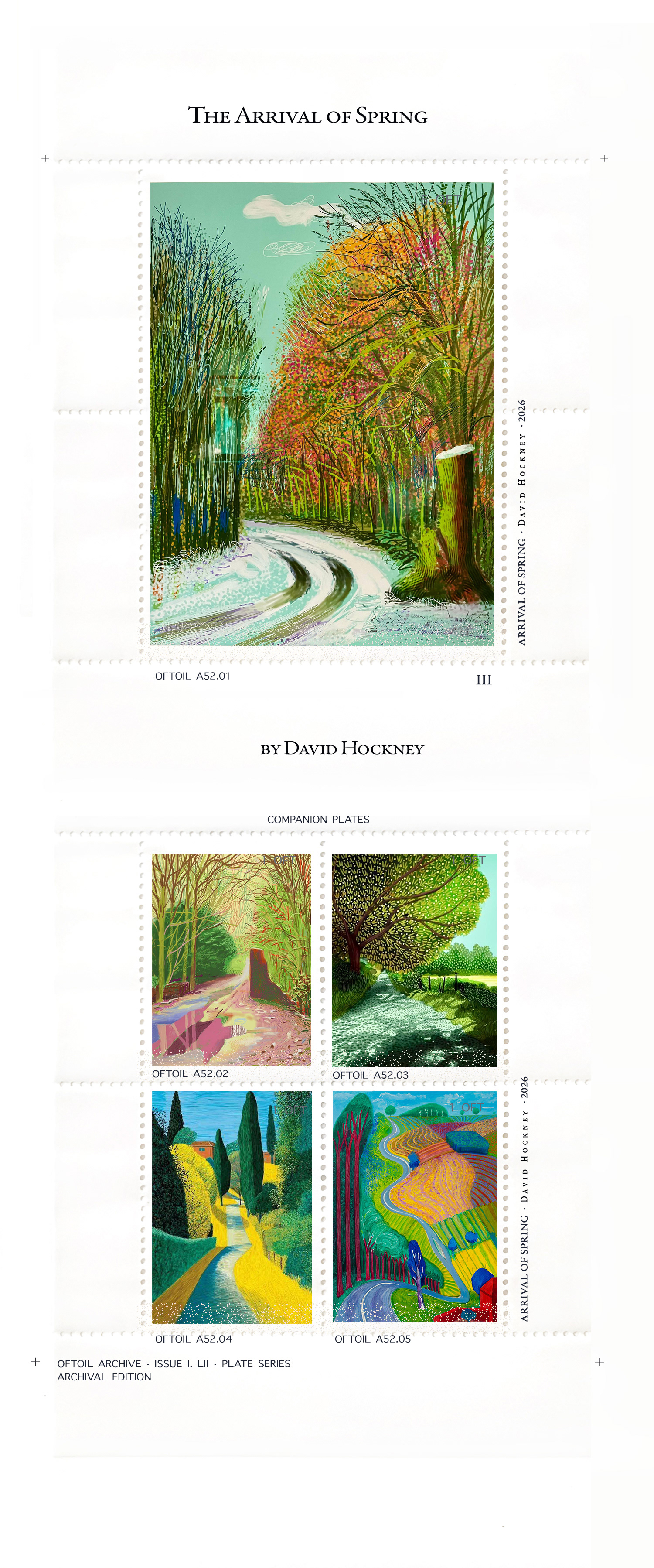
Created during the final winter months before spring’s return, this series documents the gradual awakening of the landscape. Working daily, Hockney recorded subtle shifts in light, color, and growth, transforming seasonal change into a visual diary of renewal. Each image becomes a record of time made visible.
Spring does not arrive all at once. It accumulates through thousands of unnoticed changes. Hockney’s achievement is not the depiction of nature, but the preservation of attention itself.
David Hockney’s work offers a rare proposition: that wonder can be found without leaving the everyday. A road, a tree, a shadow on water, or the arrival of spring may contain enough beauty for a lifetime of looking. His archive stands as a testament to observation—a reminder that the world continually reveals itself to those willing to pay attention.