
“Tradition survives not by remaining still, but by being carried forward by the hand.” — Oksana Boriychuk
Oksana Boriychuk’s jewelry revives vernacular ornament as living ritual rather than historical citation. Drawing from Hutsul material culture— brasswork, ceramic beads, woven tassels—her pieces preserve the tactile memory of celebration, harvest, and seasonal renewal.
The collections move between sacred object and personal adornment. White enamel recalls budding willow branches before Easter; hand-formed clay beads echo thawing earth and first blossoms emerging beneath snow. Brass carries warmth, weight, and continuity, while delicate imperfections preserve the trace of the maker’s hand.
These works do not imitate folk tradition from a distance. They continue it.
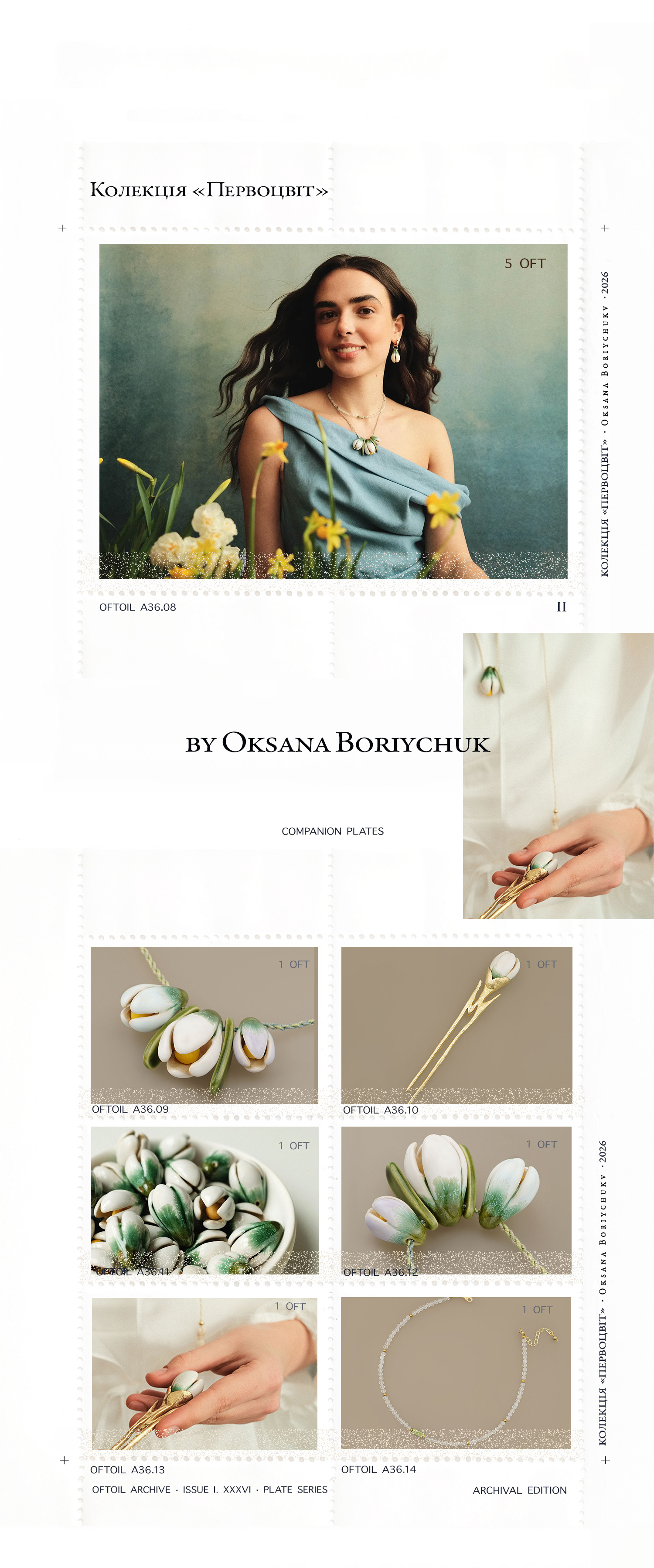
Колекція «Первоцвіт» – про пробудження землі, оновлення та ніжну силу.
Заквітчані вироби доповнені вручну сформованими та розписаними намистинами з білої глини. Їхні природні, трохи неідеальні силуети та м’яка палітра нагадують перші знаки весни, що з’являються з-під снігу. Усередині кожної – крихітна намистинка, що ніжно дзеленчить у русі та відсилає до давньої гуцульської прикраси – шелестів.
У наших пращурів рання весна знаменувала початок нового кола життя. Землю сприймали як живу істоту, що взимку спить, а навесні пробуджується. І з першими пелюстками первоцвітів приходить сила оновлення.
Pervotsvit speaks of the earth emerging from winter dormancy. Hand-shaped white clay beads, intentionally irregular, resemble the first flowers breaking through frozen ground.
Within each bead, a small hidden element produces a quiet sound in motion, recalling ancient Hutsul shelests. The object becomes animate: not only seen, but softly heard.
Авторська підвіска "Дідух" виготволена з литва латуні, кутасики та стрічка – плетені вручну.
* Колір прикраси може дещо відрізнятися, в залежності від індивідуальних налаштувань та кольоропередачі екрану Вашого мобільного пристрою чи комп'ютер
The Didukh pendant condenses ancestral symbolism into a singular form. Cast in brass and finished with handwoven tassels and ribbon, it recalls the ceremonial sheaf carried through Ukrainian winter traditions.
Here ornament functions as continuity. The object becomes less accessory than portable inheritance.

Here the flower presses against the optical skin of the vase, producing a softened field of repetition and blur. The bloom becomes atmospheric rather than botanical.
Surface overtakes subject. Texture itself carries the image, transforming decoration into spatial experience.
The Op-Vase proposes that design can alter perception without abandoning utility. Saltik’s objects retain the familiarity of domestic forms while quietly destabilising the act of looking itself. The flower remains temporary; the distortion becomes the memory that endures.

Spring Tokens
The smaller elements—rings, ribbons, ceramic forms—operate like gathered fragments of a larger vernacular language. Each piece feels accumulated rather than designed in isolation, as though assembled through years of ritual use.
The smaller elements—rings, ribbons, ceramic forms—operate like gathered fragments of a larger vernacular language. Each piece feels accumulated rather than designed in isolation, as though assembled through years of ritual use.
Together they form a wearable treasury of recurring symbols: blossom, grain, light, renewal.
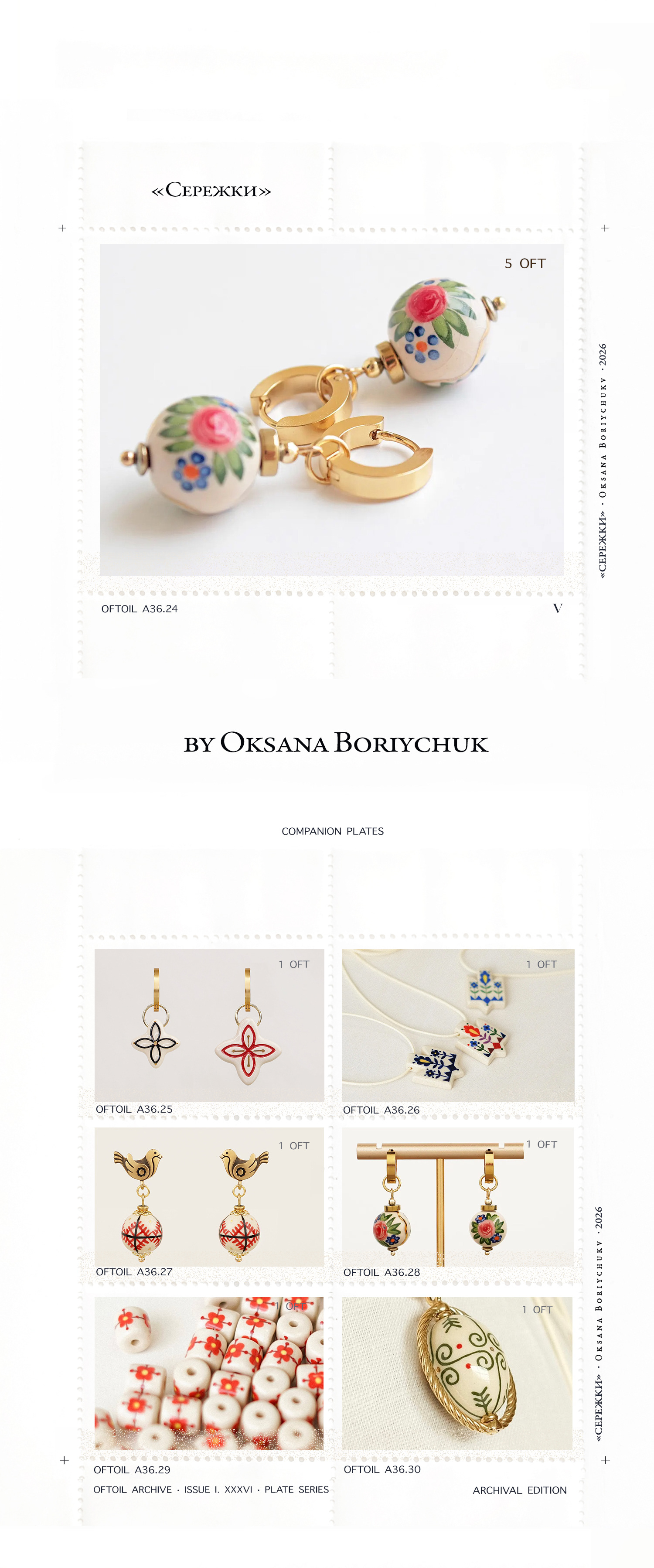
Boriychuk’s work demonstrates that folk ornament can remain contemporary without losing its ceremonial gravity. Through brass, enamel, clay, and woven detail, tradition is neither preserved behind glass nor reduced to nostalgia. It is reactivated—worn, sounded, carried forward into another season.
Words & images courtesy of Oksana Boriychuk


