
“It has to surprise, seduce and calm down.”
— Winy Maas
— Winy Maas
The Imprint transforms architecture into surface memory. Designed by MVRDV for Paradise City, the project rejects the isolated monument in favour of something more atmospheric: a building that absorbs its surroundings and reflects them back as relief, shadow, and illusion.
Without windows, the façade becomes narrative. Neighbouring structures are pressed into the concrete skin like traces left behind by pressure and time. Architecture here behaves less as enclosure than imprint—an urban surface carrying evidence of the city around it.
Below: The golden entrance interrupts the pale façade like a rupture in the surface. Geometry folds inward, transforming entry into spectacle.
Rather than applying ornament, the project manipulates the façade itself—stretching, compressing, and bending architecture until the building appears almost soft. Gold functions not as decoration but as atmosphere: a concentrated field of light embedded within the larger white relief.
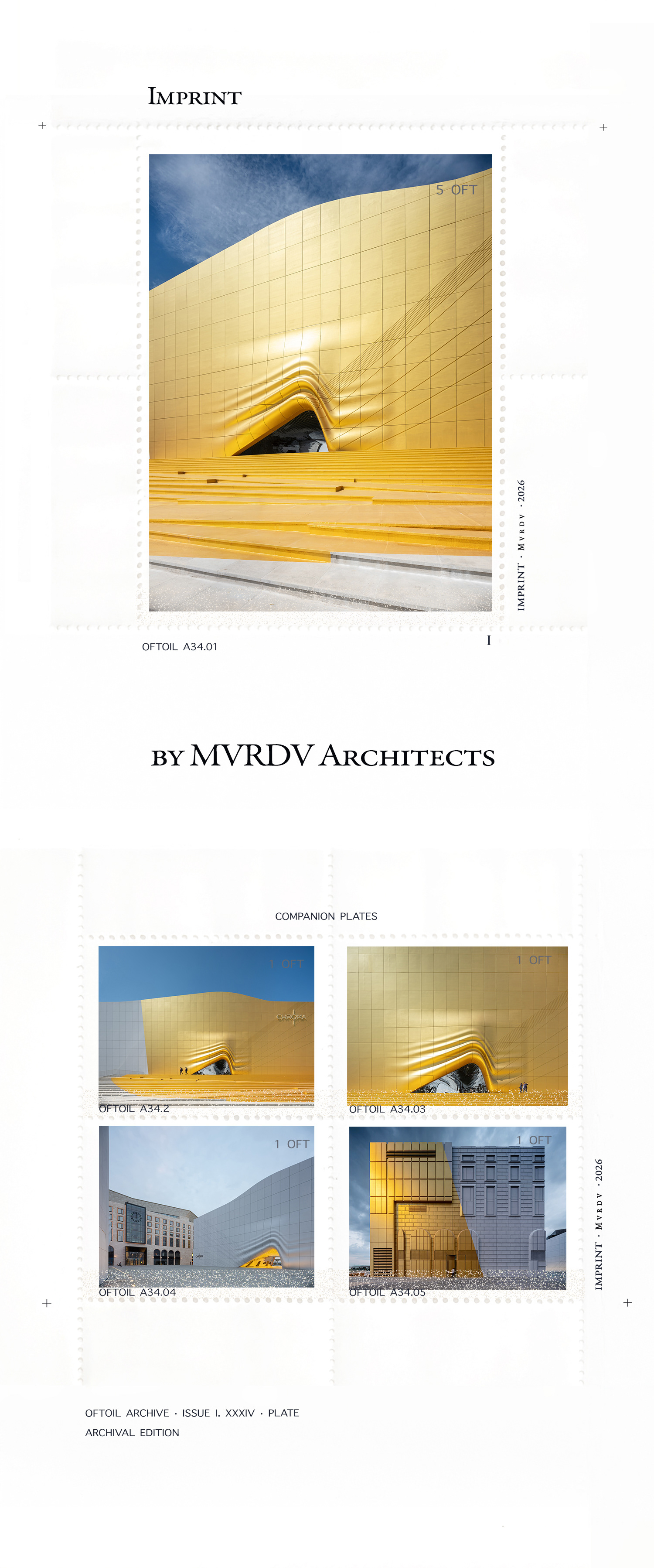
Below: Relief replaces transparency. Walls become embossed surfaces carrying fragments of neighbouring architecture, preserving the visual rhythm of the surrounding city.
The building behaves like a cast impression rather than a fixed object. Corners distort, façades drape downward, and shadow activates the structure across the day. Architecture is experienced not through openings, but through texture, depth, and movement.

Inside, reflection dissolves solidity. Mirrored ceilings, illuminated floors, and warped geometries transform the interior into theatrical space.
Light multiplies across surfaces until architecture becomes immersive rather than structural. Perspective destabilizes; scale becomes uncertain. The building no longer behaves as a container for entertainment, but as part of the performance itself.
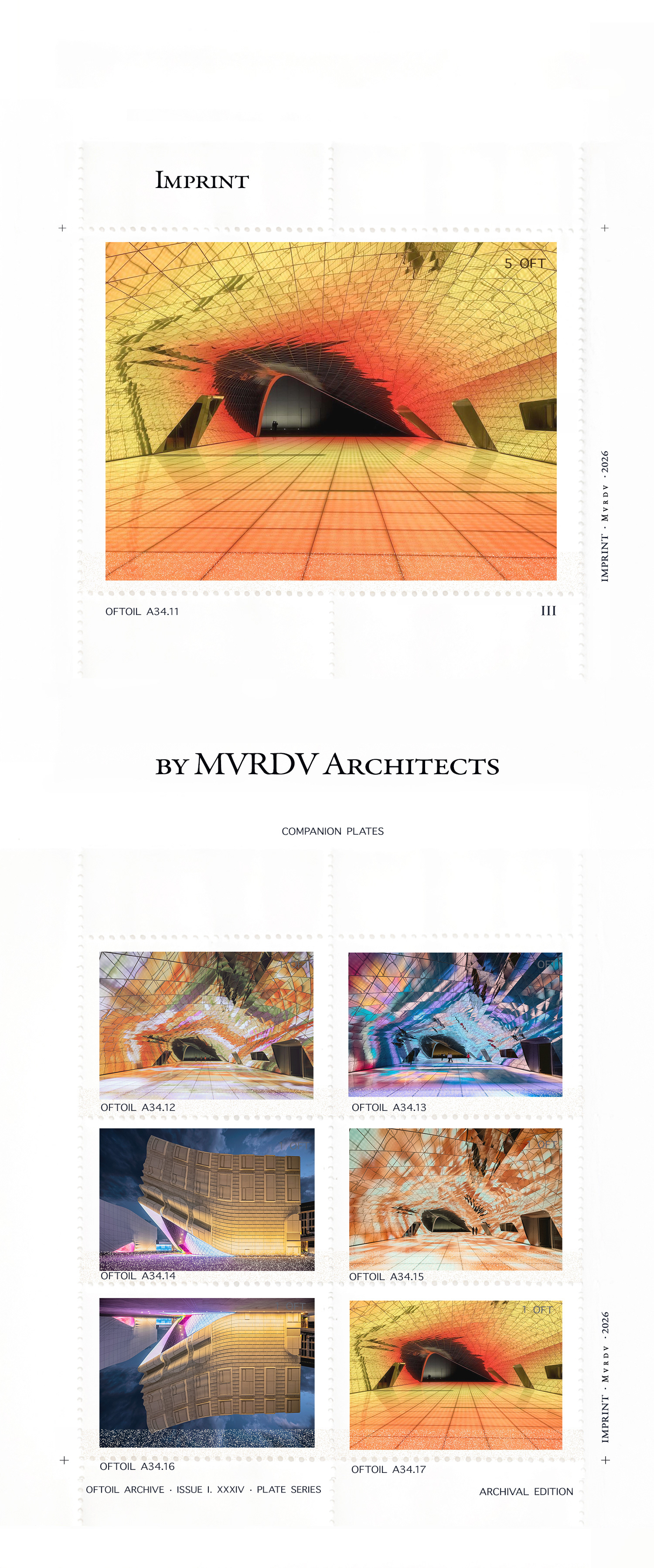
The Imprint proposes architecture as sensation rather than object. Surface replaces façade, reflection replaces monumentality, and atmosphere becomes structure.
In doing so, MVRDV creates a building that exists between city and mirage—an architecture designed not only to be seen, but to be experienced as visual memory.


