“I wanted to create something that appears alive only through the movement of the wearer—as though the atmosphere itself had become visible.”
— Maiko Takeda
— Maiko Takeda
The aesthetic of the collection is inspired by the futuristic mood of sound and imagery taken from Robert Wilson’s 1976 production of Philip Glass’ opera “Einstein on the Beach”, which Maiko saw during its reproduction in London during March 2012.
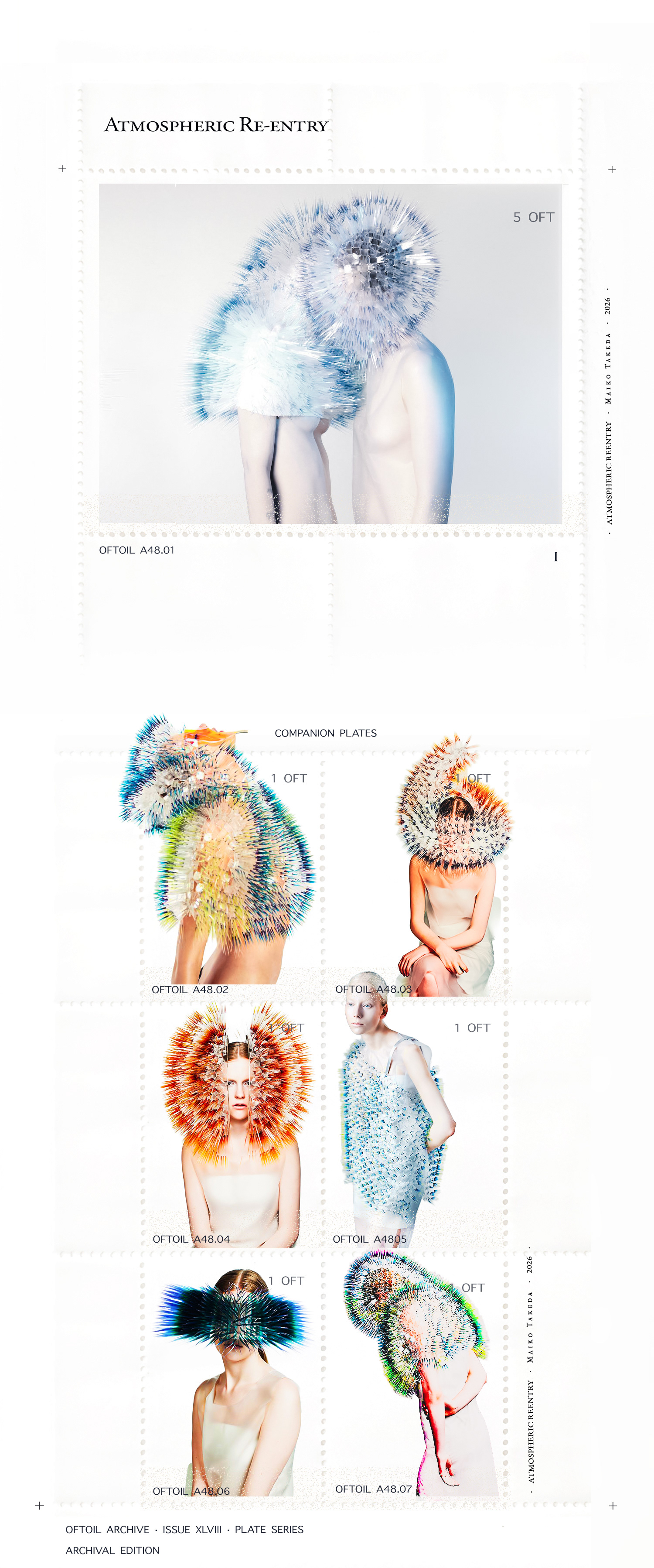
Maiko favors the use of conventional materials, with each piece a careful assembly of hundreds of spiky feather-like units constructed from clear acrylic discs, colour-gradient tinted film and silver jump rings, which are transformed into surreal and ethereal experiences for the wearer and the surrounding environment.
Some objects occupy space. Others reveal it.
Atmospheric Re-entry transforms the invisible dynamics of air into a material language. Thousands of transparent acrylic spikes tipped with iridescent color respond to the slightest movement, creating garments that appear to breathe, expand, and dissolve. Rather than clothing the body, the pieces extend its presence into the surrounding environment, making motion itself the subject.
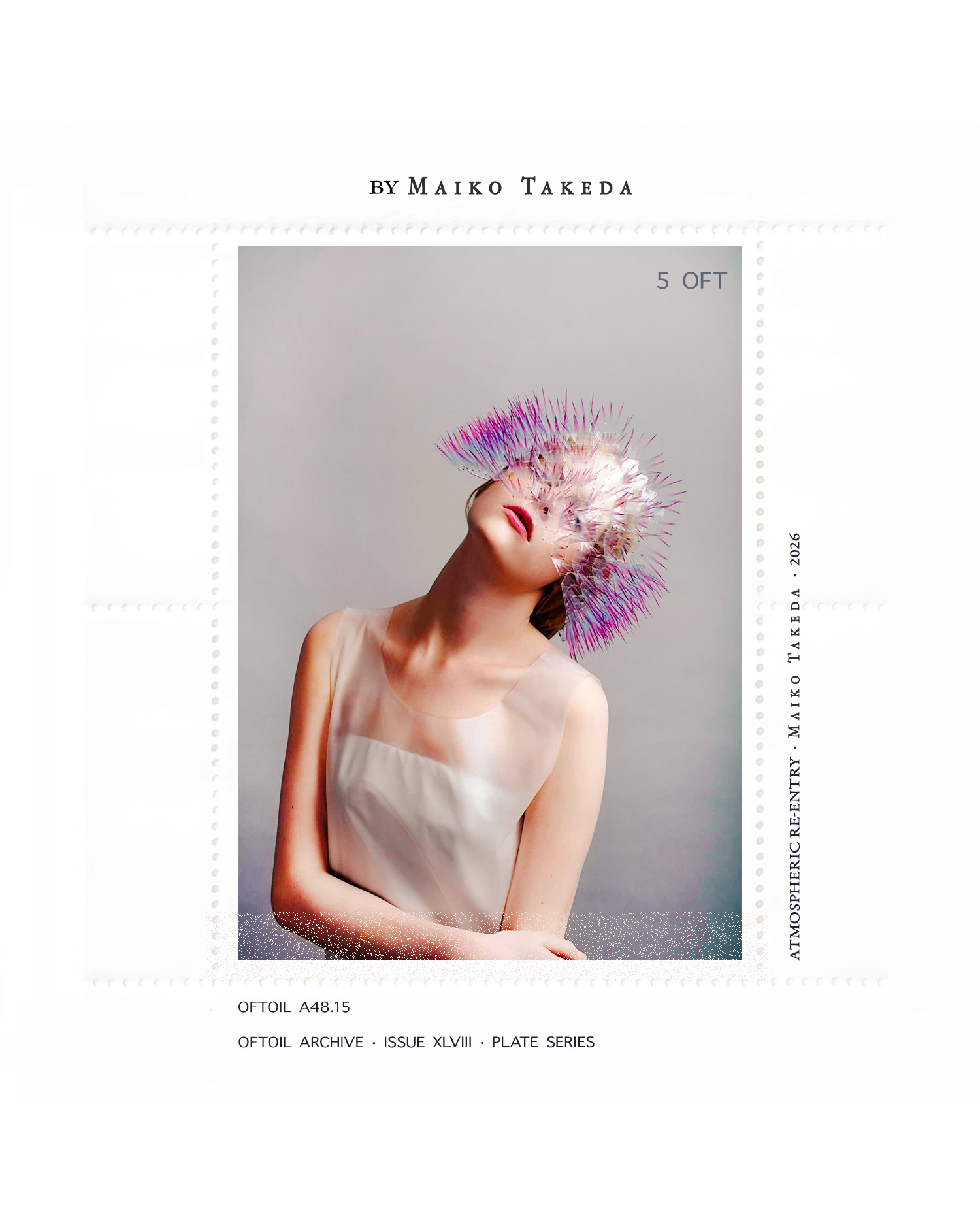
The collection borrows its name from the moment a spacecraft returns through Earth’s atmosphere—a violent encounter between matter and air translated into extraordinary delicacy. Each headdress and garment suggests turbulence without weight, protection without armor, and ornament without excess. They exist somewhere between biology, meteorology, and engineering, resembling sea creatures, seed heads, frost crystals, or charged particles suspended in light.
Takeda’s work dissolves familiar distinctions between fashion, sculpture, and installation. The wearer becomes a catalyst rather than a model; the pieces only fully exist through movement. They are not designed to complete an outfit, but to alter perception, making the surrounding atmosphere briefly visible.
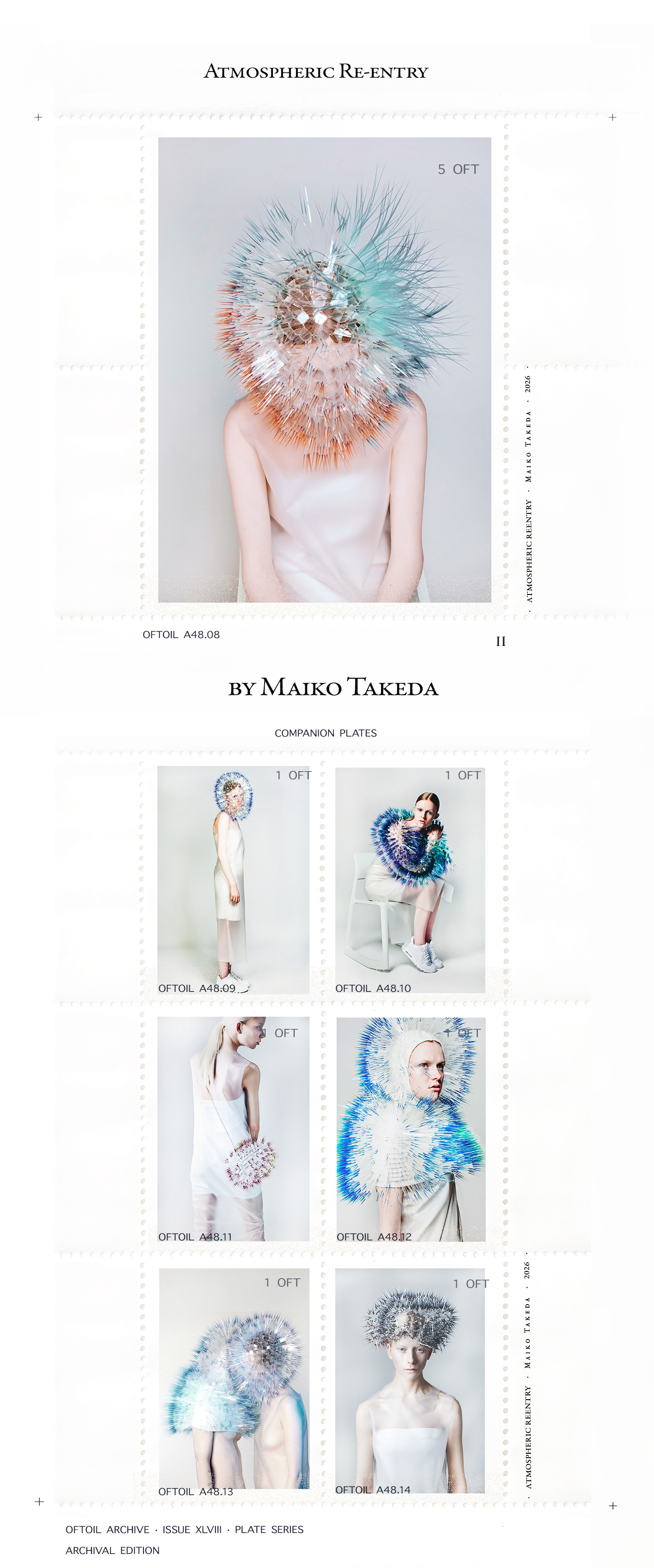
Atmospheric Re-entry is preserved in the Of.Toil Archive because it expands the vocabulary of fashion beyond fabric into the realm of natural phenomena. It demonstrates how material, light, and motion can become a single expressive medium, reminding us that the most enduring design often gives form not to objects, but to forces we normally cannot see.
Images and some words courtesy of Maiko Takeda