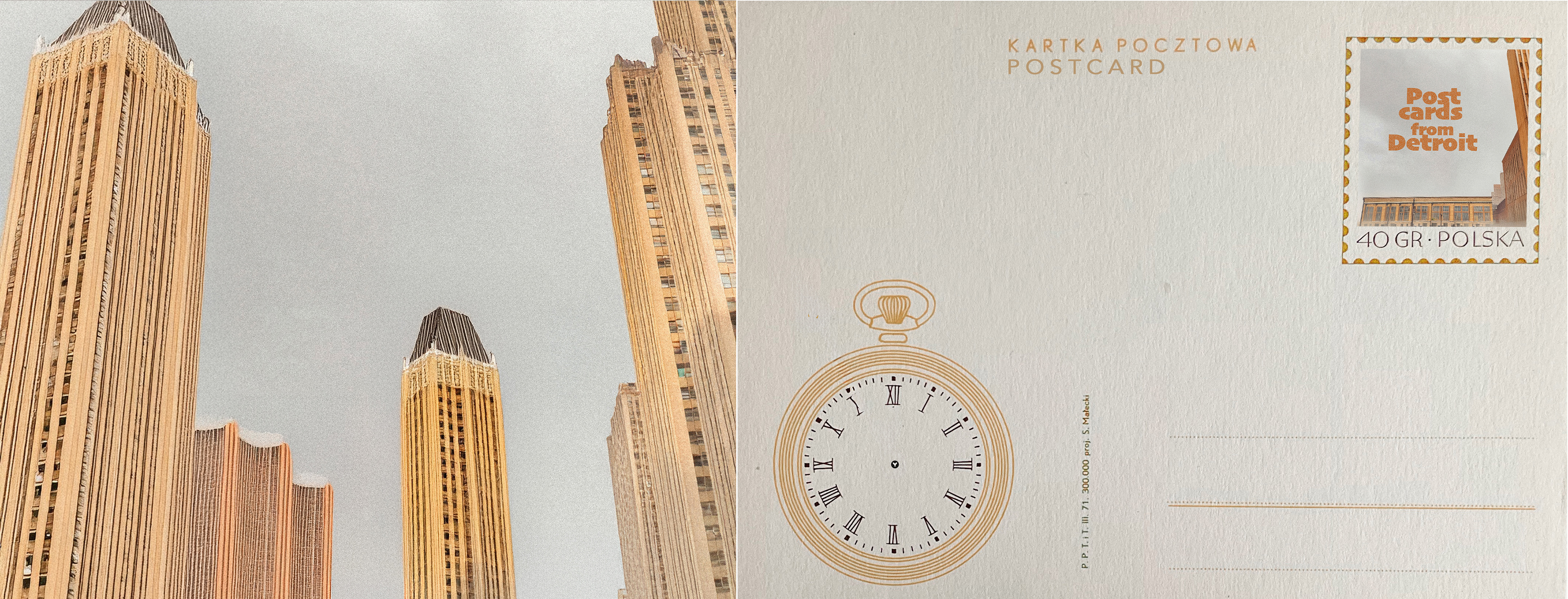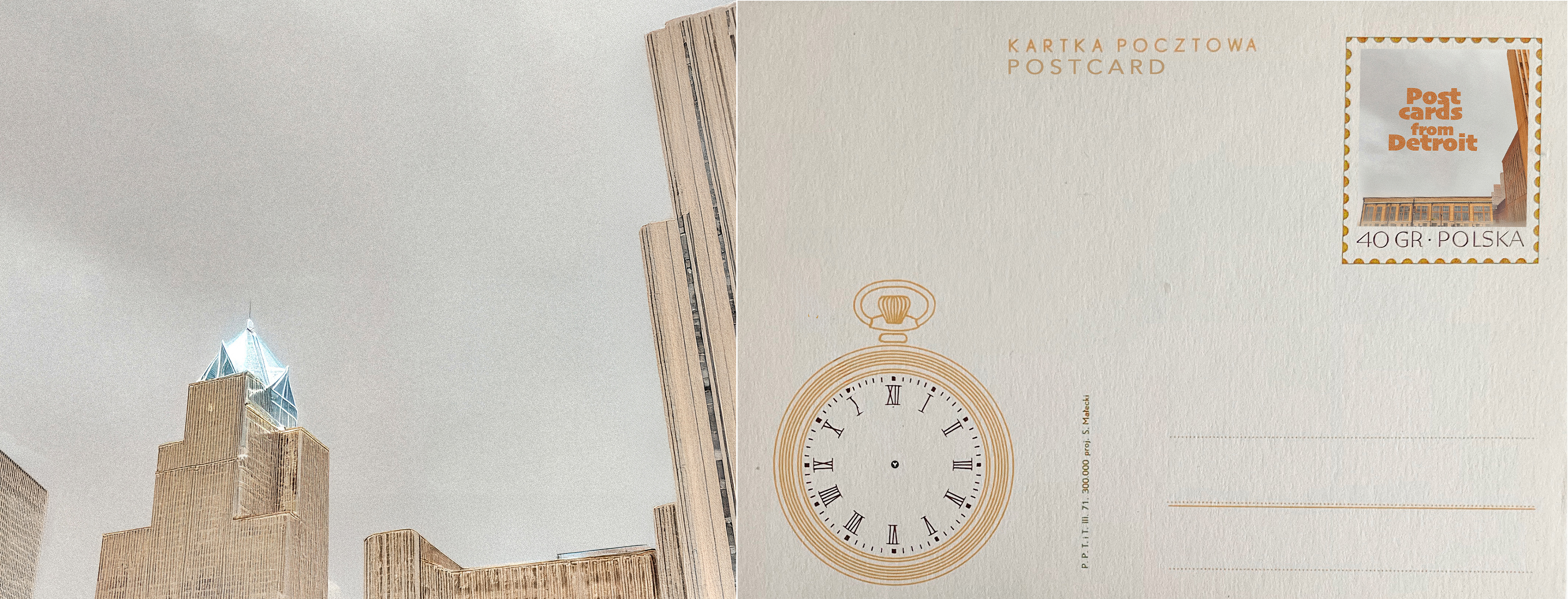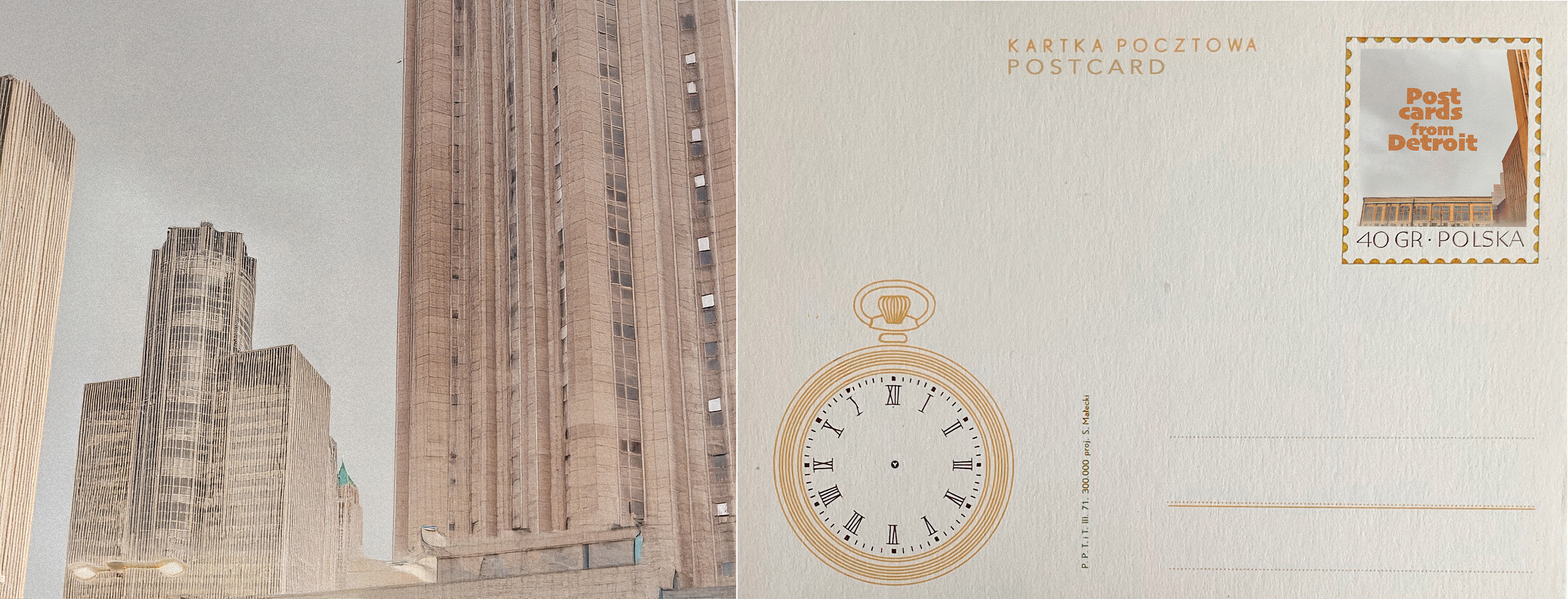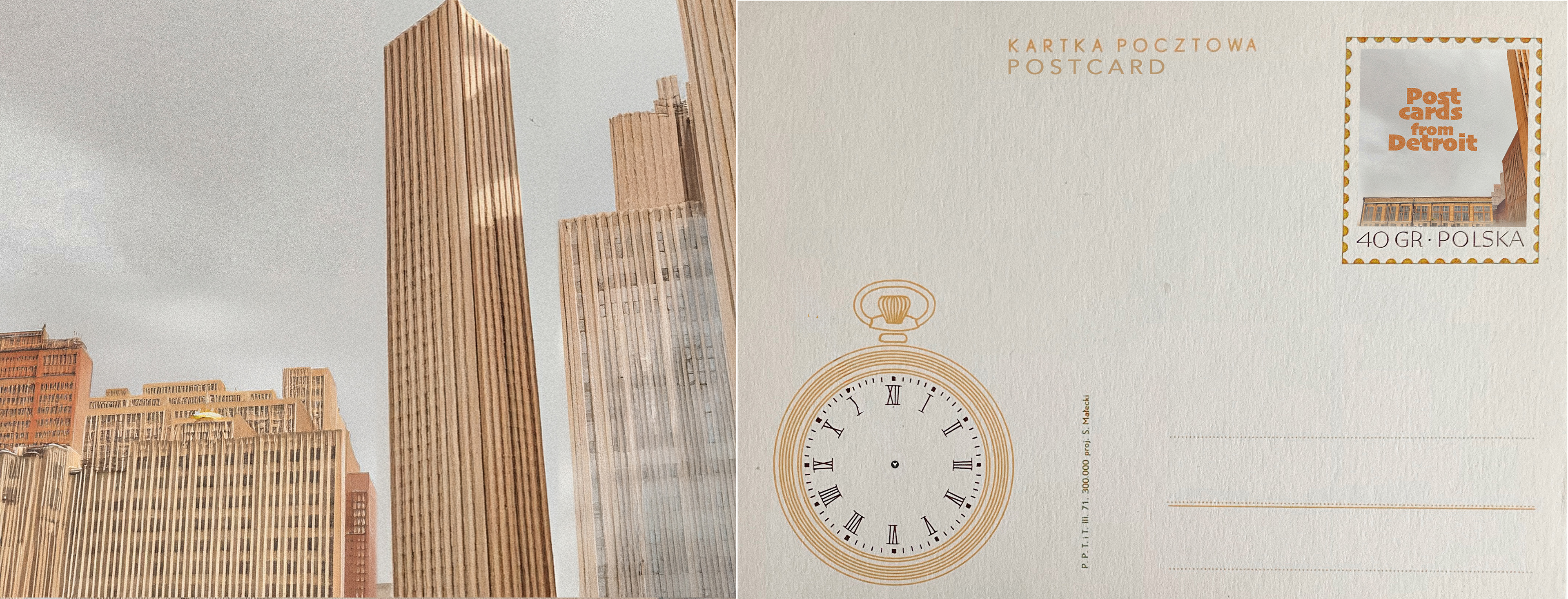
Motown
Detroit is a city defined less by a single origin than by successive retoolings. Founded in 1701 as a French trading post at a narrow crossing of the river that would lend the city its name (détroit, the strait), it began as an outpost of exchange—fur, timber, passage—situated between inland territories and the Great Lakes. From the outset, Detroit functioned as a hinge rather than a destination: a place through which materials, labor, and ambition moved.
The nineteenth century recast the city as a site of manufacture. Its geography—water access, rail lines, proximity to raw materials—made it receptive to scale. By the early twentieth century, Detroit became synonymous with industrial modernity. The automobile was not merely produced here; it reorganized time, labor, and the urban form itself. Assembly lines compressed motion into sequence. Skyscrapers rose not as monuments to finance, but as instruments of coordination—vertical accumulations of work, management, and repetition.
Detroit grew quickly and unevenly. Immigrants from Europe and migrants from the American South arrived in waves, drawn by the promise of wages and permanence. Neighborhoods formed around factories; houses followed grids optimized for efficiency rather than ceremony. At its peak, the city embodied an idea of progress grounded in output and motion. The clock—an object of measurement, discipline, and synchronization—was not metaphor but infrastructure.
The second half of the twentieth century fractured that rhythm. Automation, deindustrialization, racial injustice, and capital flight eroded the systems that had once sustained the city. Population declined; buildings emptied; production slowed or vanished altogether. What remained was scale without density, architecture without function, and time felt differently—stretched, suspended, unevenly distributed across neighborhoods.
Yet Detroit did not disappear. It entered a long interval of redefinition. What distinguishes the city today is not recovery in the conventional sense, but persistence. Structures endure beyond their intended lifespan. Materials weather honestly. New uses emerge within old forms, without erasing their prior inscriptions. The city’s visual language—its towers, factories, and streets—retains a clarity born of having been built for purpose rather than display.
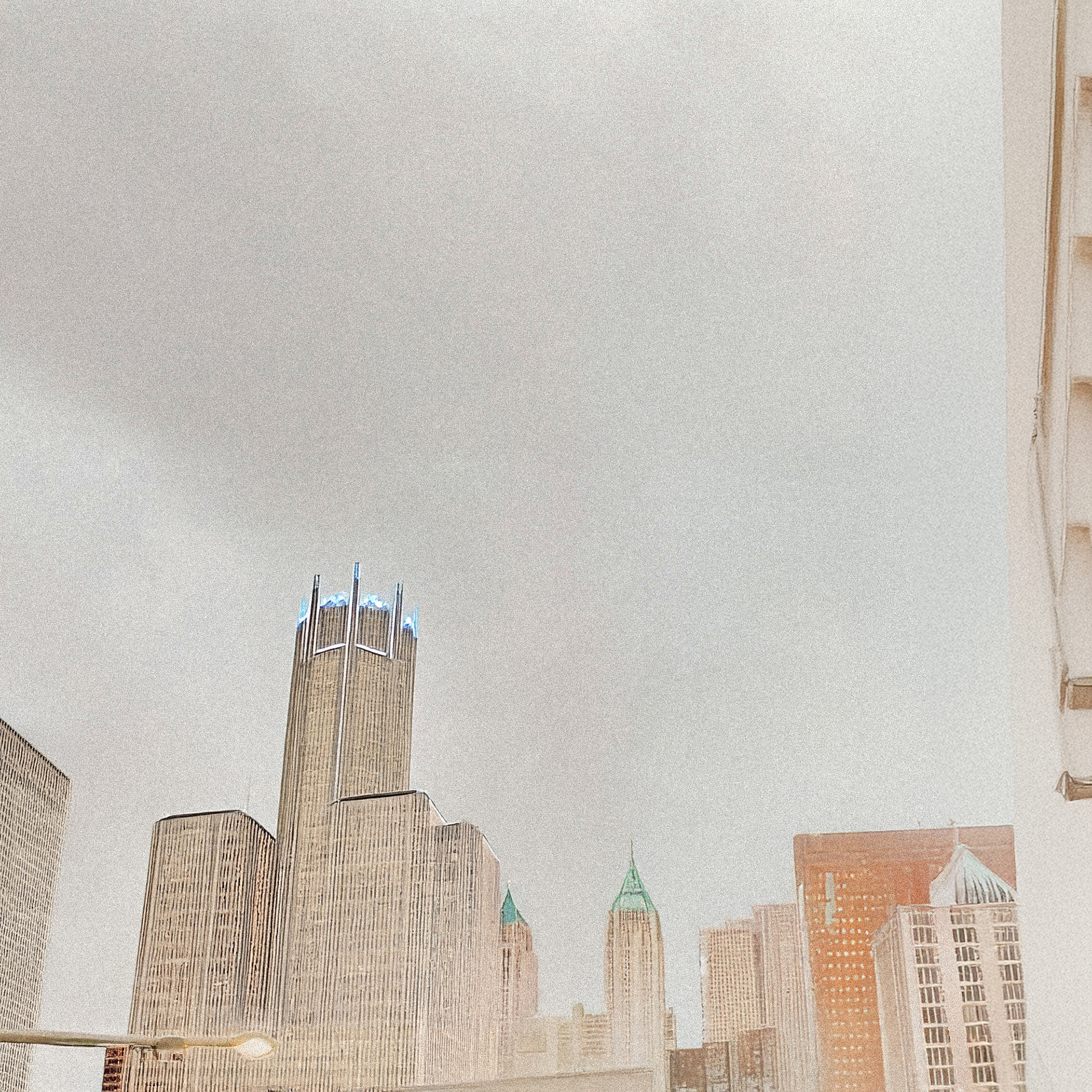
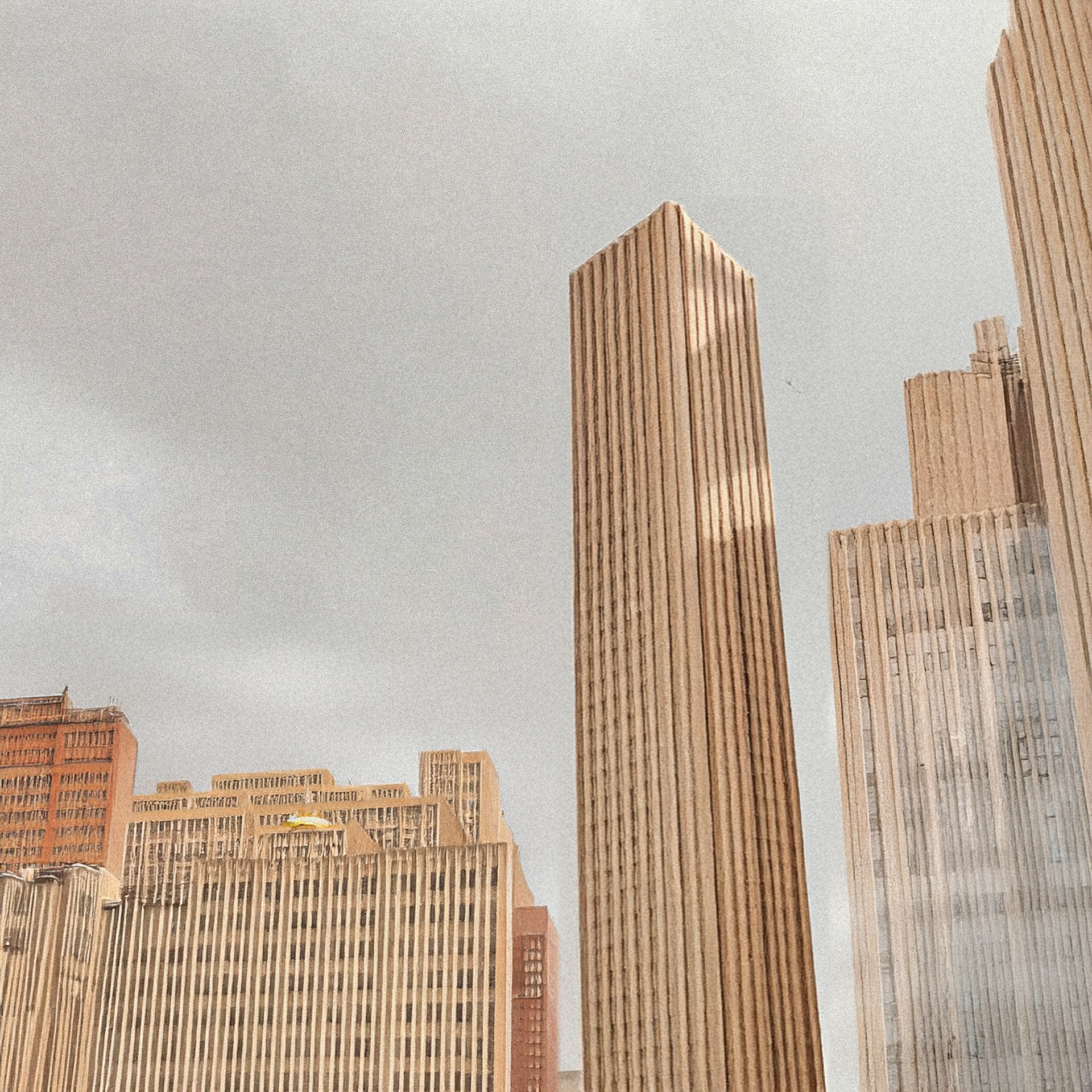
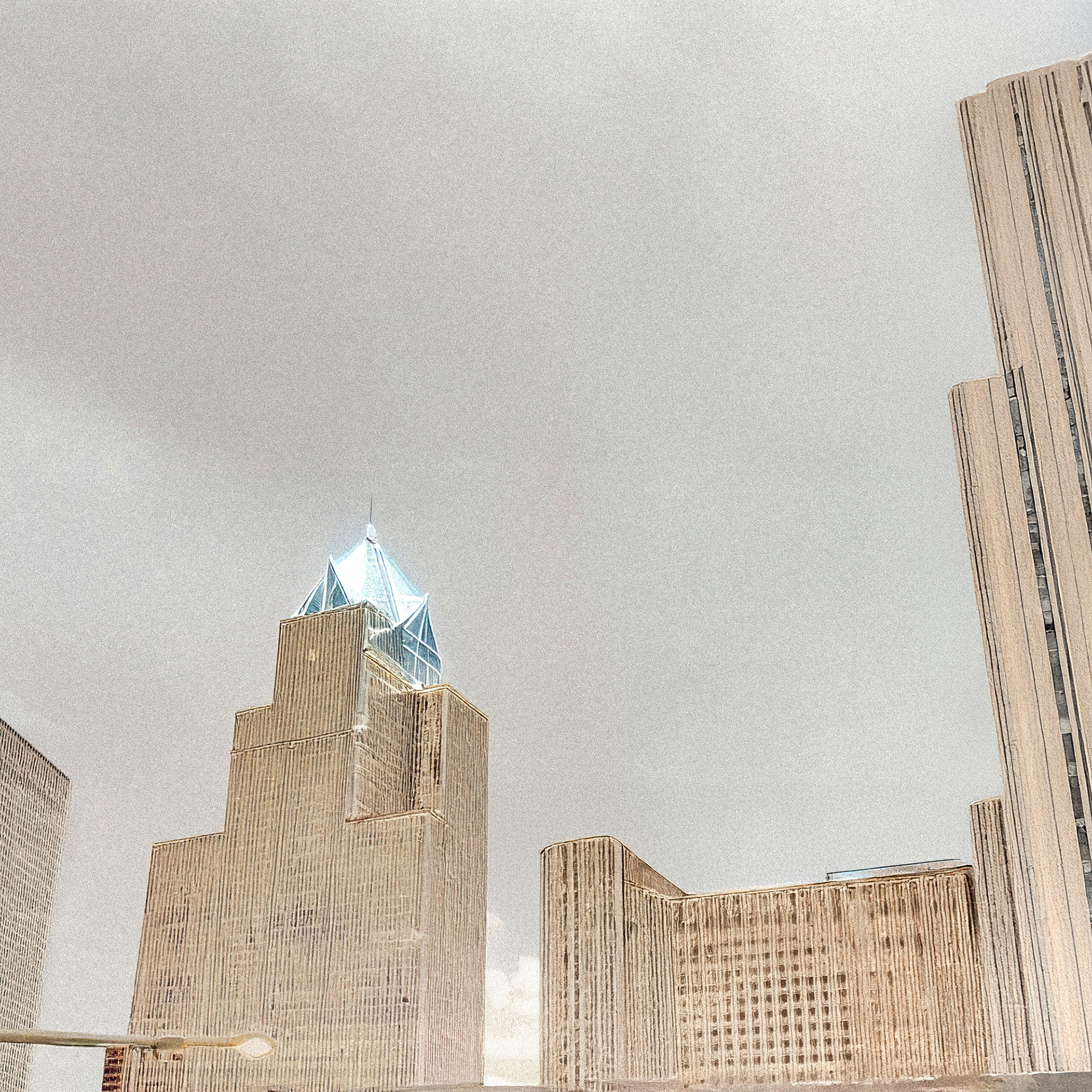
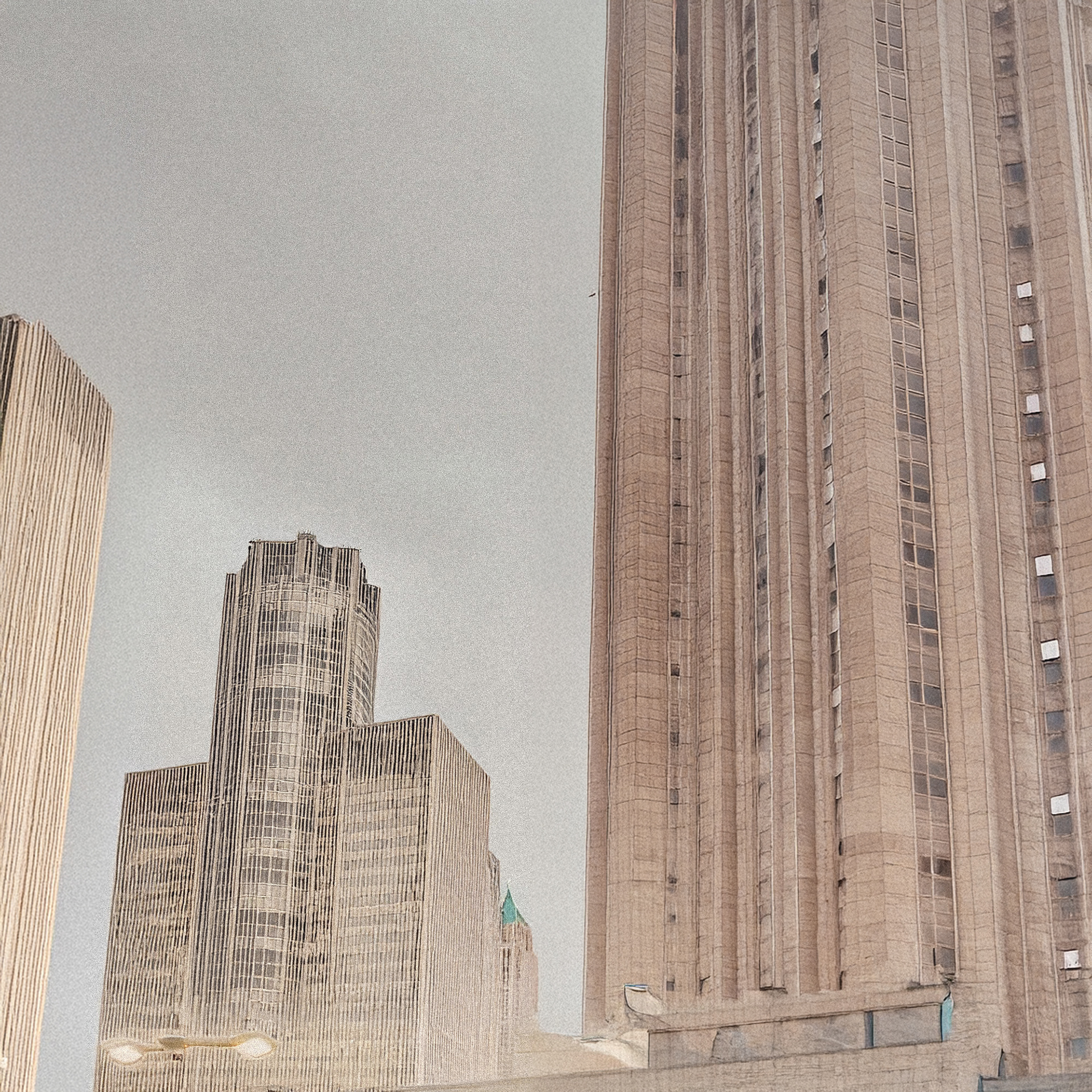
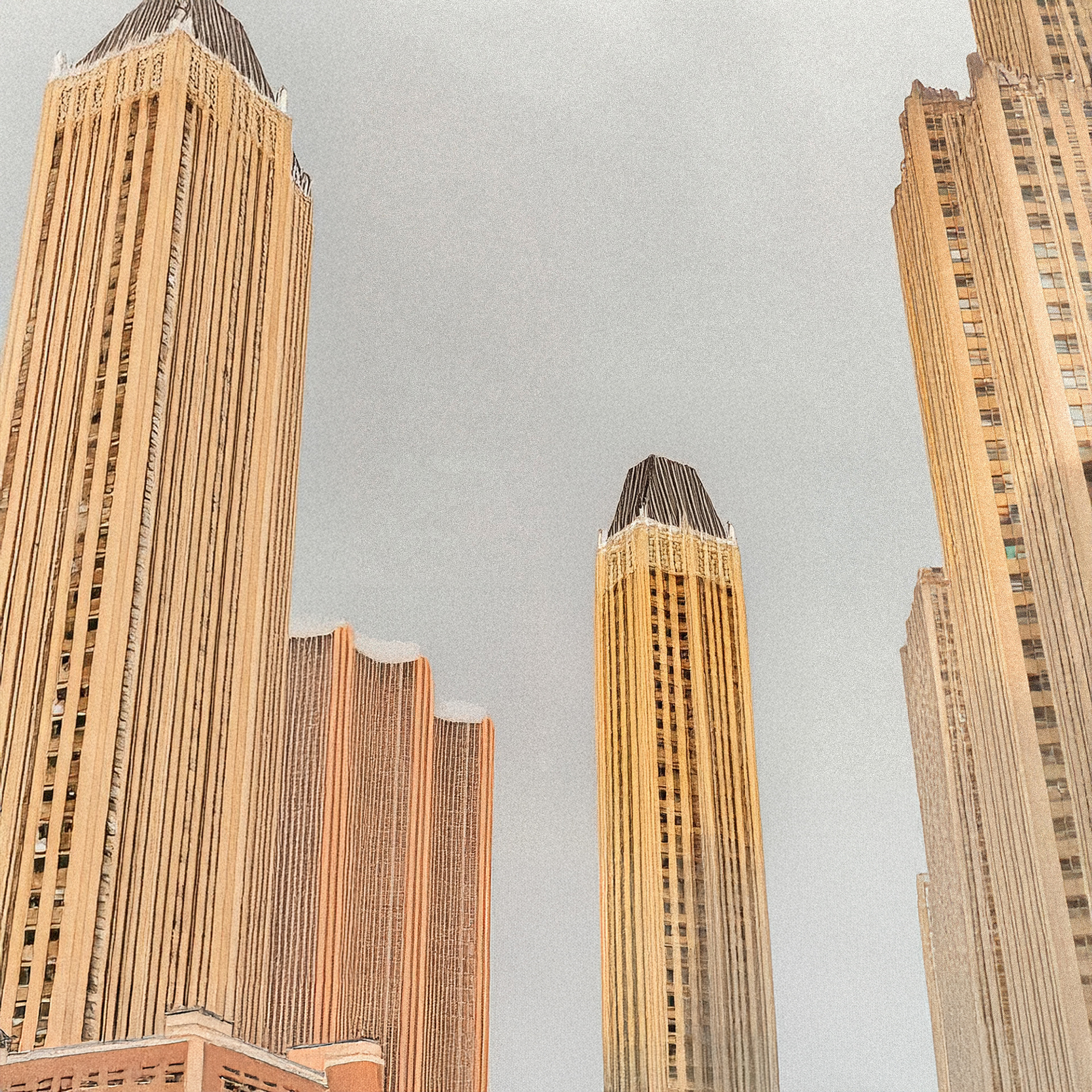
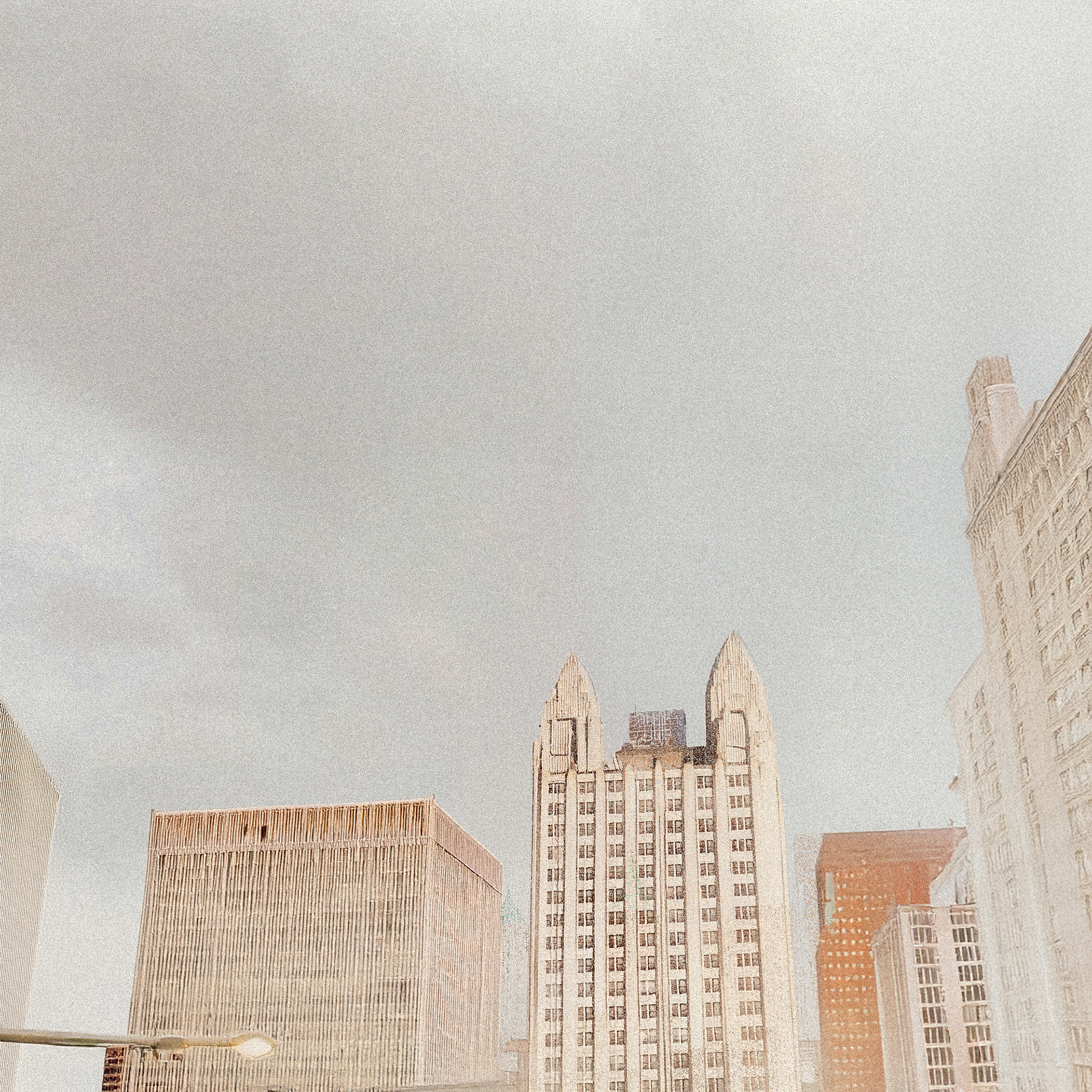
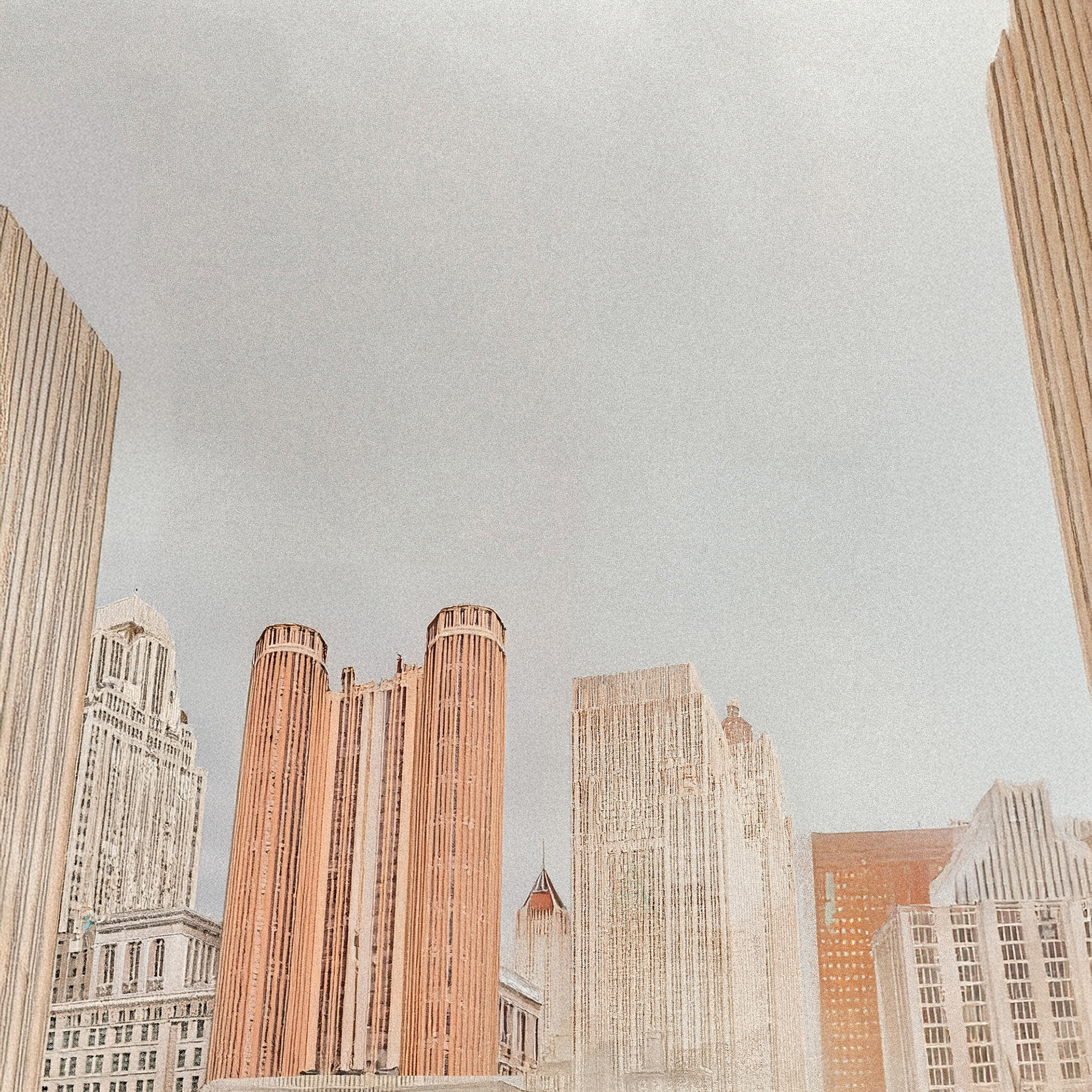
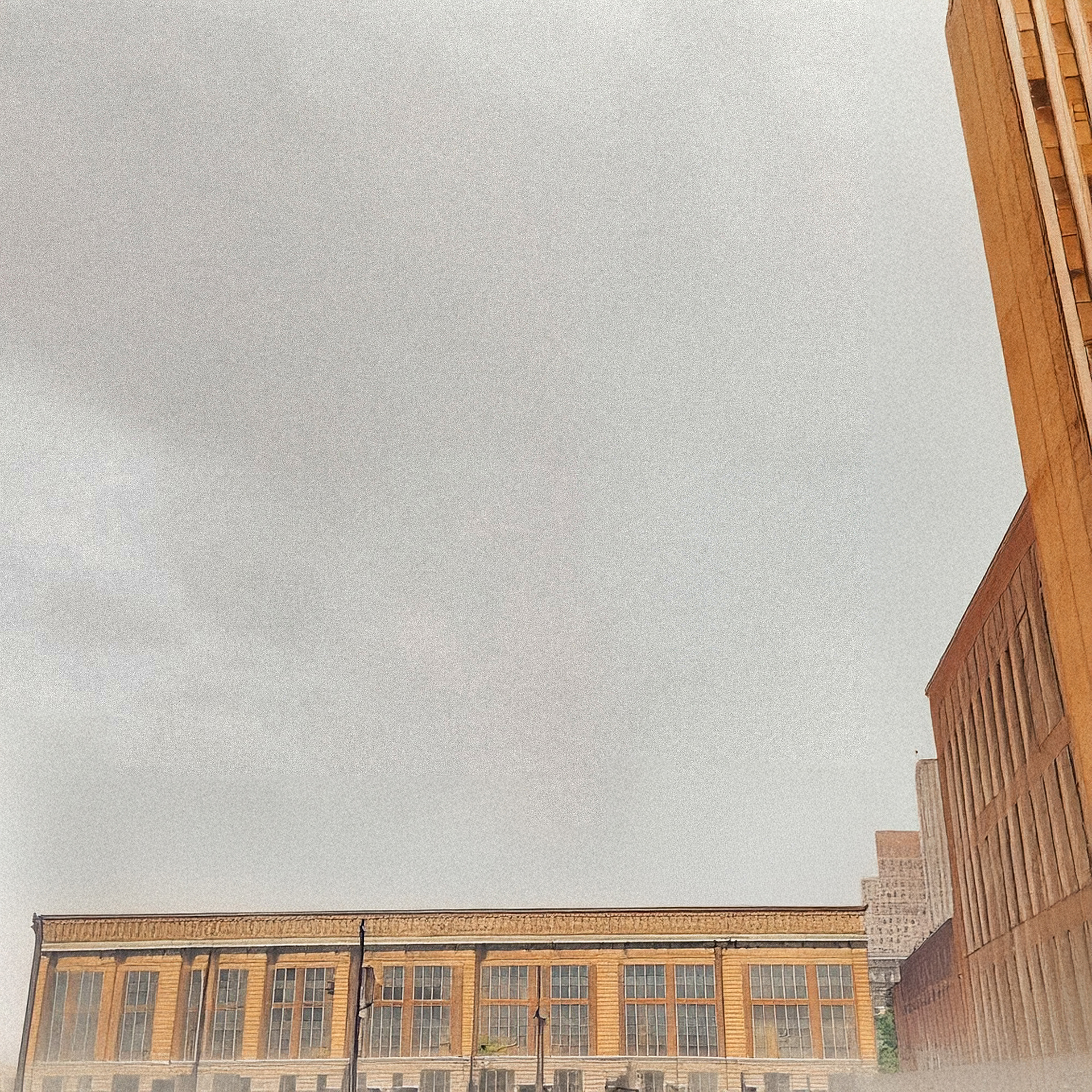
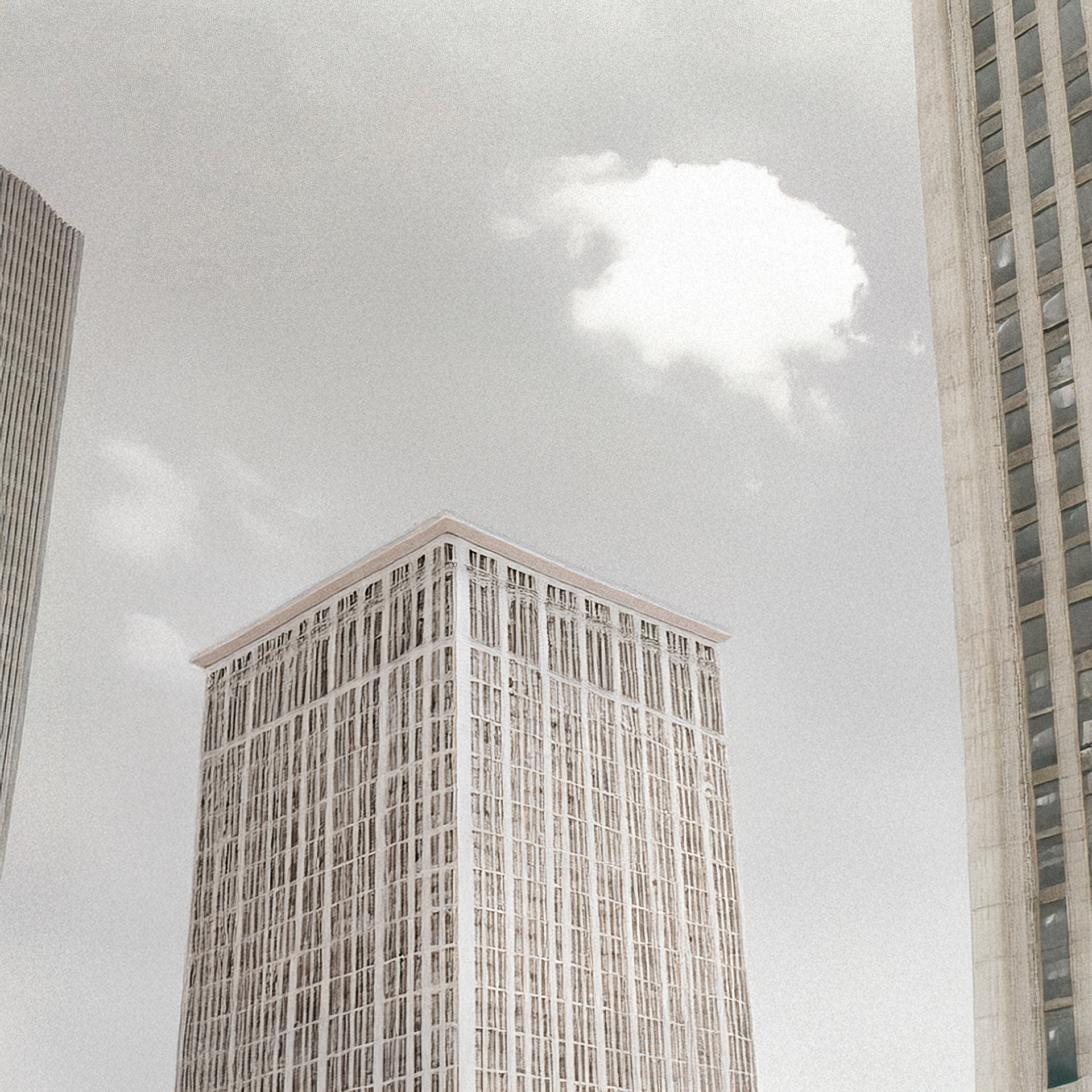
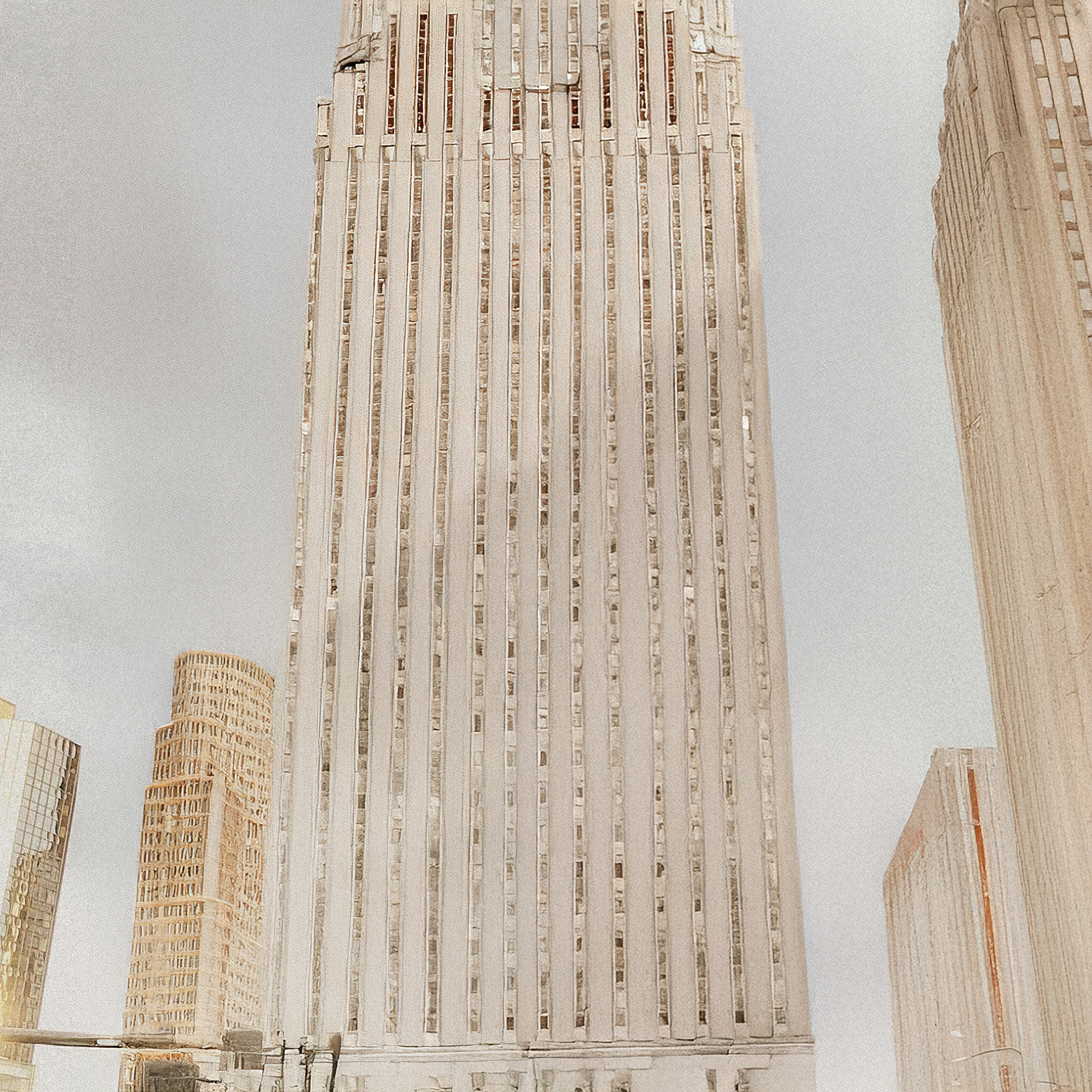
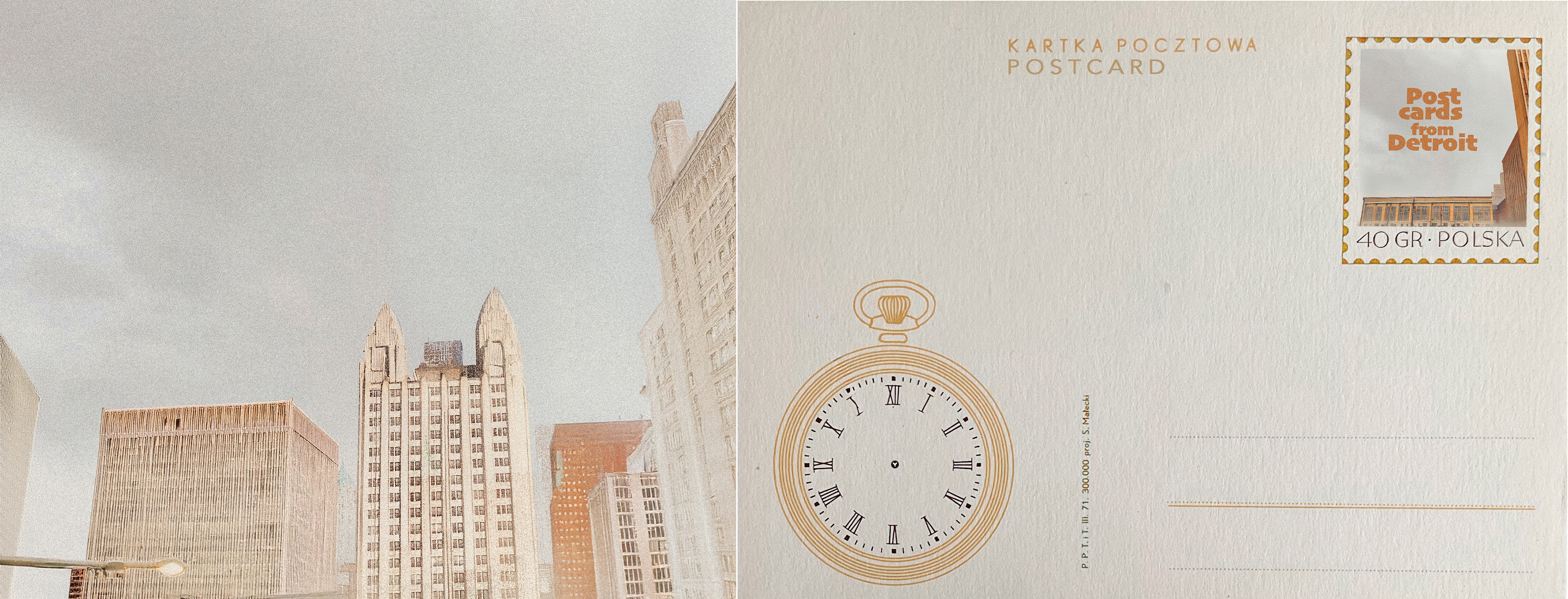
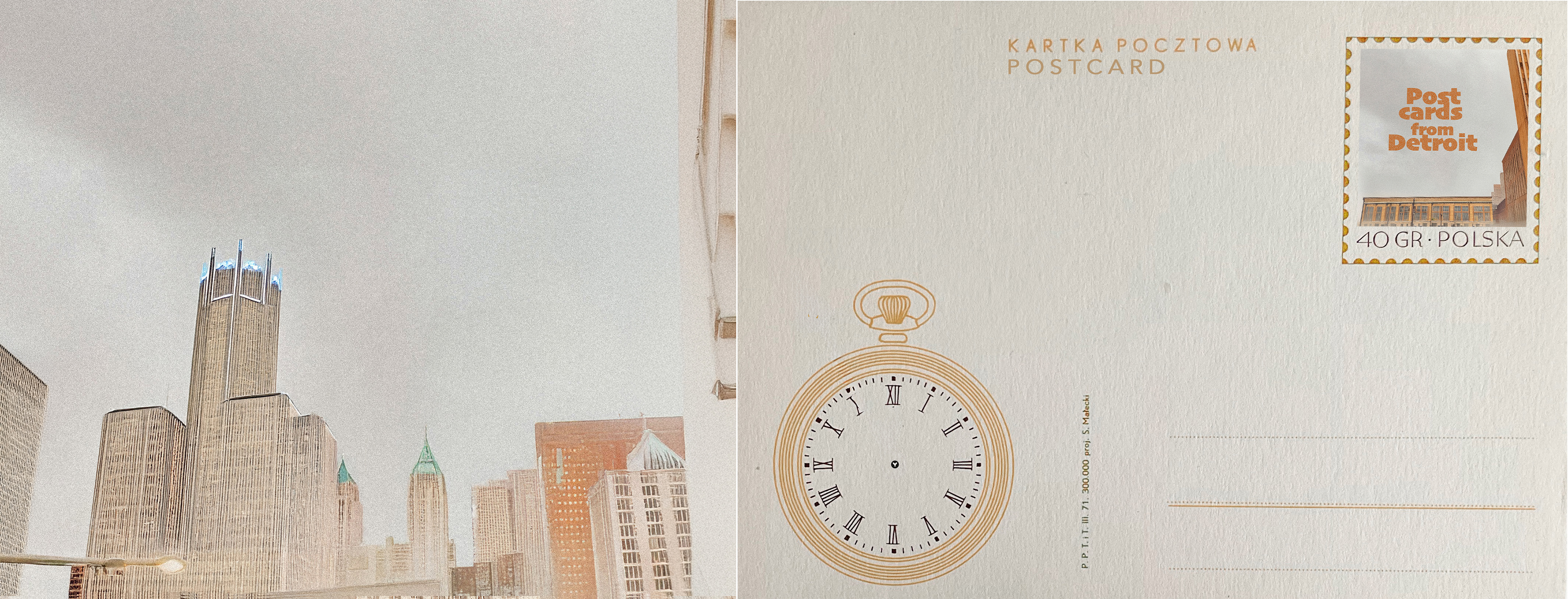
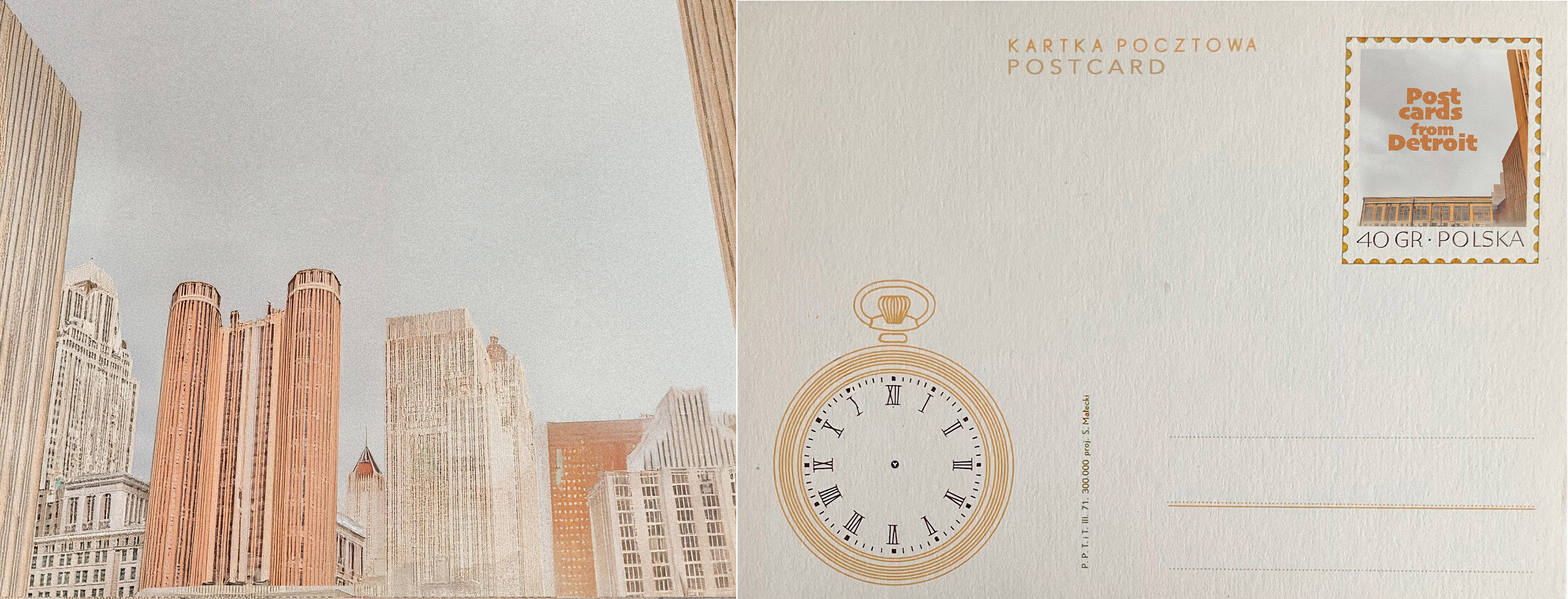
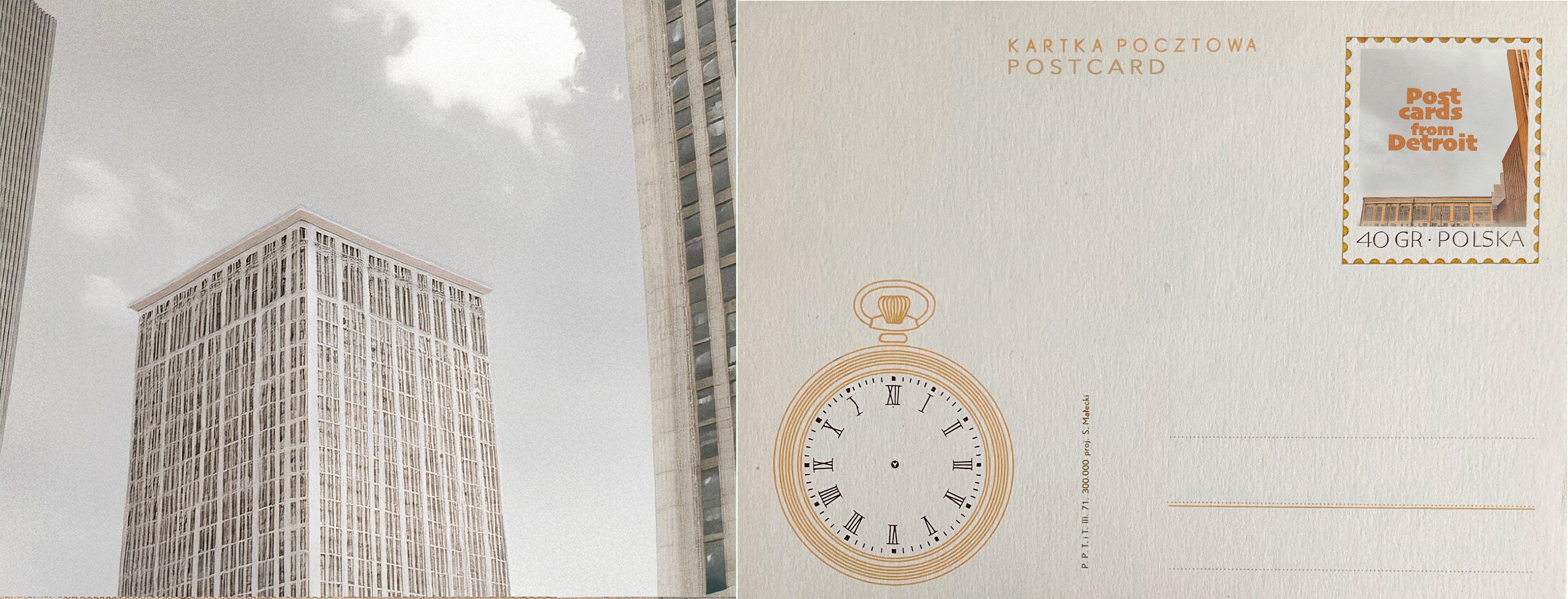
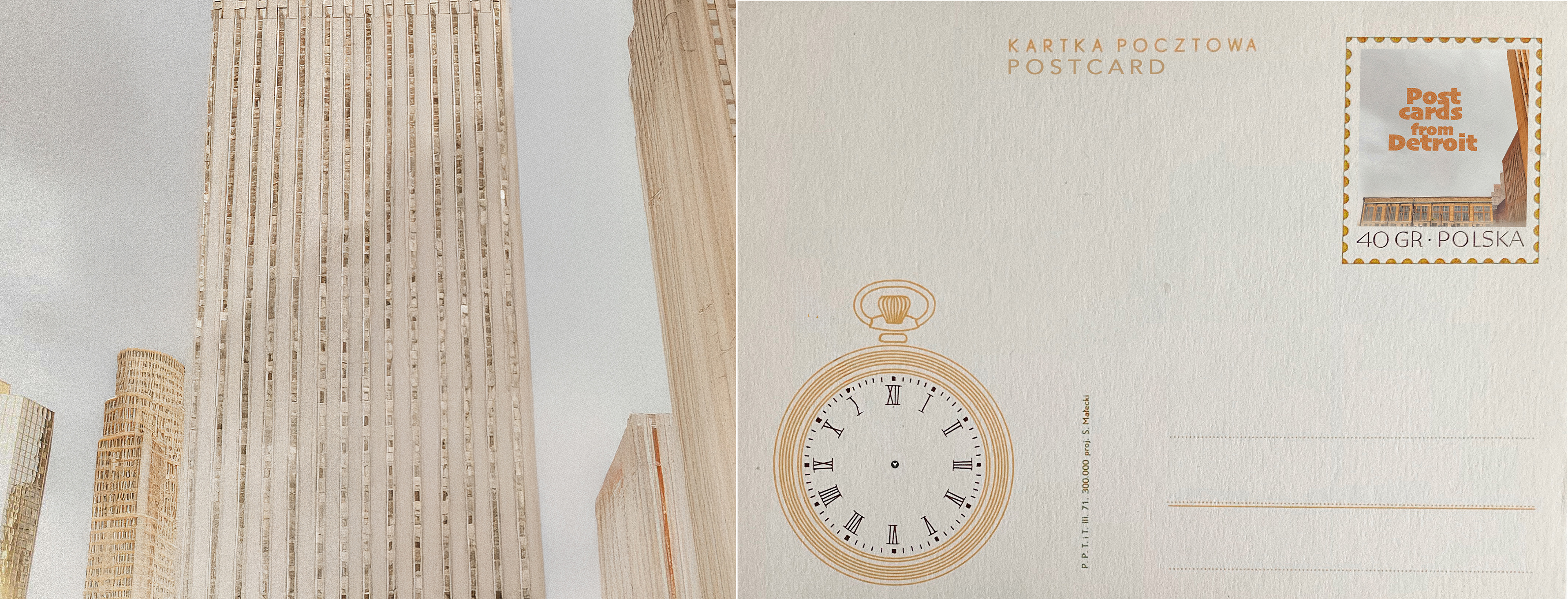
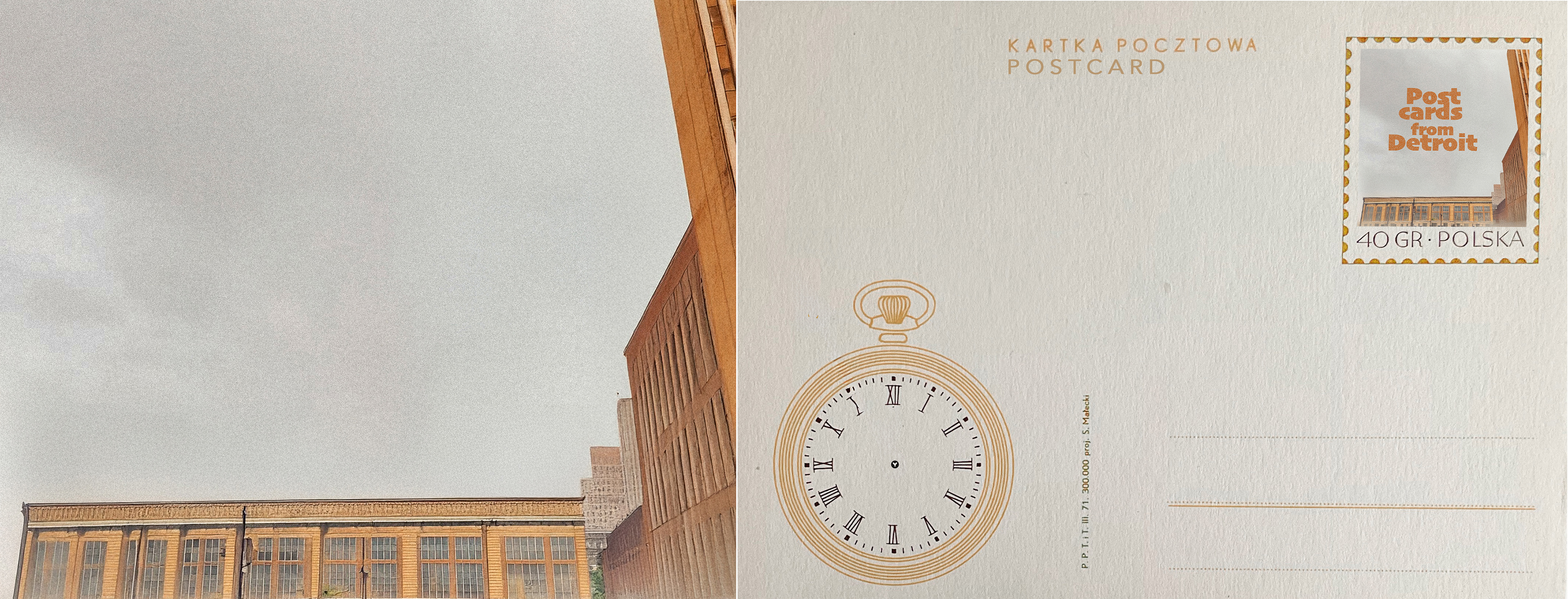
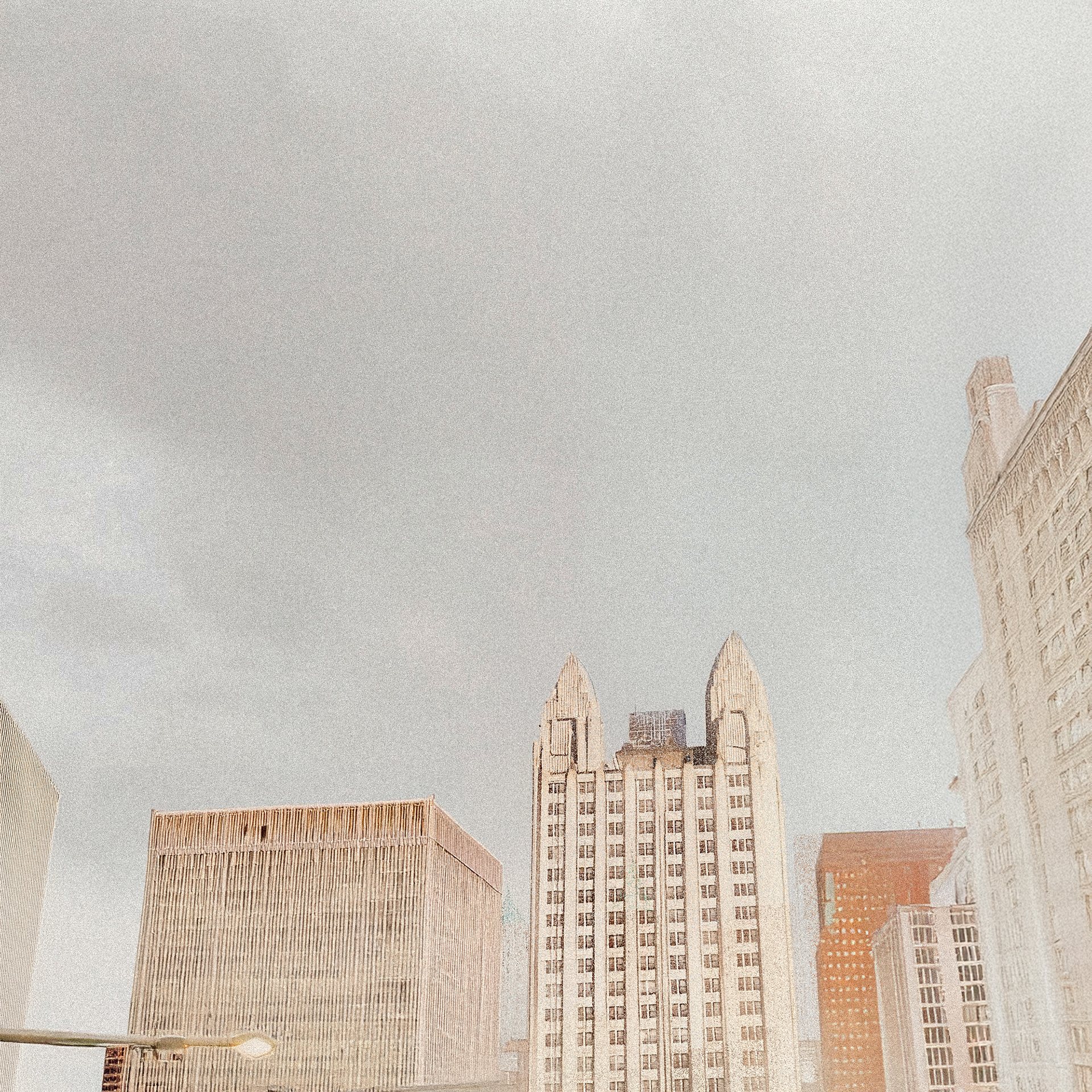
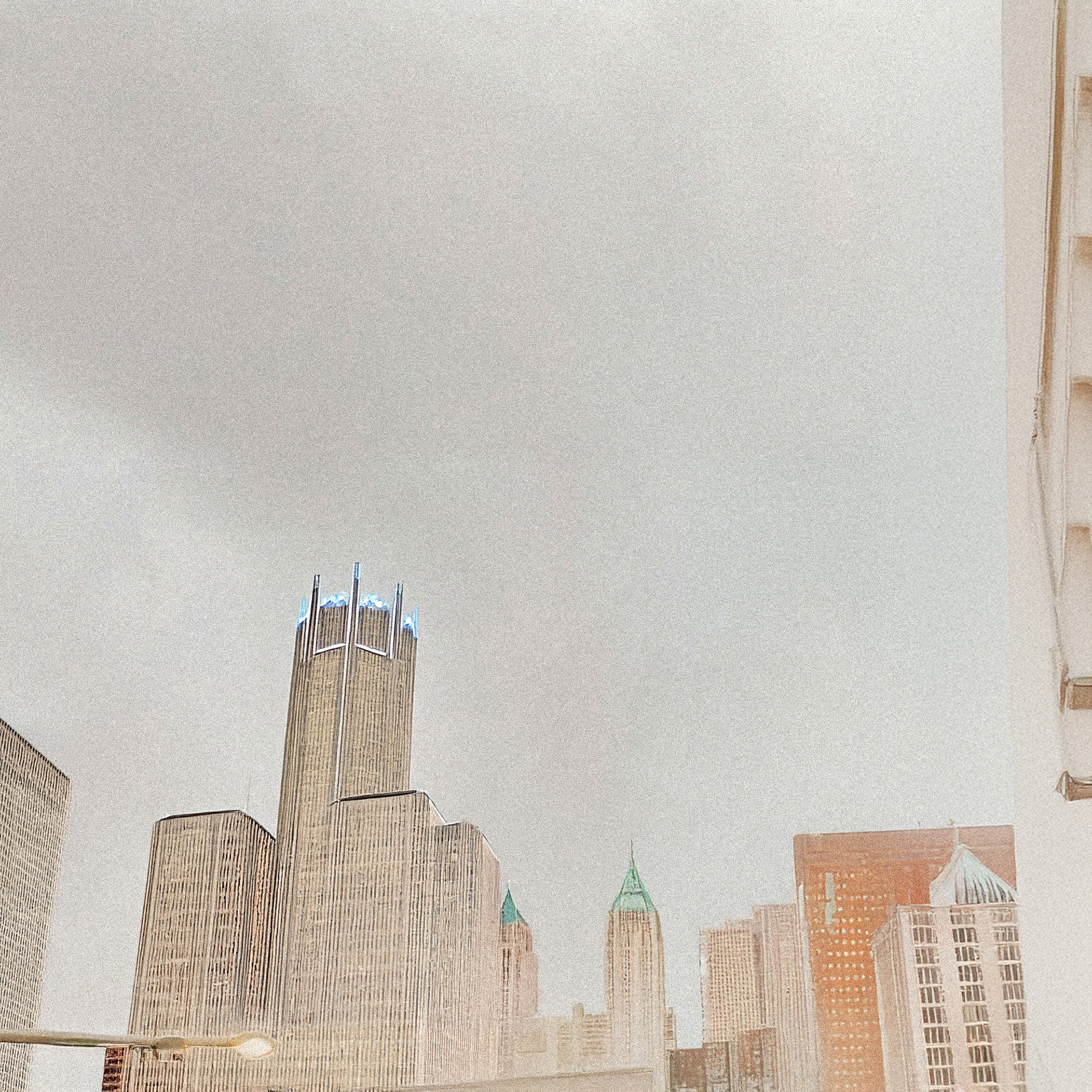
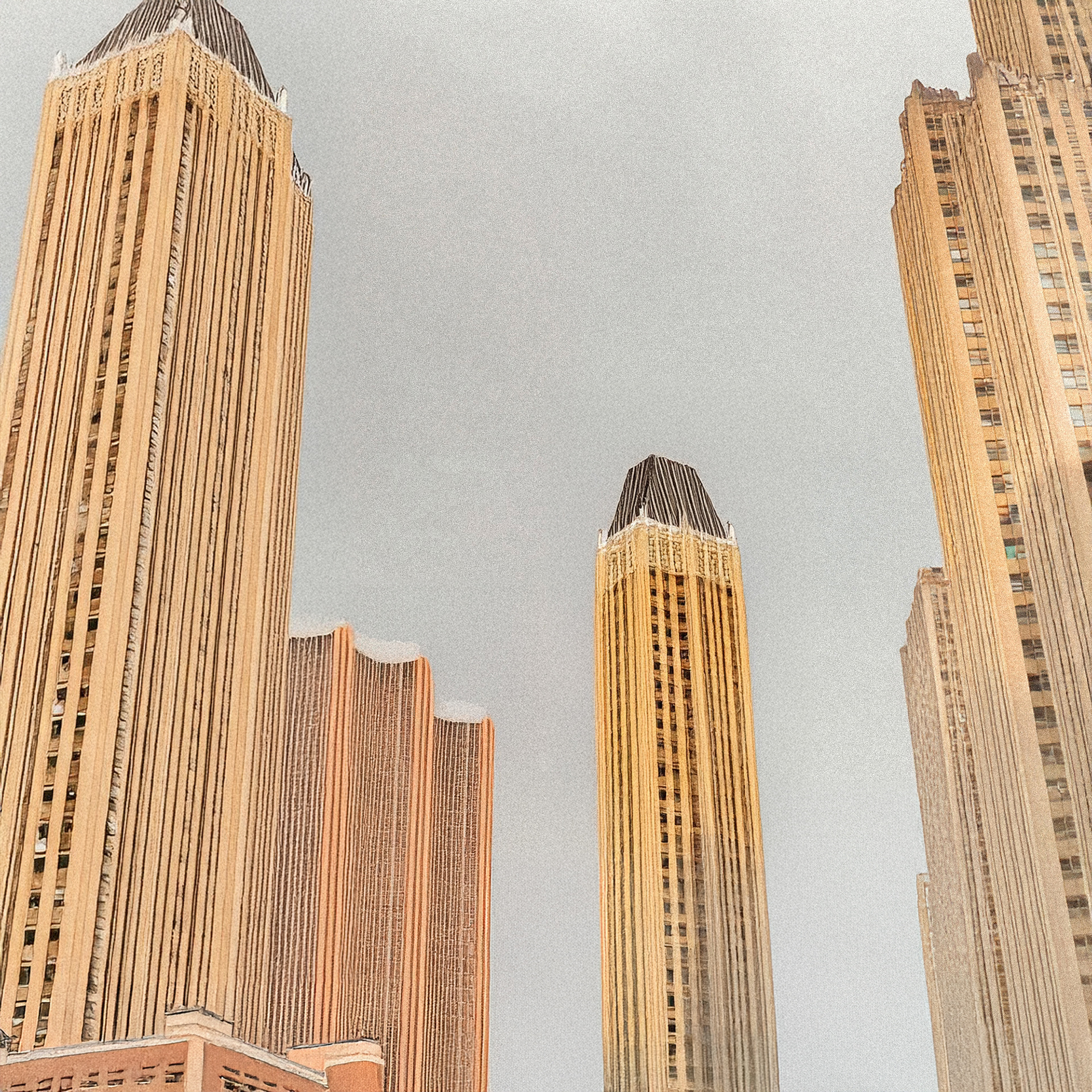
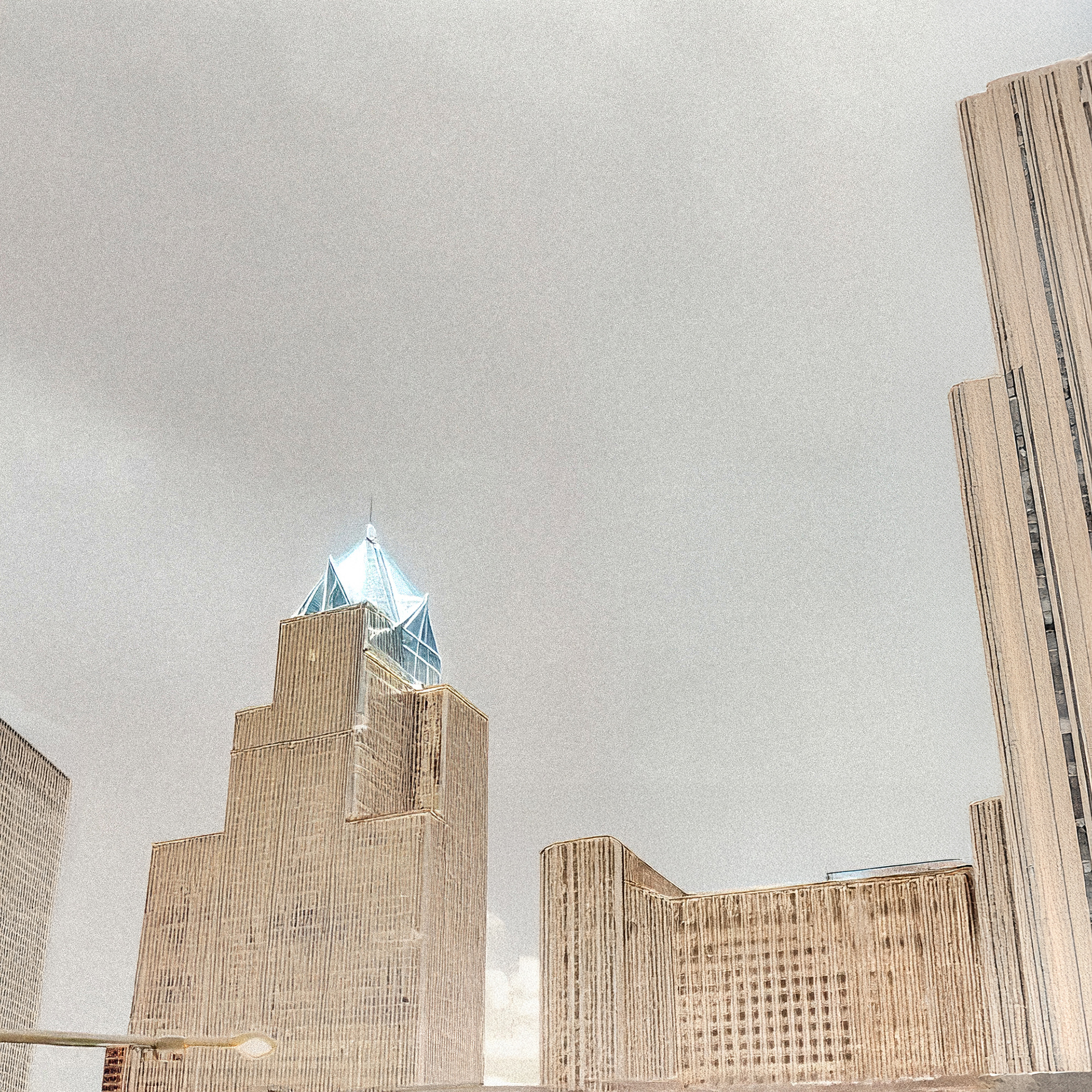
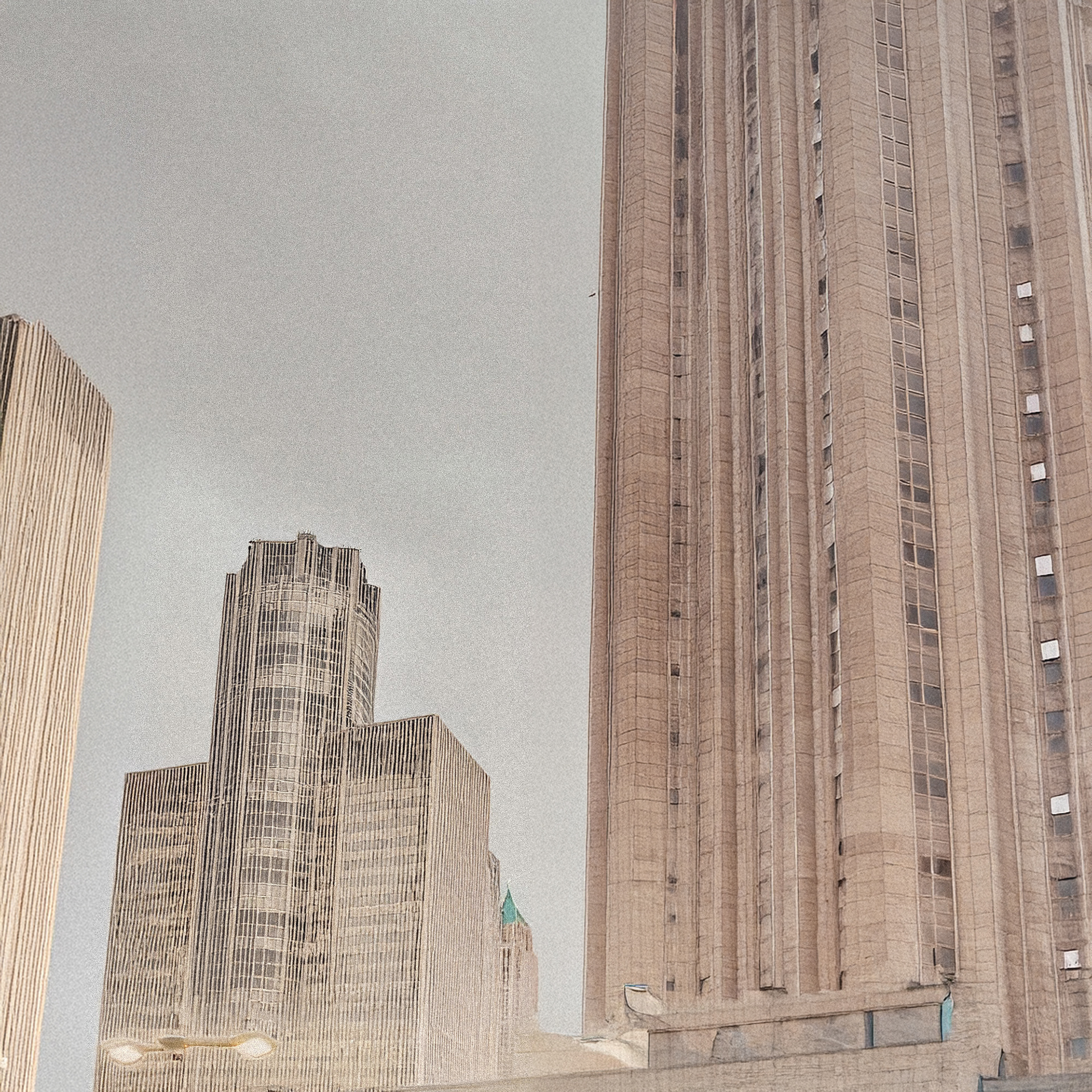
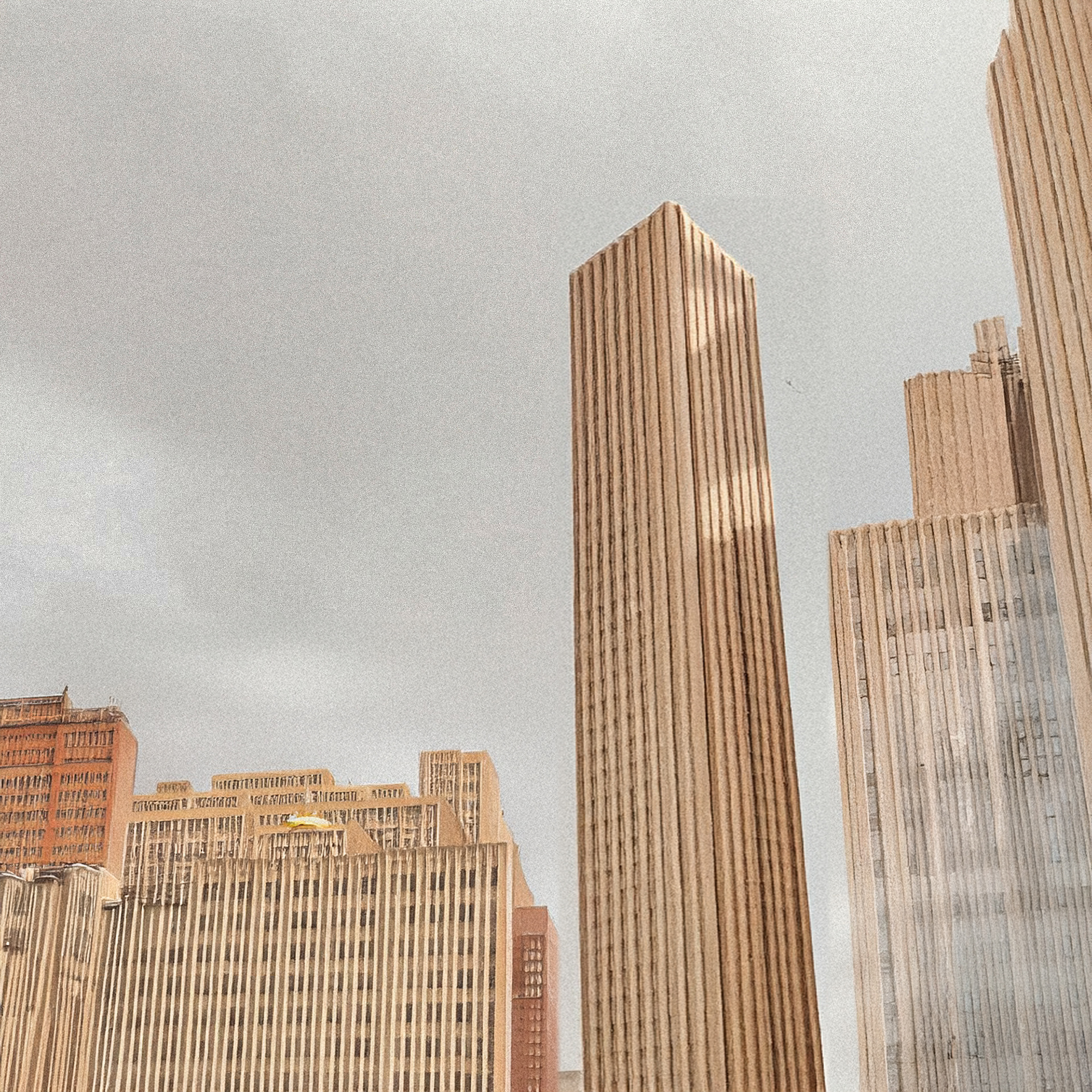
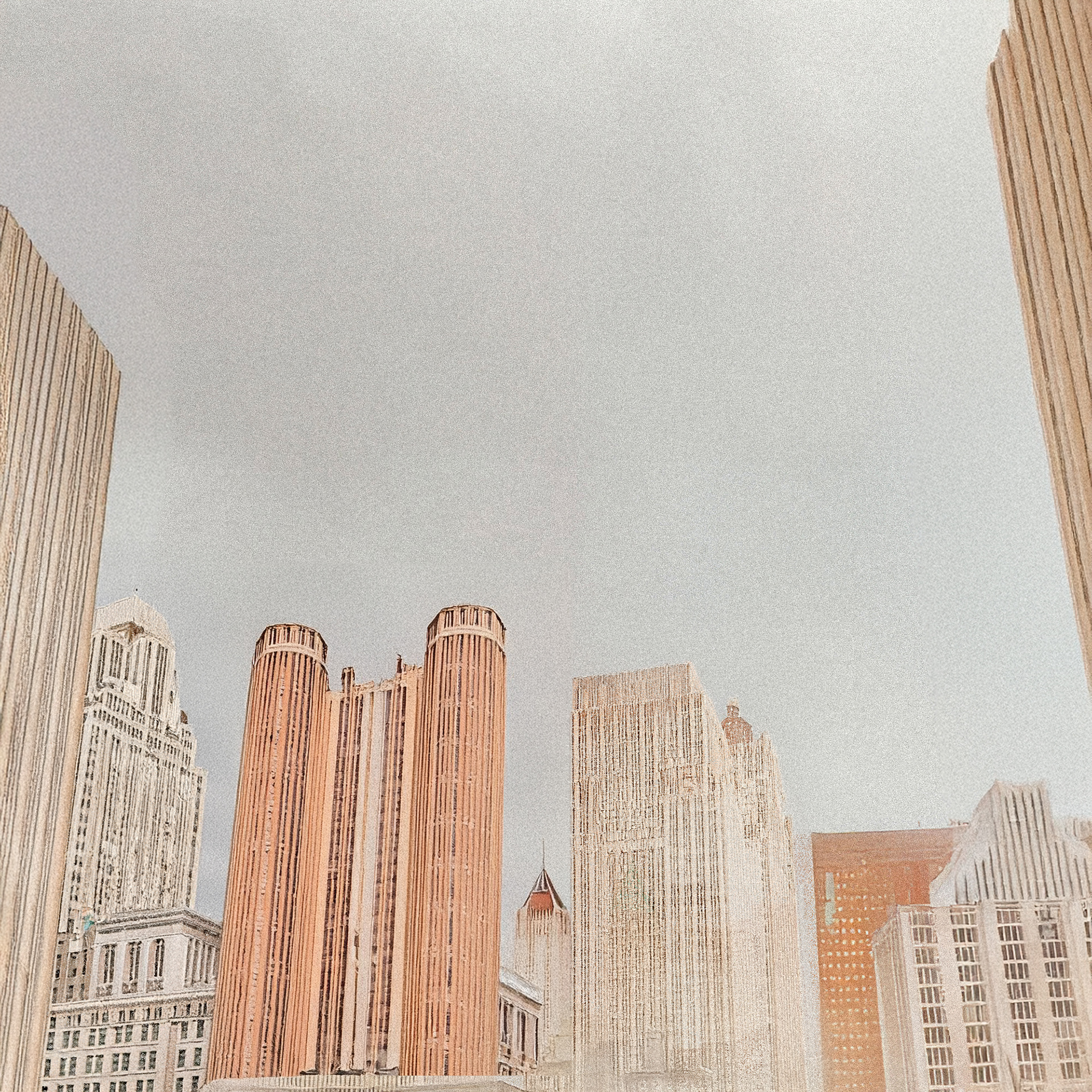
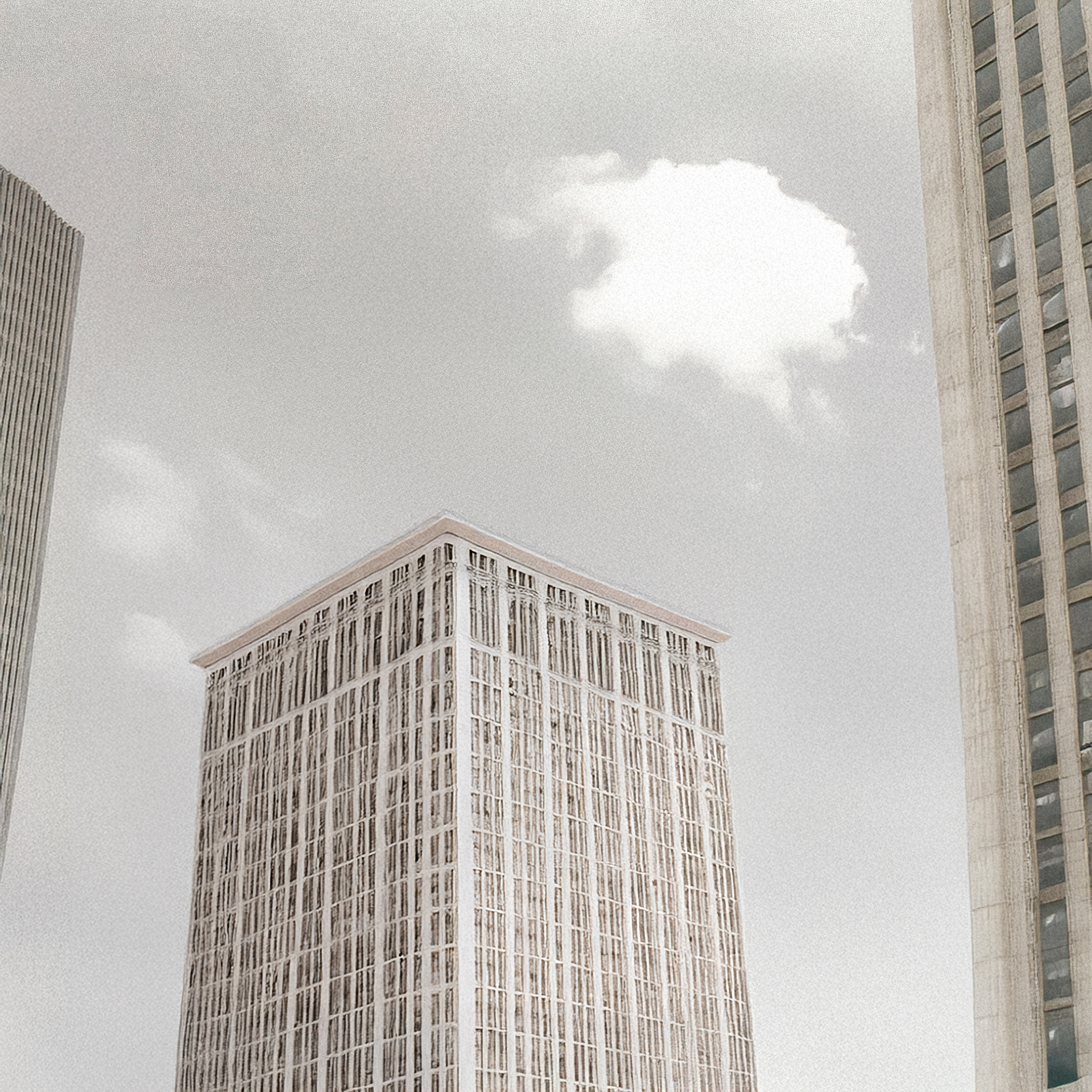
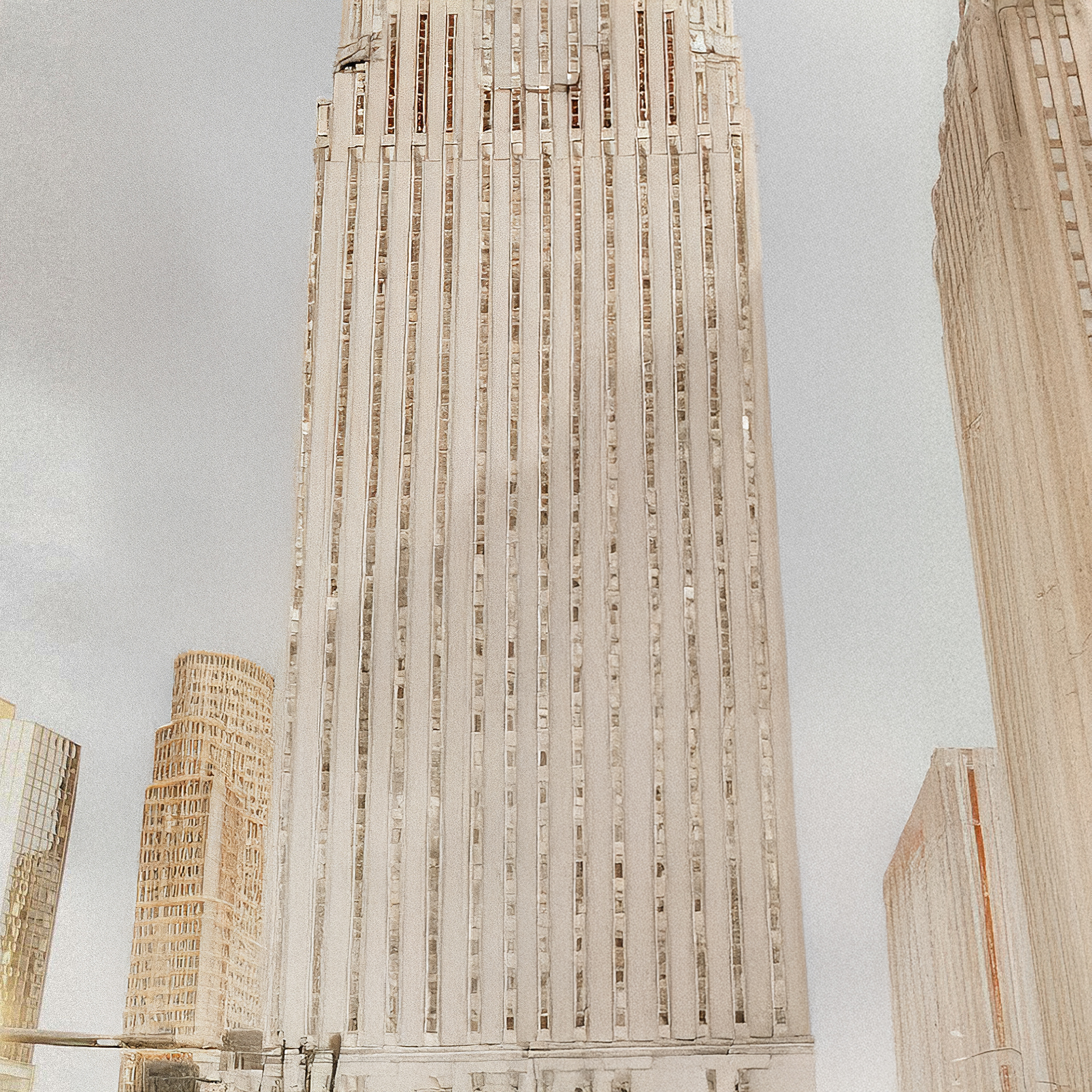
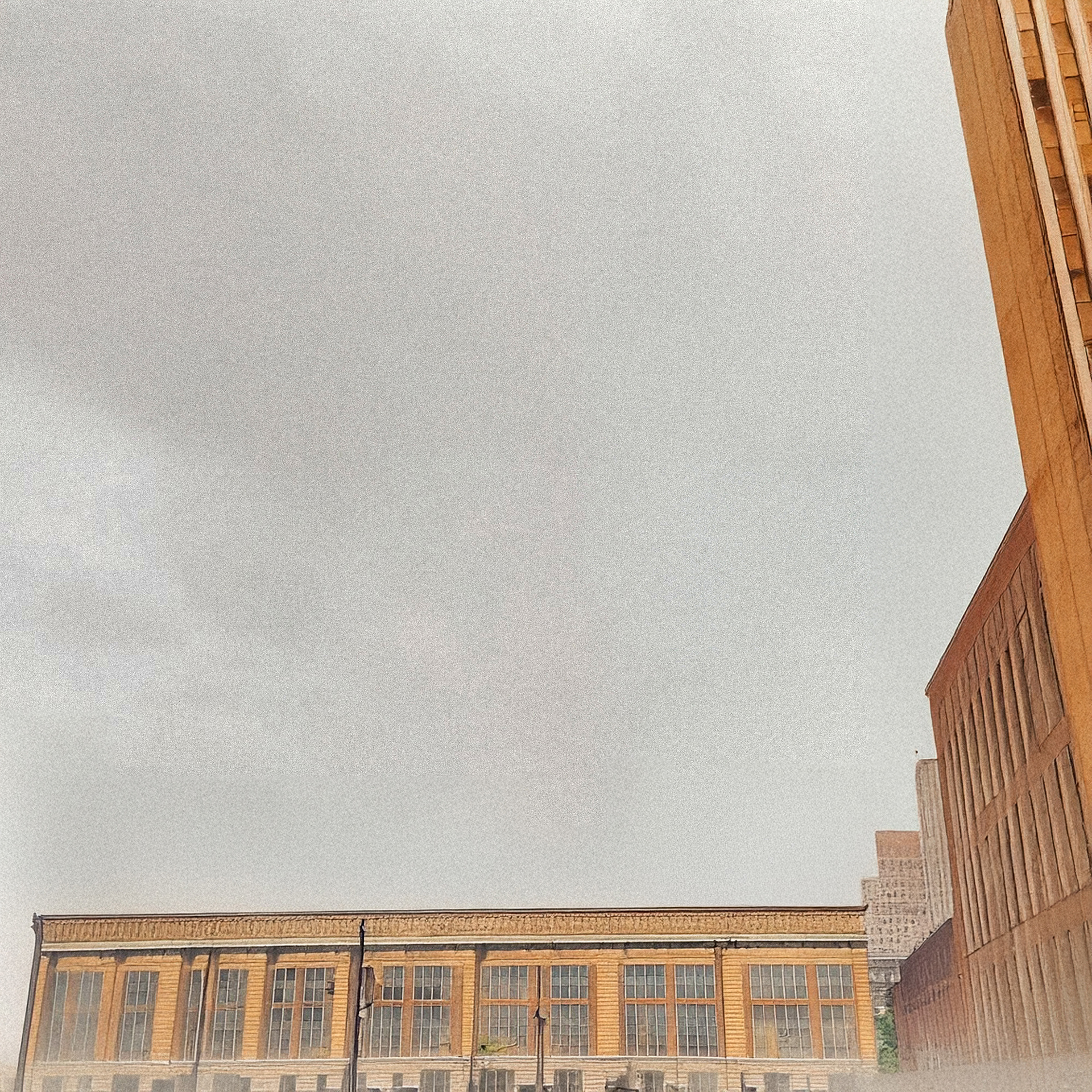
In this postcard series, Detroit is recorded without dramatization. The buildings stand upright and quiet, reduced to mass, line, and surface. Color is restrained; ornament is minimal. The inclusion of the timepiece does not mark nostalgia, but calibration—a reminder that this city has always been measured against time, production, and delay.
Detroit remains a city in which history is not sealed behind glass. It is structural, present in elevation and spacing, legible in the gaps between buildings as much as in the buildings themselves. These postcards do not commemorate a moment. They acknowledge a condition: a city still standing, still working, still keeping its own time.
STANDARD COMMERCIAL LICENSE
For commercial, promotional, advertising, packaging, branding, or product-related use. Scope, duration, territory, and exclusivity are defined per project.
Commissioned works fall under individually negotiated terms. For licensing inquiries, commissions, or clarification, please get in touch.
Unless otherwise specified, digital asset collections issued by OfToil&co Studio are provided under the following terms:
The purchaser is granted an exclusive, worldwide, perpetual license to use the assets in personal, editorial, and commercial projects, including client work.
Assets may be modified and integrated into larger bodies of work.
They may not be resold, redistributed, sublicensed, or reissued as standalone files or as part of a competing asset collection.
Copyright and authorship remain with OfToil&co Studio. Purchase constitutes acceptance of these terms.
For commercial, promotional, advertising, packaging, branding, or product-related use. Scope, duration, territory, and exclusivity are defined per project.
Commissioned works fall under individually negotiated terms. For licensing inquiries, commissions, or clarification, please get in touch.
Unless otherwise specified, digital asset collections issued by OfToil&co Studio are provided under the following terms:
The purchaser is granted an exclusive, worldwide, perpetual license to use the assets in personal, editorial, and commercial projects, including client work.
Assets may be modified and integrated into larger bodies of work.
They may not be resold, redistributed, sublicensed, or reissued as standalone files or as part of a competing asset collection.
Copyright and authorship remain with OfToil&co Studio. Purchase constitutes acceptance of these terms.
Curated. Editorial. Collectible. Designed for the age of intelligent creation.
OfToil Studio produces AI-generated visual assets developed with the precision of a designer and the sensibility of an art director. Each work is built from a narrative core — a fusion of concept, craft, and intelligent automation — ready for deployment across the publishing, design, and advertising industries.
Applications
Editorial design · book publishing · campaign concepting · brand identity · visual research · experiential design · web & motion · exhibition and poster work · fine art reproduction
Available Formats
High-resolution stills · print-ready artwork · layered source files · bespoke commissions. Each asset is crafted with an editorial eye and is available via custom licensing, or direct collaboration through OfToil Studio’s creative archive.
OfToil Studio produces AI-generated visual assets developed with the precision of a designer and the sensibility of an art director. Each work is built from a narrative core — a fusion of concept, craft, and intelligent automation — ready for deployment across the publishing, design, and advertising industries.
Applications
Editorial design · book publishing · campaign concepting · brand identity · visual research · experiential design · web & motion · exhibition and poster work · fine art reproduction
Available Formats
High-resolution stills · print-ready artwork · layered source files · bespoke commissions. Each asset is crafted with an editorial eye and is available via custom licensing, or direct collaboration through OfToil Studio’s creative archive.