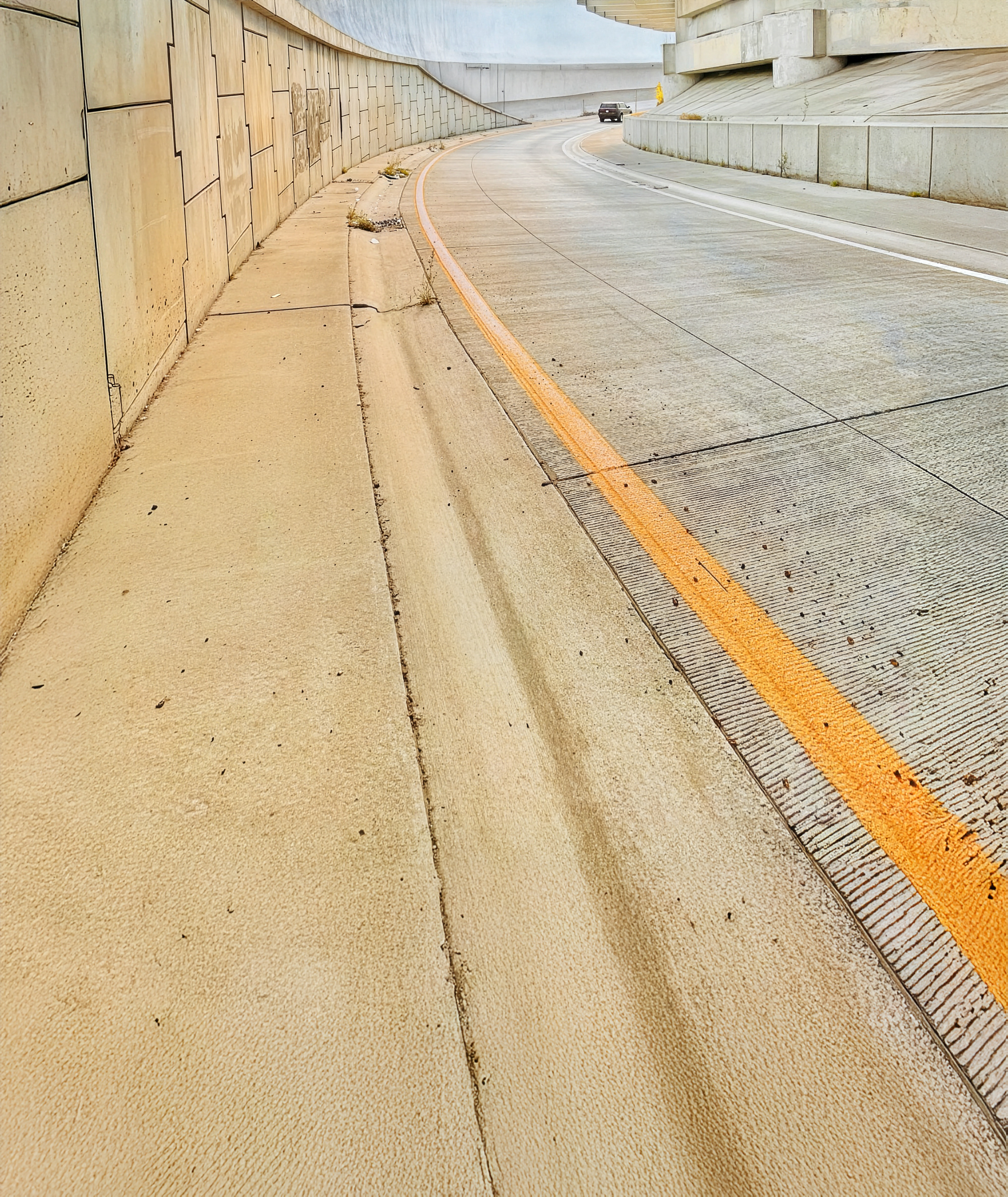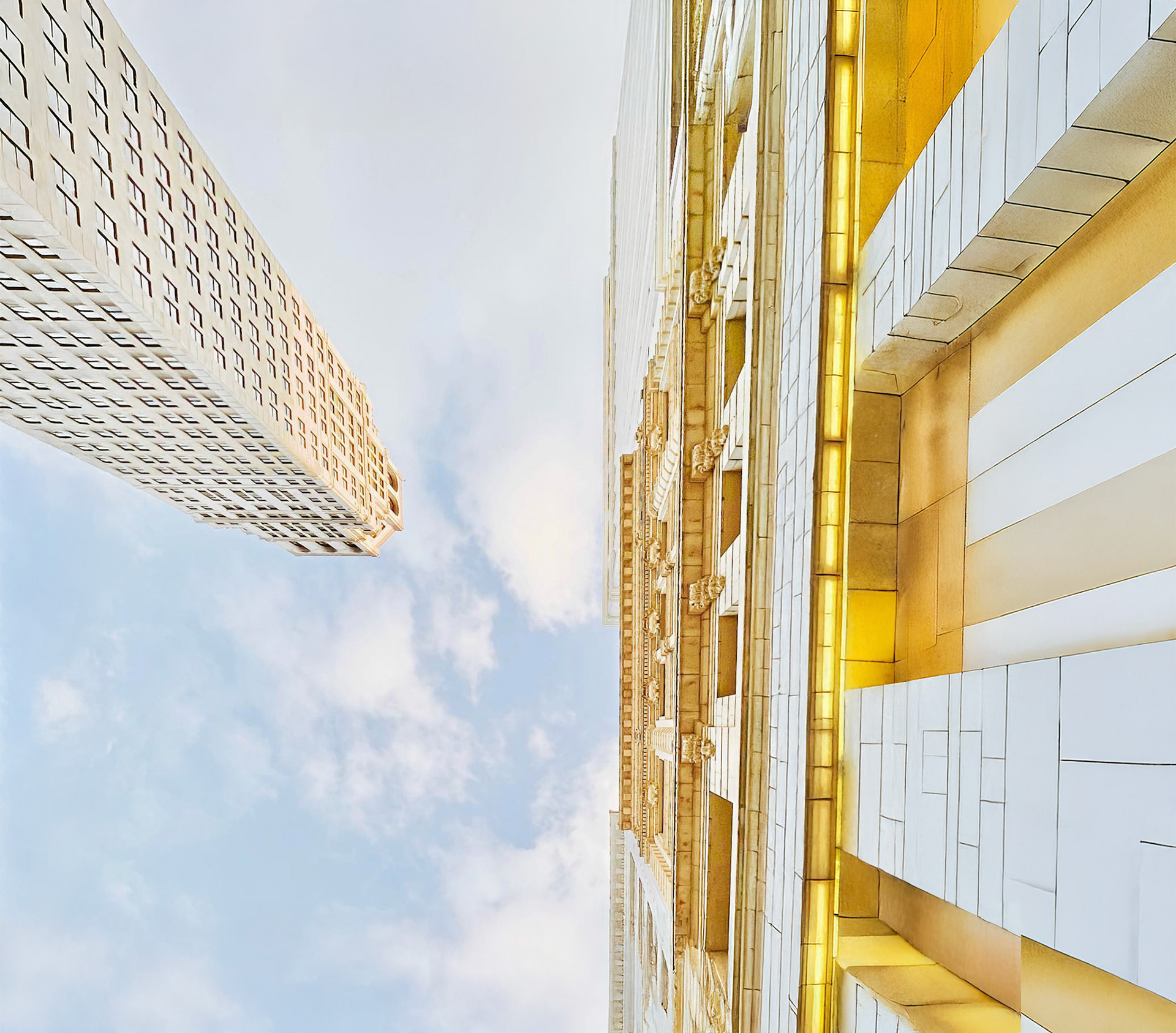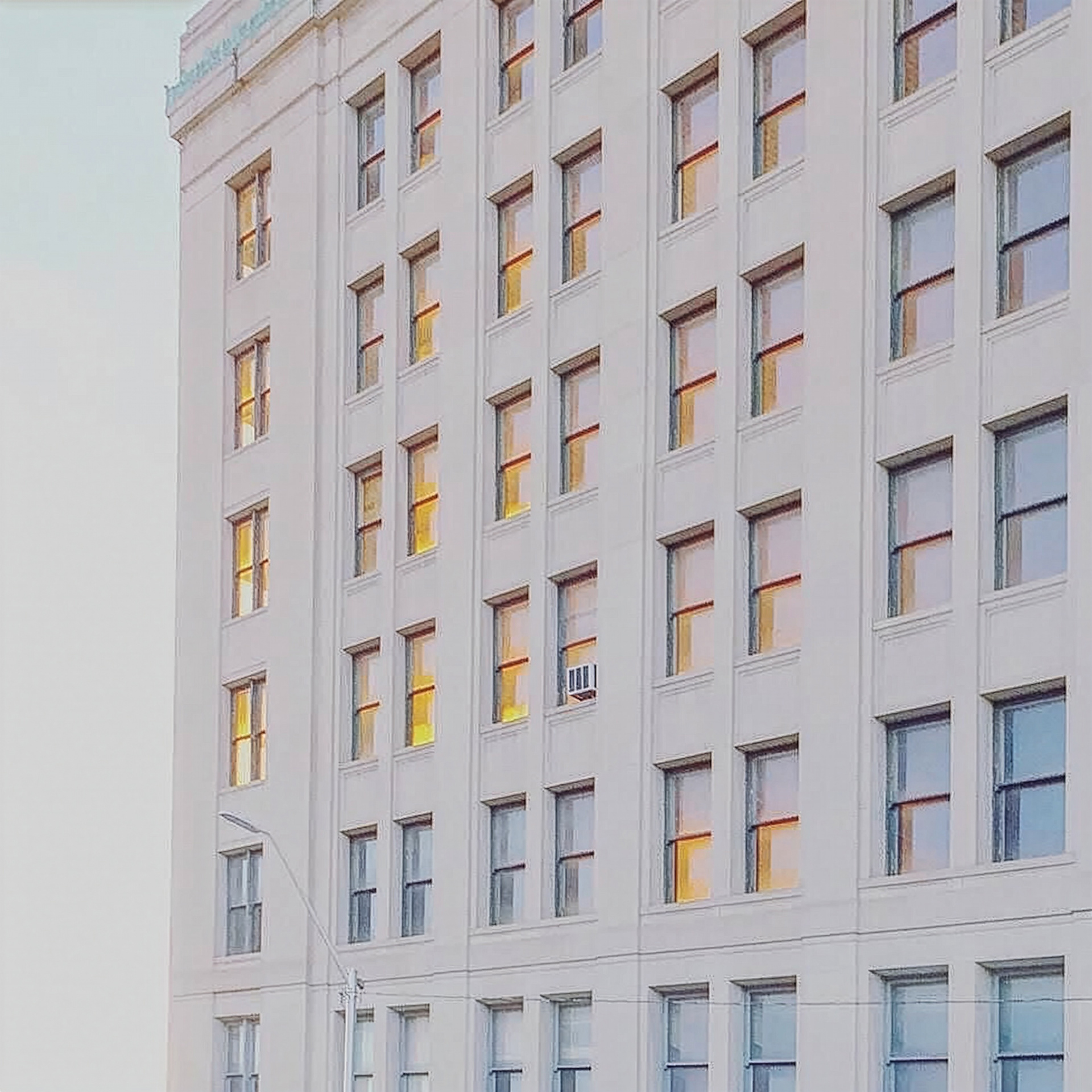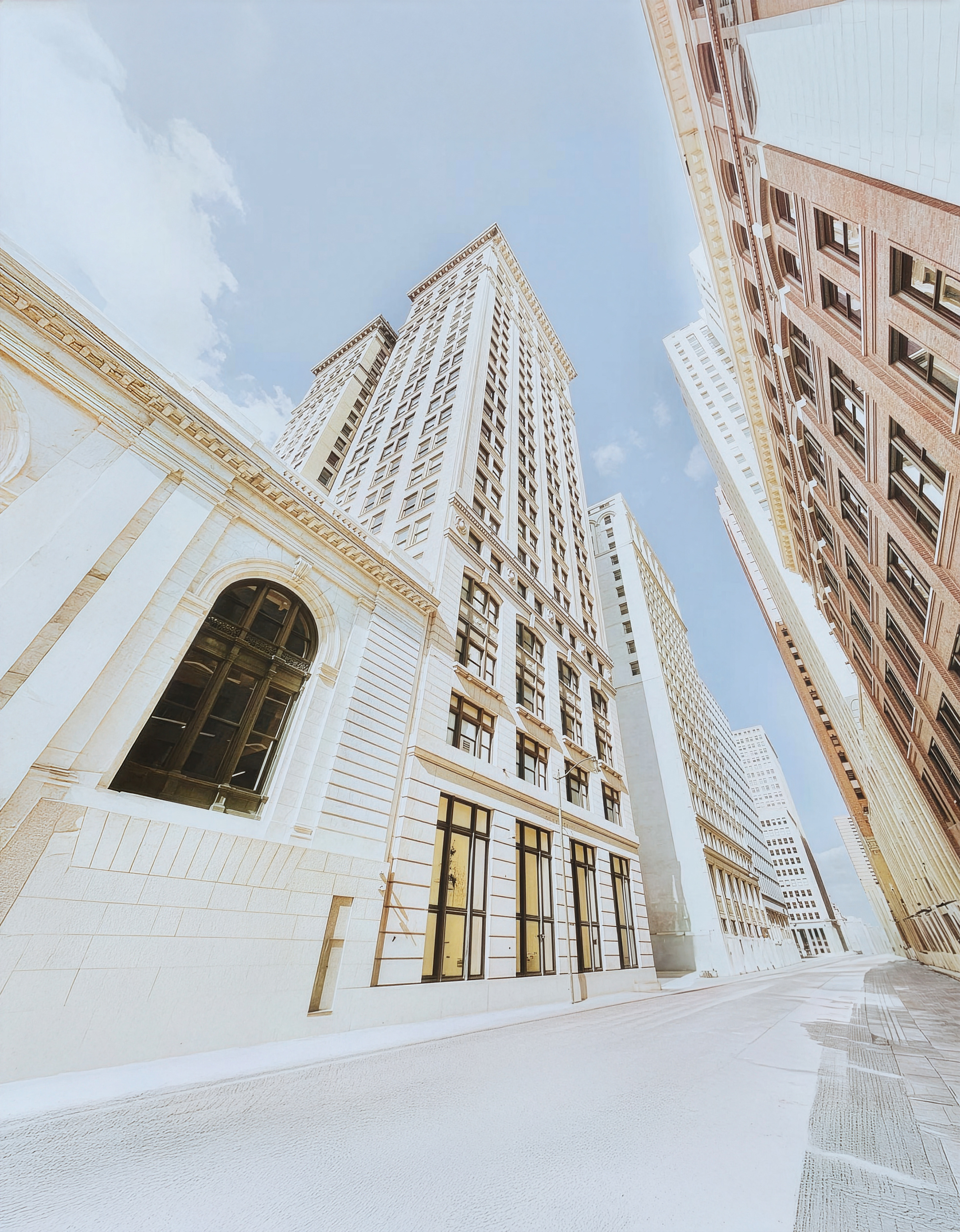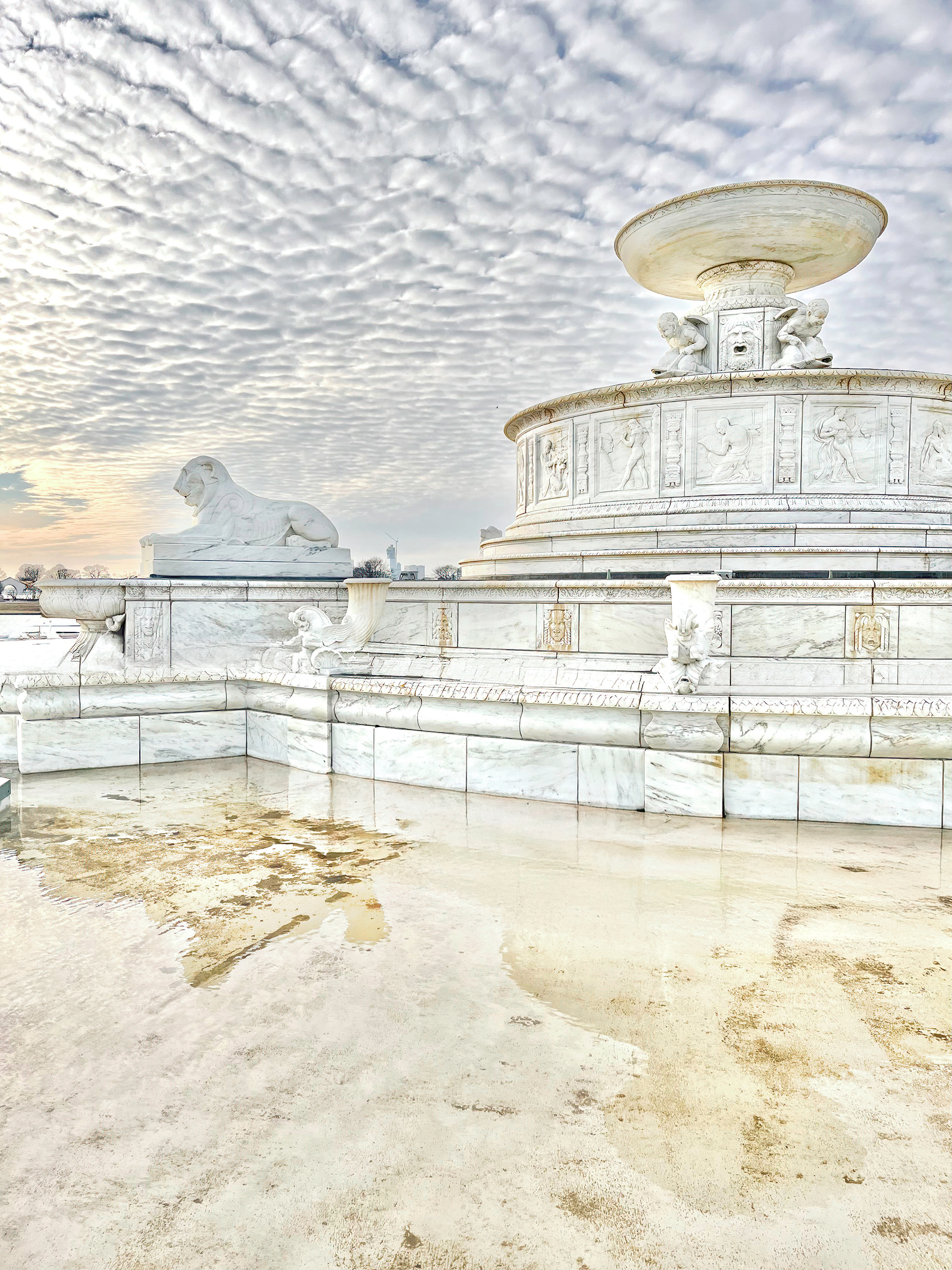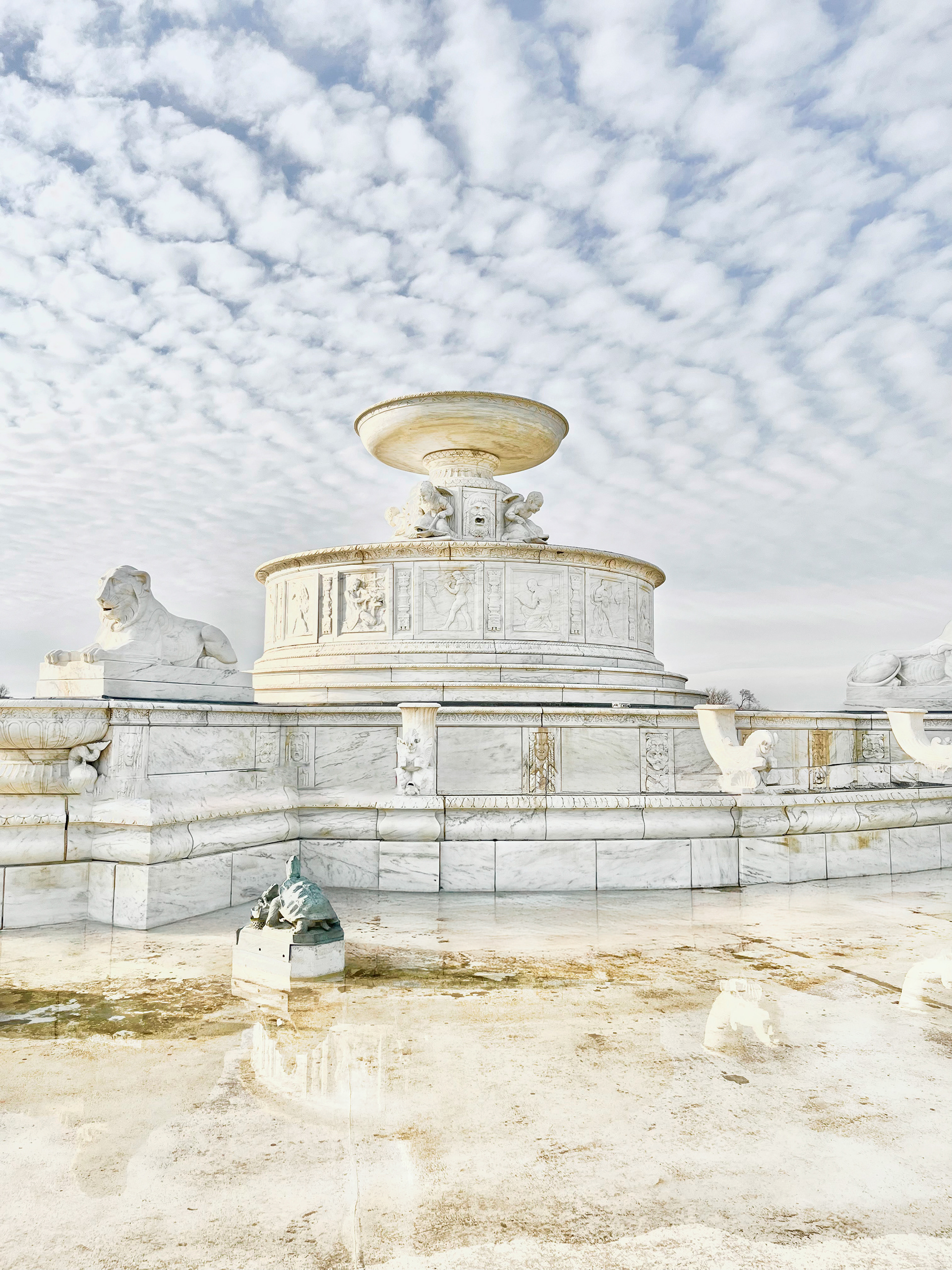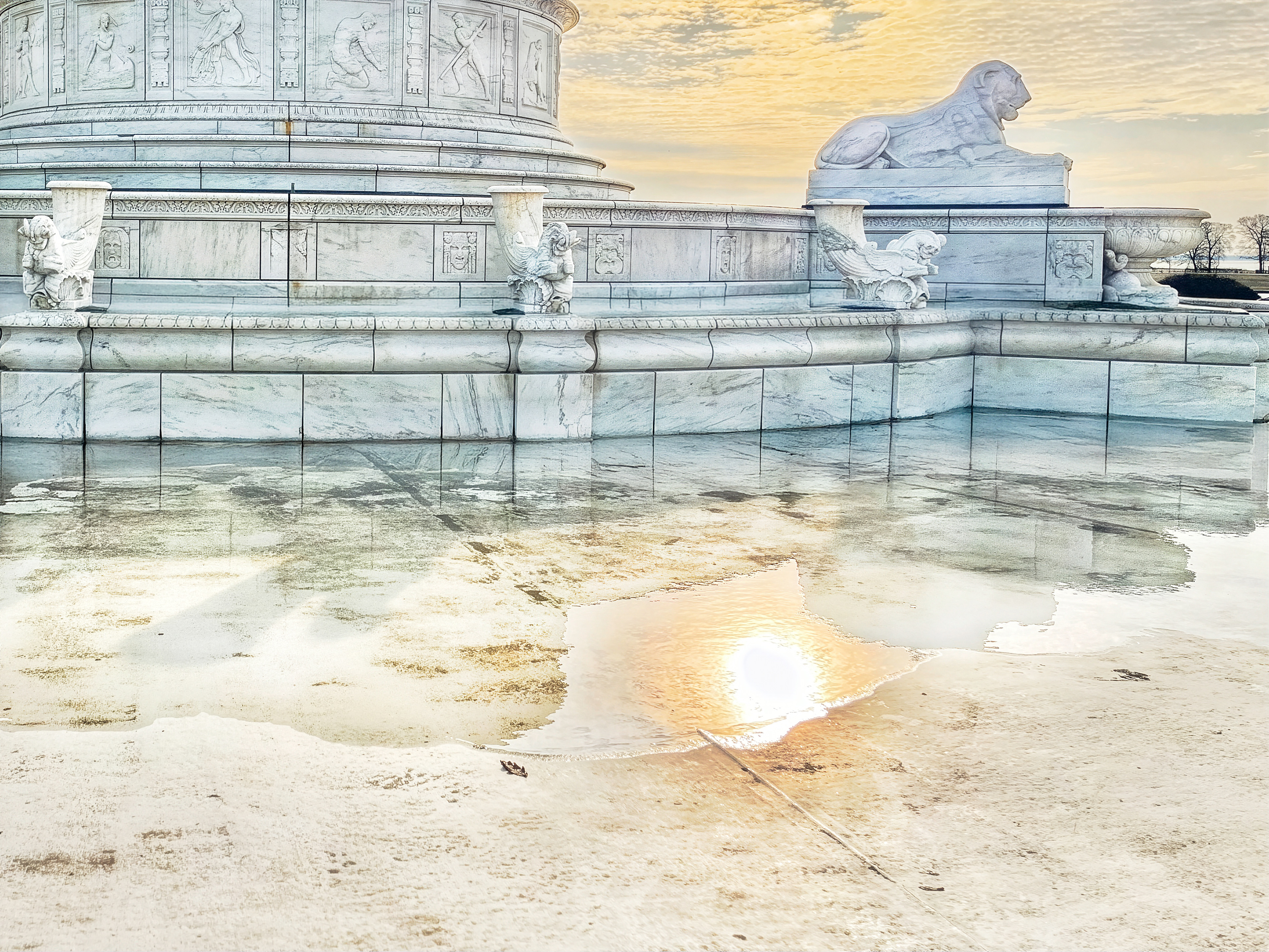

A quiet futurism settles over Detroit’s architectural marrow—an imagined tomorrow where the city’s industrial past has been distilled, clarified, and burnished into a rare urban minimalism.
Detroit appears here as a city re-articulated by light.
The edges are cleaner, the surfaces calmer; the streets seem to exhale in long, measured breaths. Buildings—some remembered, some reimagined—stand in a compositional equilibrium rarely afforded to cities still tethered to their own history. In these images, Detroit is not rebuilt but refocused, as though an unseen hand had wiped the soot from its skyline and revealed the underlying geometry of a place long misunderstood.
There is a persistent stillness in this vision.
A speculative hush.
The kind that arises when a city becomes aware of its own future and decides, quietly, to lean toward it.
The familiar landmarks feel newly tactile. Brick and limestone soften into a near-ceramic clarity; windows glow with a shy, metallic warmth. The avenues extend in elegant lines, uncongested, as if the urban grid itself had been ironed smooth. Even the air seems reconstructed—paler, cleaner, tinged with the luminescence of a morning that has not yet arrived.
What emerges is not fantasy, but possibility.
Detroit as a study in architectural restraint: light falling on restored cornices, empty intersections resonating with potential, facades holding the memory of industry while whispering a different kind of future. A future in which the city’s density is not measured in noise but in intent.
These images read like frames from a film that has yet to be made—an art-house portrait of an American metropolis entering its most quietly radiant chapter. Detroit, imagined forward, sheds its narratives of decline and instead wears the elegance of a place that has finally grown into its own design.
A city not reborn.
Simply re-seen.