
Curated. Editorial. Collectible.
Designed for the age of intelligent creation.
OfToil Studio produces AI-generated visual assets developed with the precision of a designer and the sensibility of an art director. Each work is built from a narrative core — a fusion of concept, craft, and intelligent automation — ready for deployment across the publishing, design, and advertising industries.
Applications
Editorial design · book publishing · campaign concepting · brand identity · visual research · experiential design · web & motion · exhibition and poster work · fine art reproduction
Editorial design · book publishing · campaign concepting · brand identity · visual research · experiential design · web & motion · exhibition and poster work · fine art reproduction
Available Formats
High-resolution stills · print-ready artwork · layered source files · bespoke commissions. Each asset is crafted with an editorial eye and is available via custom licensing, or direct collaboration through OfToil Studio’s creative archive.
High-resolution stills · print-ready artwork · layered source files · bespoke commissions. Each asset is crafted with an editorial eye and is available via custom licensing, or direct collaboration through OfToil Studio’s creative archive.
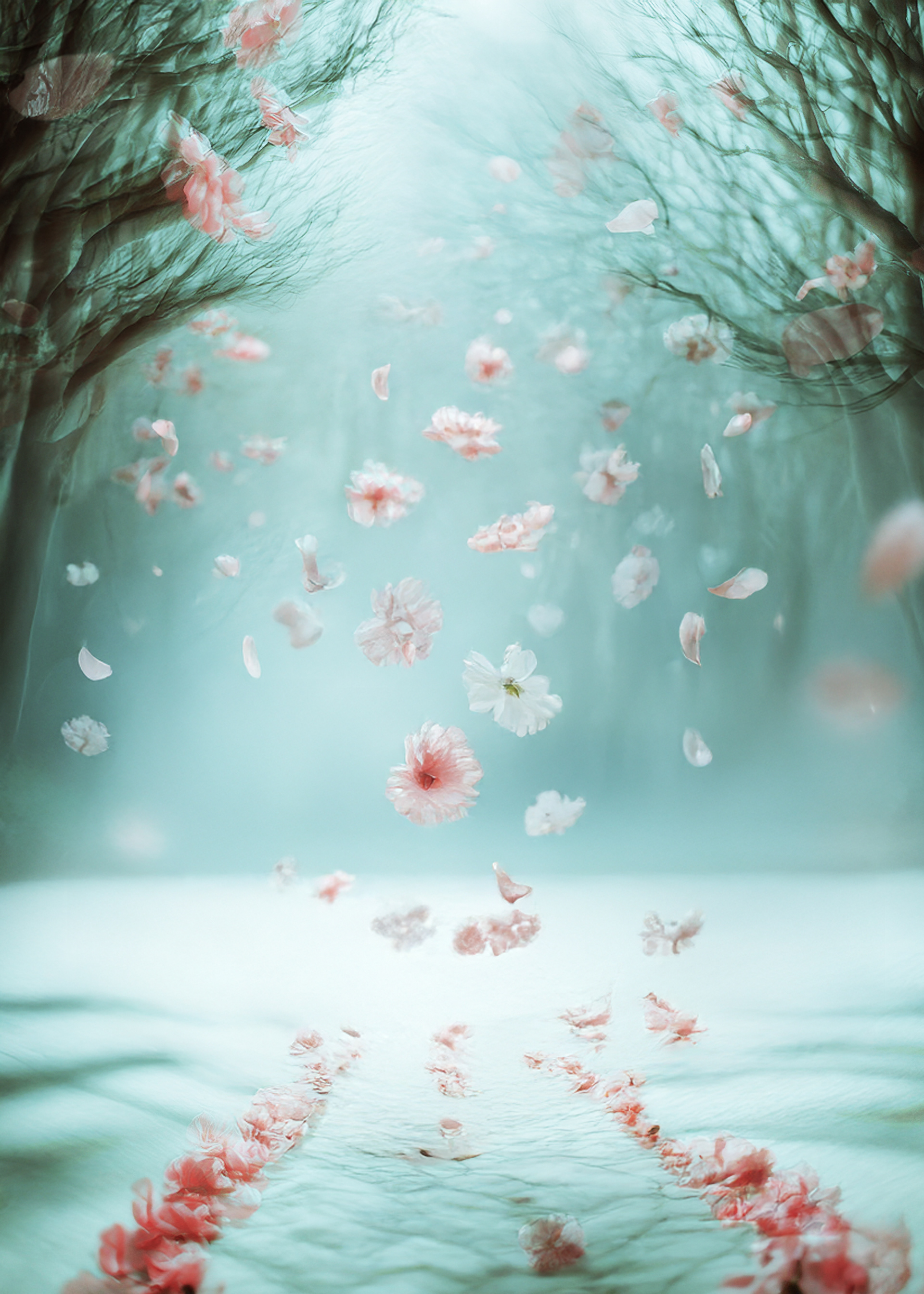
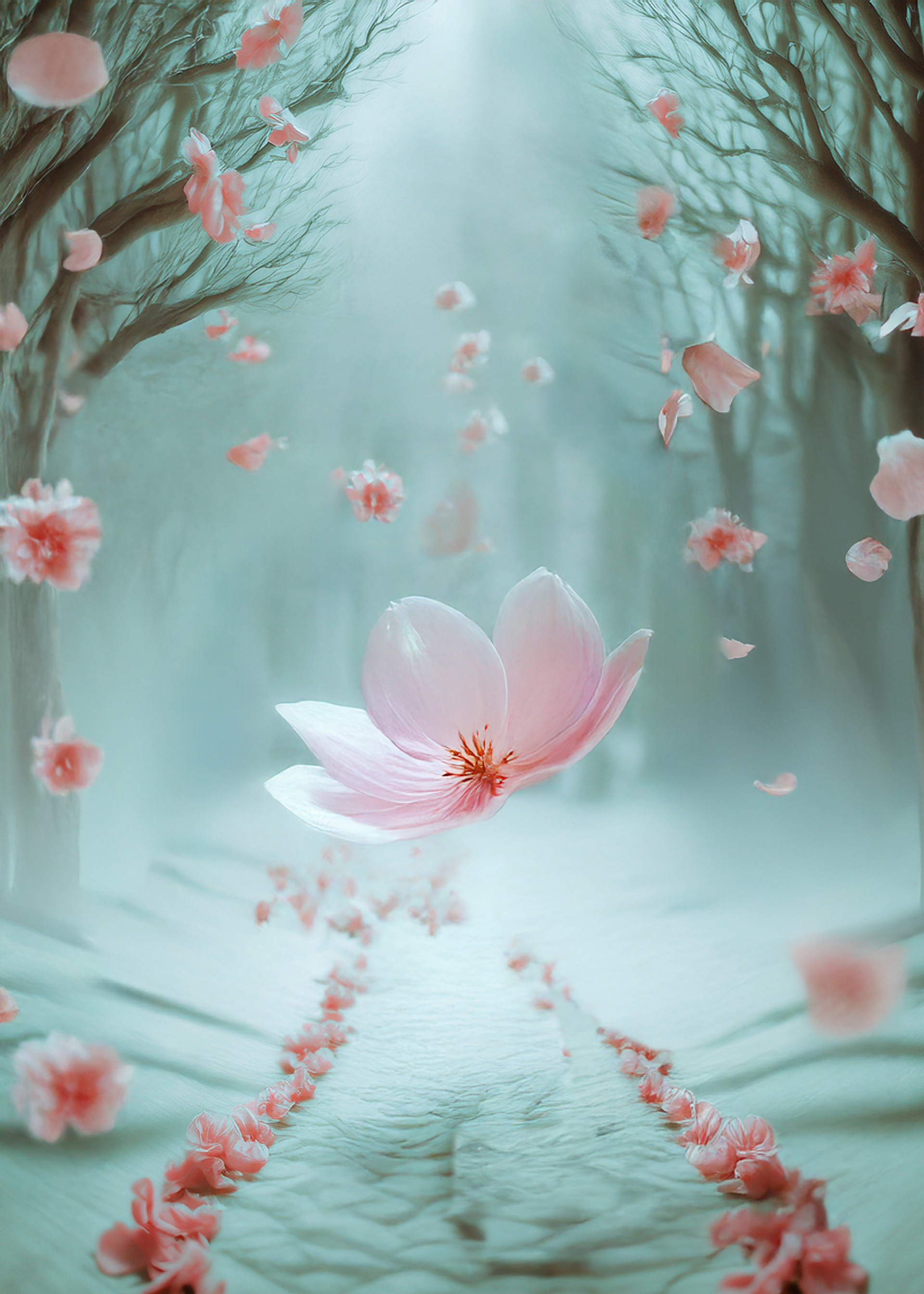
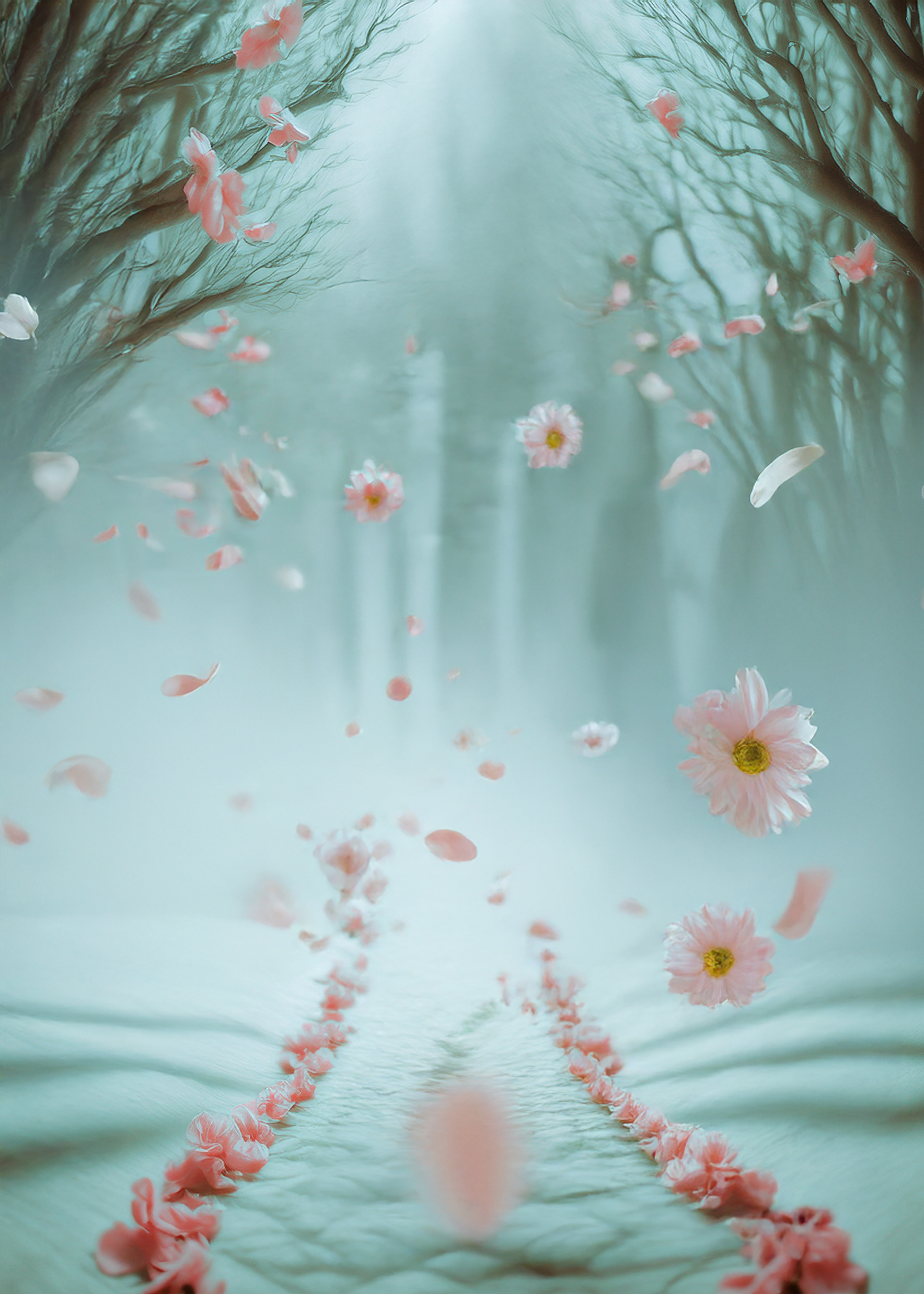
This body of work began not with a manuscript, but with images.
The illustrations emerged first — loosely, intuitively, without a fixed literary anchor — as visual meditations on pressure, suspension, tenderness, and landscape under strain. They carried the emotional temperature of a world already altered: petals falling like time, corridors turning into forests, figures veiled by flowers, open rivers flowing after something unnamed has passed.
Only later were the poems sought.
Rather than illustrating specific texts, the process moved in reverse: the images were treated as emotional instruments, and Kamil Krzysztof Baczynski’s poetry was revisited through them. Poems were not chosen for narrative correspondence, but for shared internal states — rhythm, inevitability, fragility, devotion under threat, enchantment with an undertow, and survival without triumph. Several poems were tested, abandoned, returned to. Images were reassigned. Meanings shifted. The book assembled itself through resonance rather than chronology.
The final selection forms a curated tome of thirteen poems — not a “best of,” but a carefully tuned emotional arc:
Generational fracture and awareness (Pokolenie)
Inevitability, repetition, and quiet pressure (Deszcze, Ten czas, Z głowa na karabinie)
Love as resistance and shelter (Niebo złote ci otworze, Piesn o szczesciu, Modlitwa do Bogarodzicy)
Enchantment, illusion, and dangerous beauty (Biała magia, Ballada o trzech królach, Wesele poety)
Aftermath, duration, and open space (Miasto, Elegia o… [chłopcu polskim], Pokolenie as echo).
Across these poems, recurring themes emerge naturally: vulnerability, fragility of the body and the bond, love lived under erasure, nature as both refuge and force, time under compression, and loss without closure. War is present not as spectacle, but as condition — shaping breath, gesture, and intimacy.
The illustrations respond to these themes rather than depict them. They function as atmospheric counterparts: visual pauses, emotional fields, and symbolic environments in which the poems can resonate anew. Nature becomes temporal. Figures hover between touch and disappearance. Landscapes speak after voices fall silent.
This project exists simultaneously as:
a book cover and full editorial design concept,
a limited illustration series presented as autonomous art assets, and a portfolio of possibilities — for publishers, institutions, or collaborators interested in commissioning a complete poetic volume or related works.
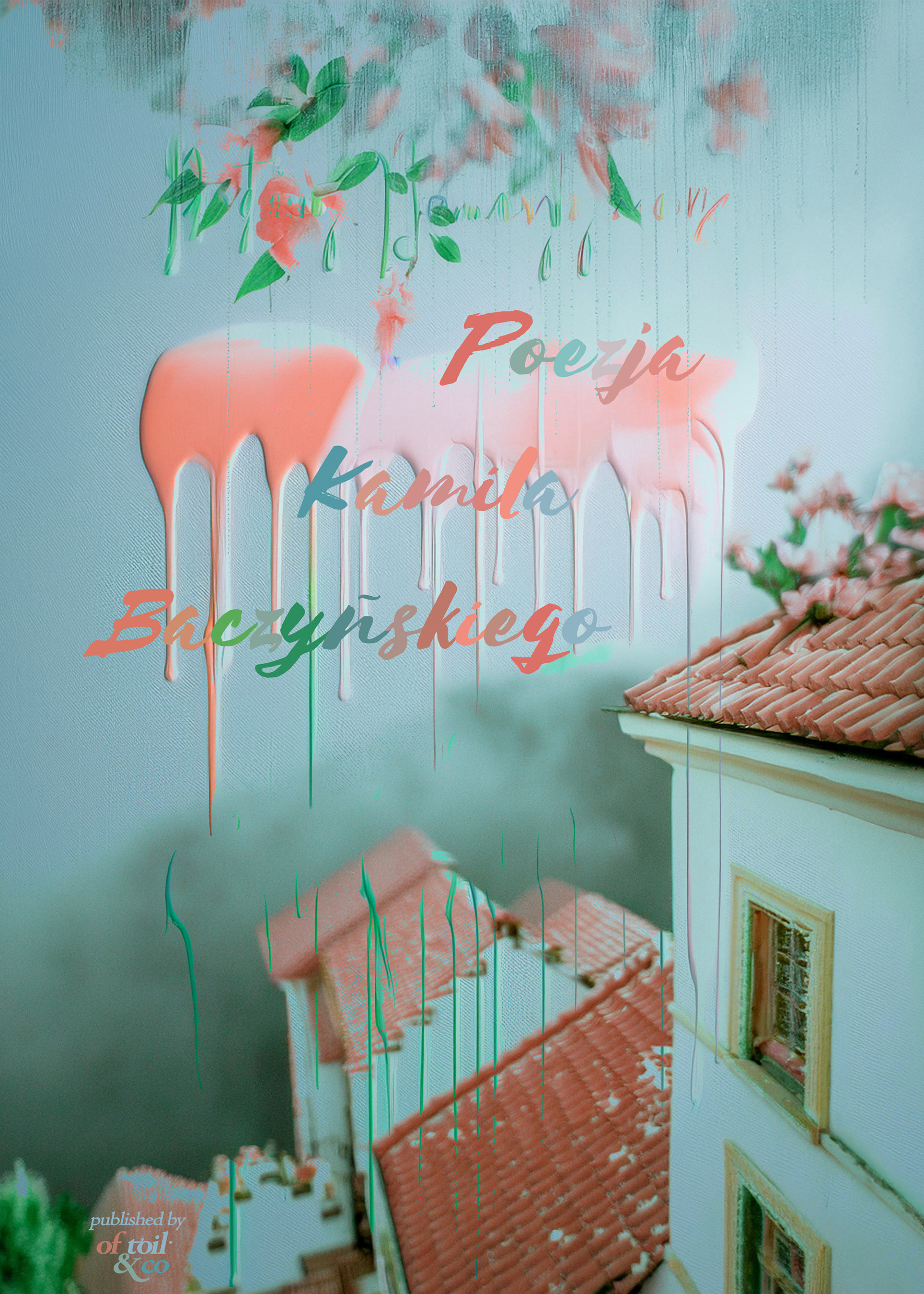

Illustration SET I — Falling / Repetition / Pressure
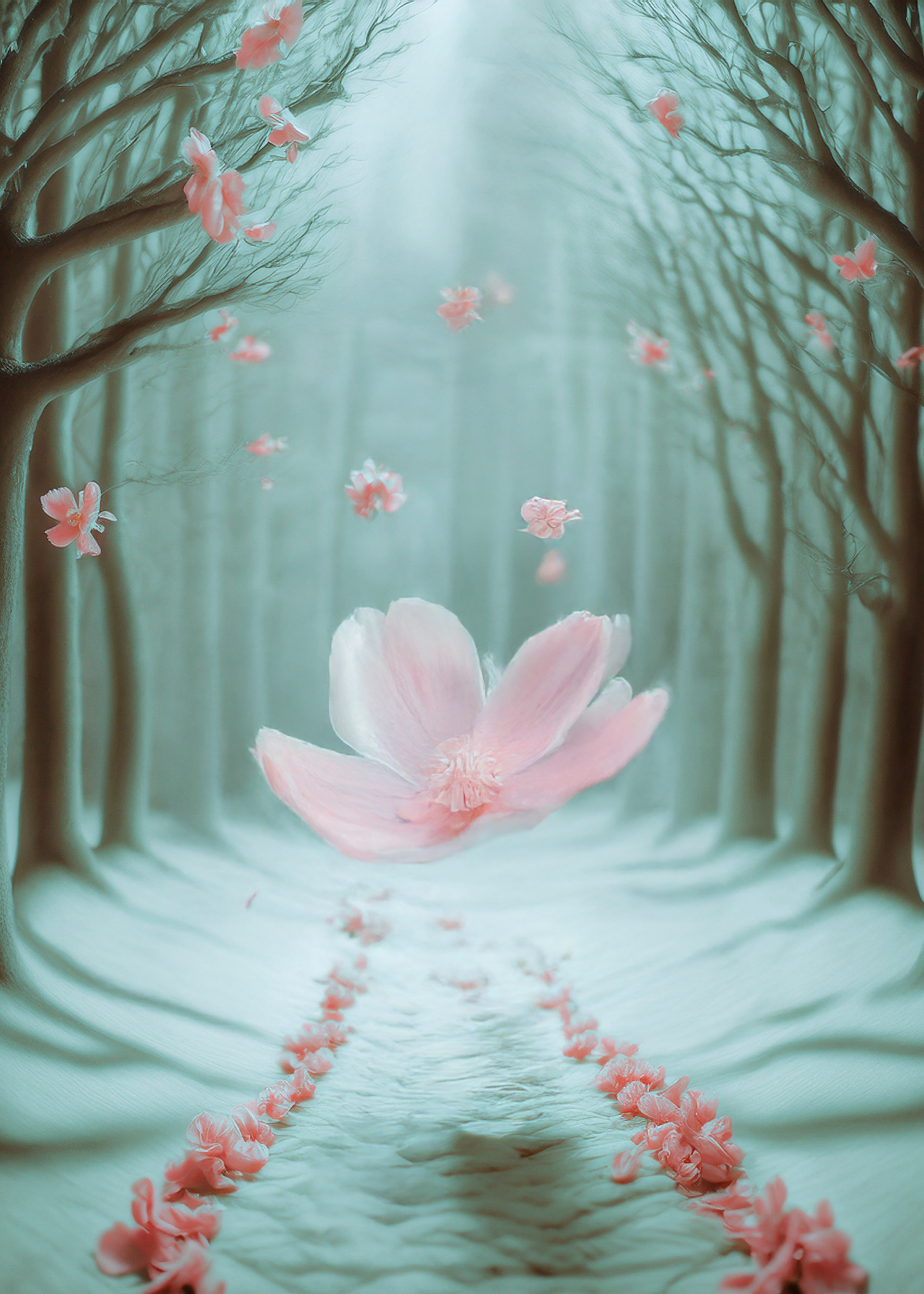
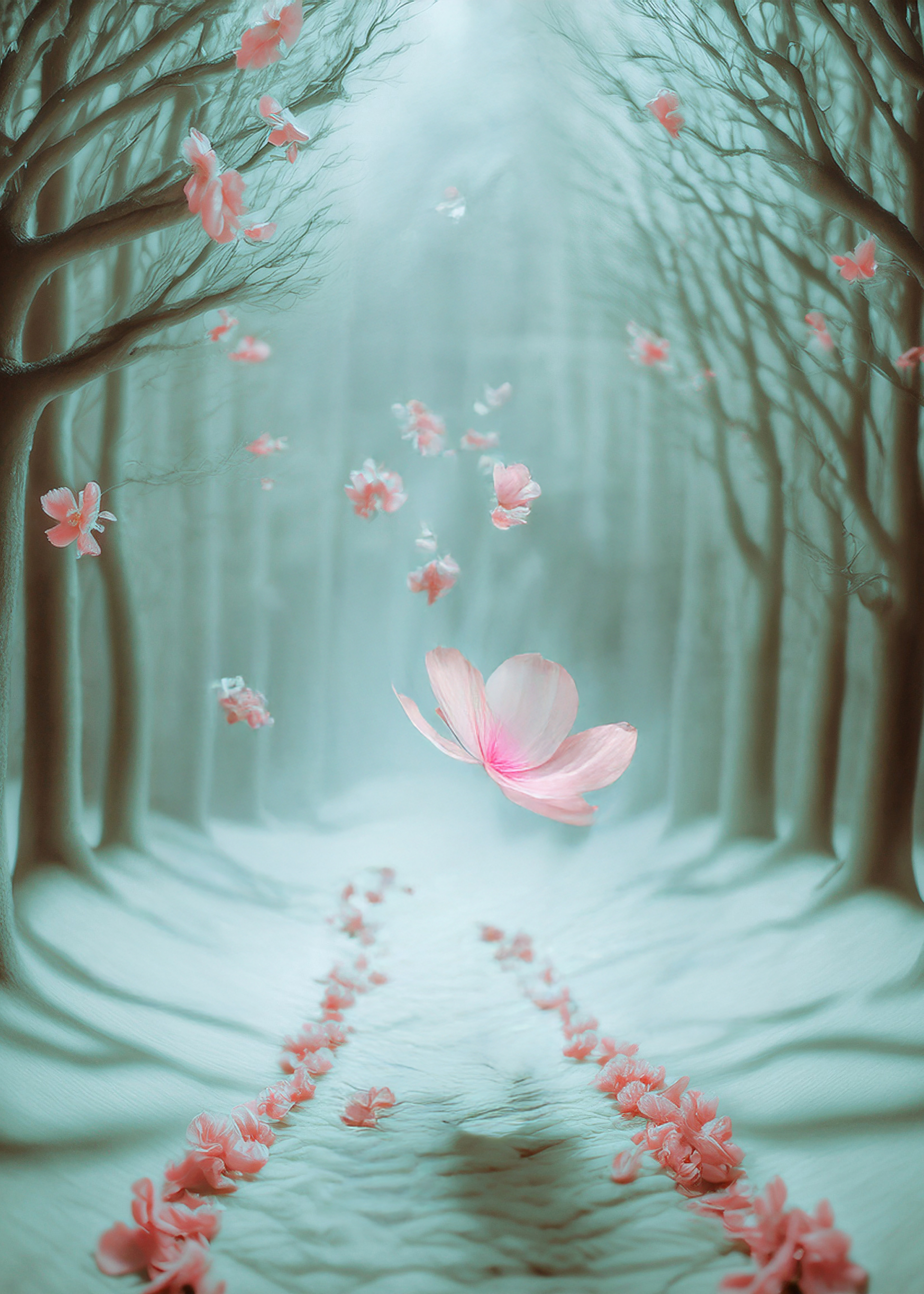
(petals in air, corridor-forest, suspended descent)
This set establishes the book’s pulse. The images move through narrow passages and open voids with the same insistence: falling not as collapse, but as condition. Petals drift like metronomes, corridors stretch into vegetal tunnels, descent is prolonged and unresolved. Nothing breaks; everything repeats.
Paired with Deszcze, Ten czas, and Z głową na karabinie (read here as mental suspension rather than combat), the imagery treats nature as a system under pressure. Time behaves like weather: dense, rhythmic, unavoidable. The forest becomes a corridor; the corridor becomes a thought that cannot be exited.
Inevitability is rendered quietly. The insistence is not loud — it is continuous.

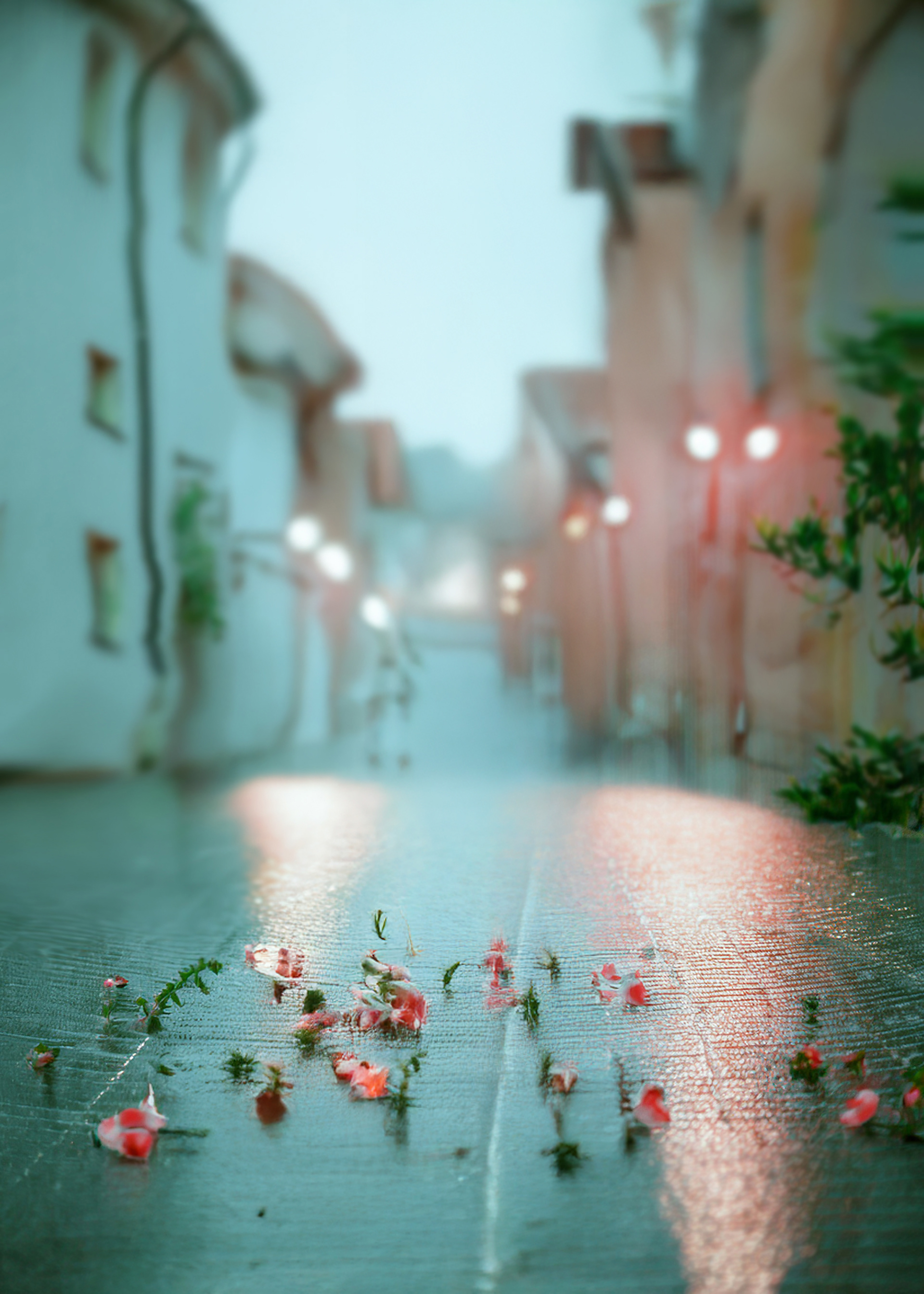
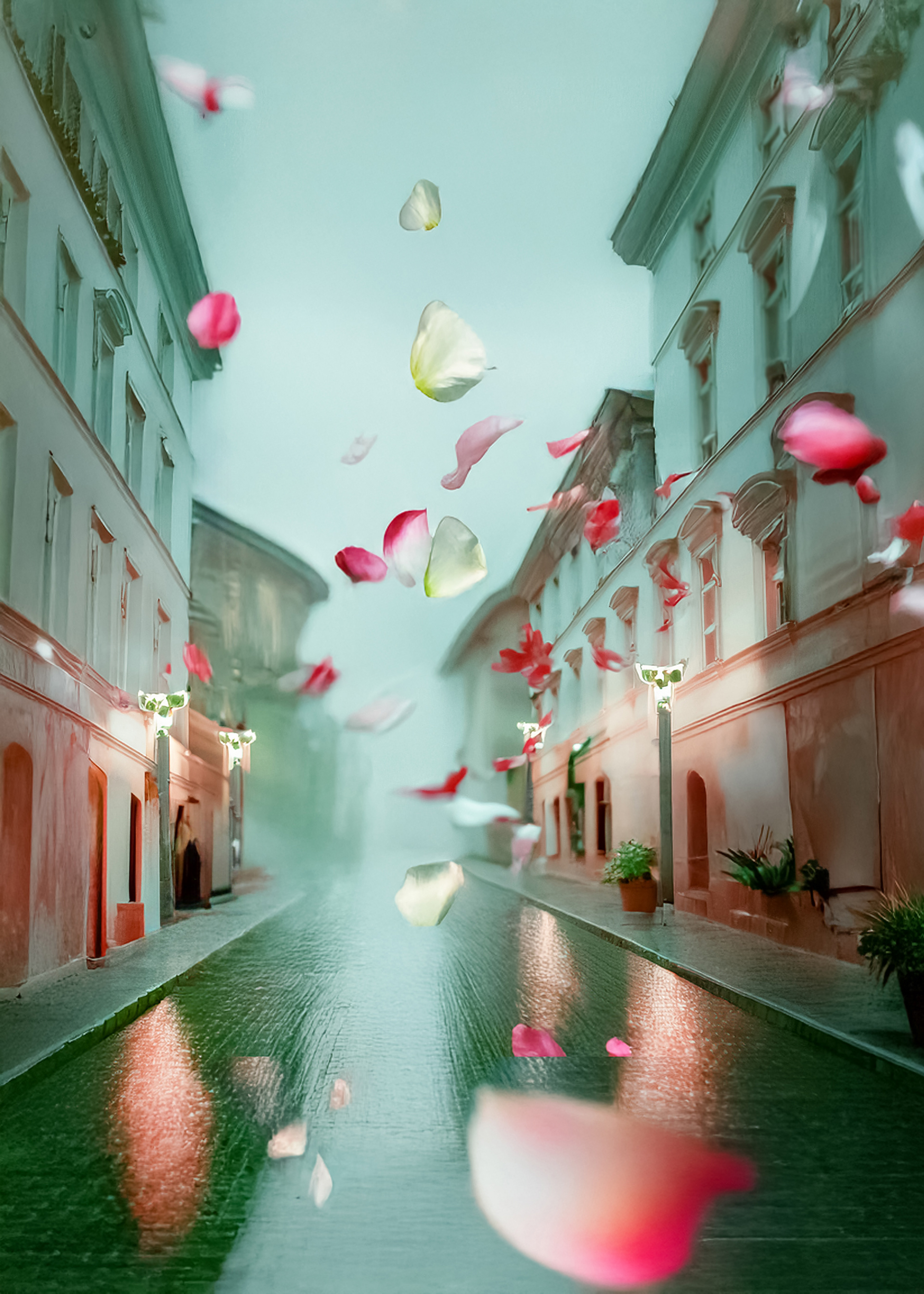
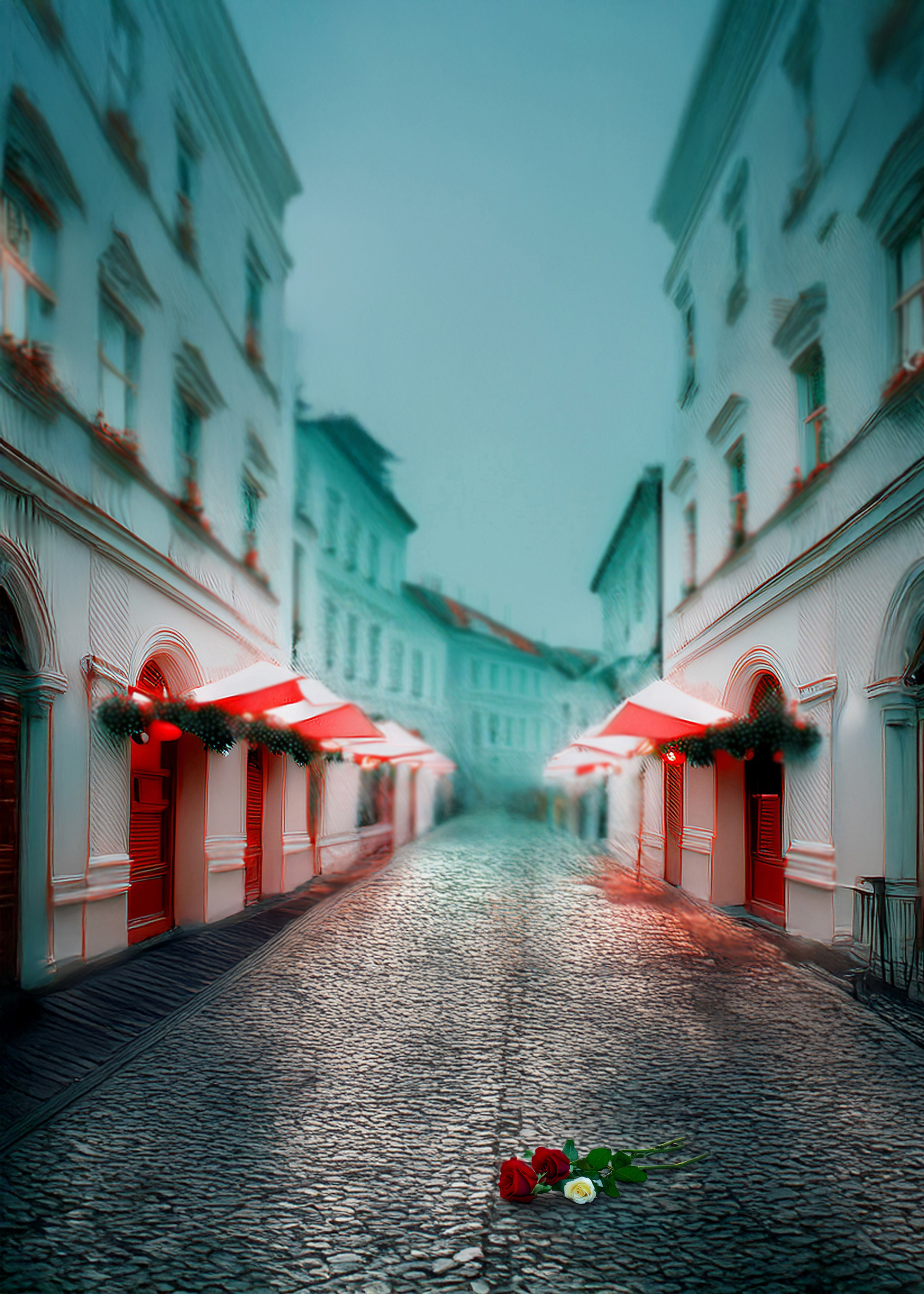
Illustration SET II — Intimacy / Shelter / Offered Heaven
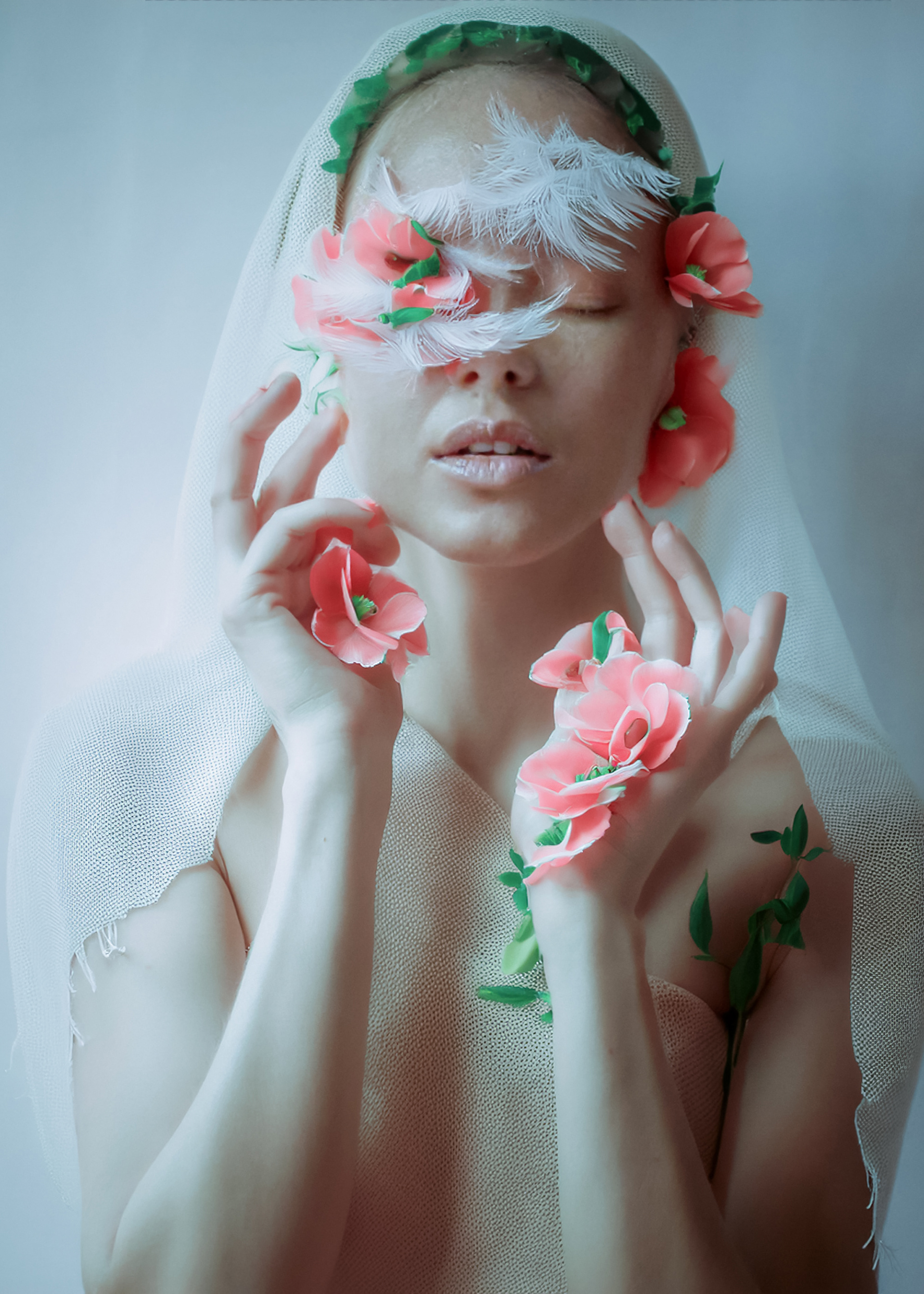
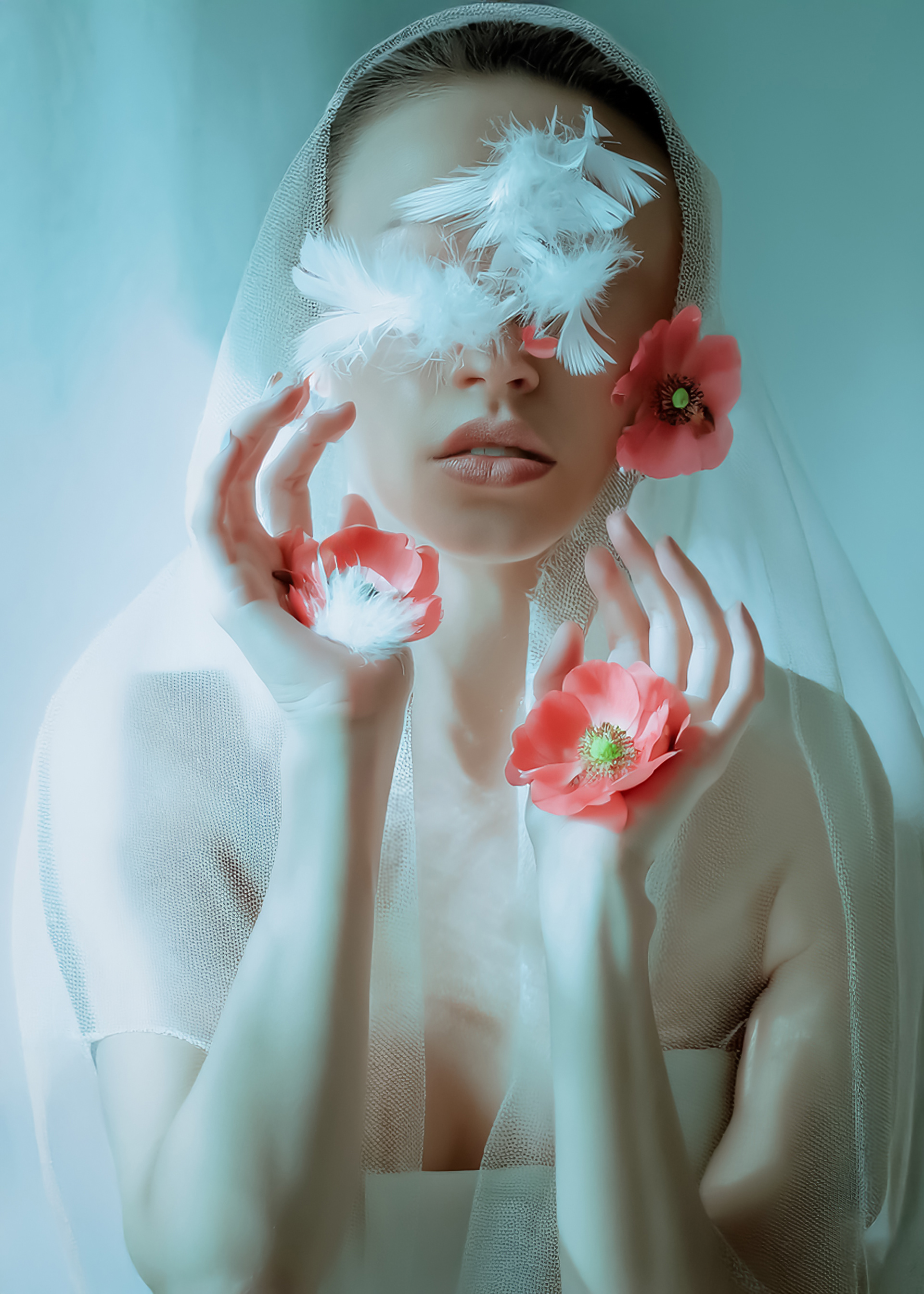
(veiled figures, flowers over eyes, touch as vow)
This is the emotional heart of the book. Figures appear close to one another, yet partially obscured — faces softened, gestures slowed, eyes replaced by flowers or light. Intimacy here is not exposure but protection.
Niebo złote ci otworze, Piessn o szczesciu, and Modlitwa do Bogarodzicy frame tenderness as resistance. Heaven is not distant; it is offered, constructed from proximity, touch, and shared silence. The images suggest that love is not an escape from dissolution, but an architecture built inside it.
Shelter is provisional, but deliberate. The act of caring becomes a structural force.

SET III — Enchantment / Liminal Calm / Pale Forces
(white magic, grasses, soft water, botanical focus)
At first glance, this set appears gentle — grasses, pale surfaces, botanical stillness, water that barely moves. But the calm is deceptive. Everything here feels suspended between spell and waking, beauty and erasure.
Biała magia, Ballada o trzech królach (used for its mythic stillness rather than narrative), and Wesele poety introduce enchantment without reassurance. The images suggest that softness can carry weight, that grace can disarm, that beauty may anesthetize before it reveals its cost.
This is where the book grows dangerous — quietly, almost politely.





SET IV — Landscape After / Open Space / Wide River
(peaceful terrain, flowing water, emptied expanses)
The final set opens outward. Space widens, the river flows, the terrain breathes. Architecture recedes; what remains is land, water, duration. There is no triumph here — only continuation.
Miasto is used as absence rather than structure, Elegia o… [chłopcu polskim] appears sparingly, almost as a residual echo, and Pokolenie anchors the set in endurance rather than resolution. The images do not commemorate; they persist.
This closes the book without closure.
The land remains.
The question remains.
This project exists simultaneously as:
a book cover and full editorial design concept,
a limited illustration series presented as autonomous art assets,
and a portfolio of possibilities — for publishers, institutions, or collaborators interested in commissioning a complete poetic volume or related works.
The book itself is conceived as a limited edition, not for scarcity’s sake, but for attentiveness. A small, deliberate object. A container for tension rather than resolution.
What results is not an illustrated poetry book in the traditional sense, but a dialogue between image and verse, assembled across time: Baczyński’s wartime sensitivity meeting contemporary tools, filtered through curatorial restraint.
The land remains.
The poems remain.
The images listen.


