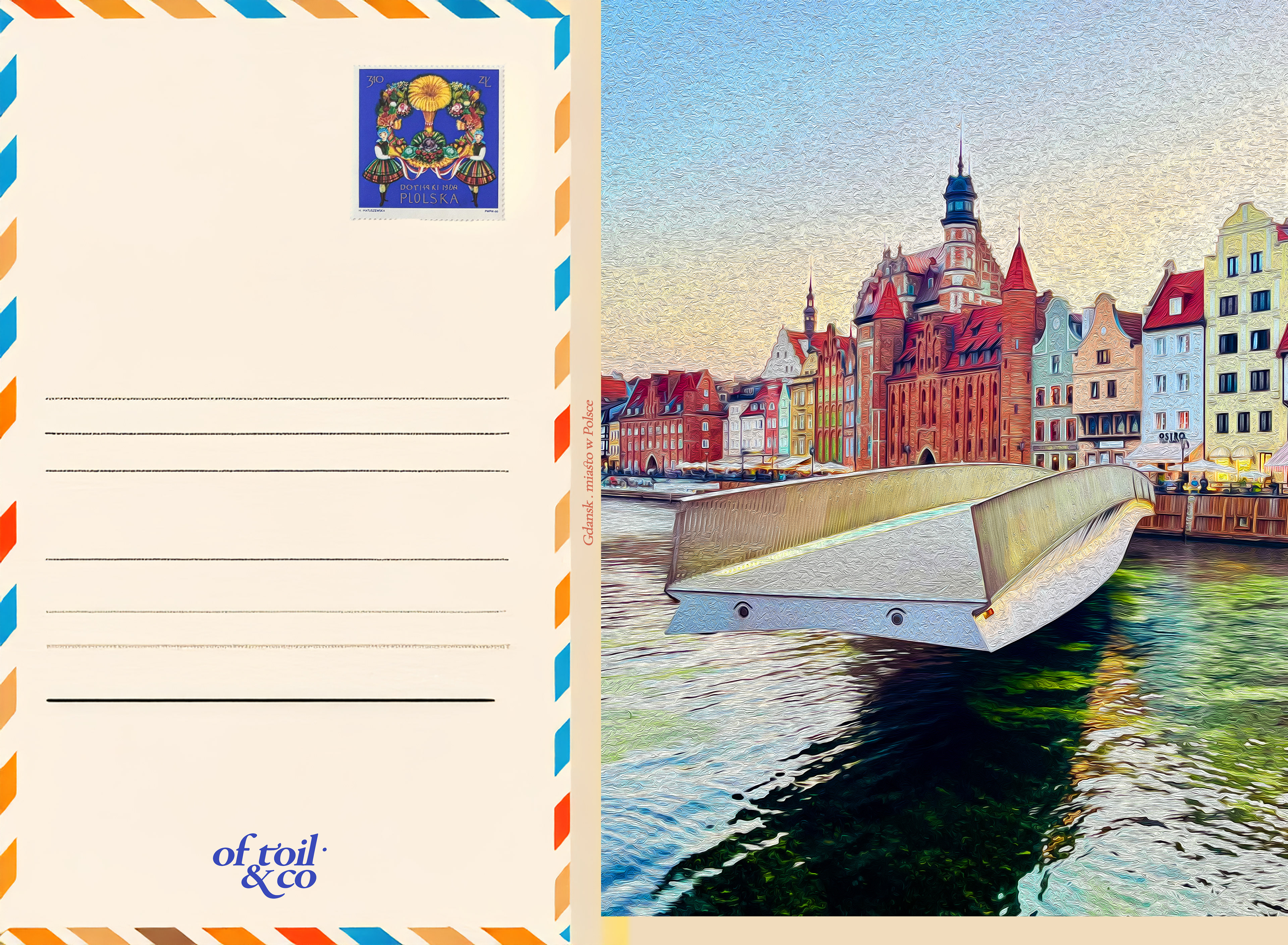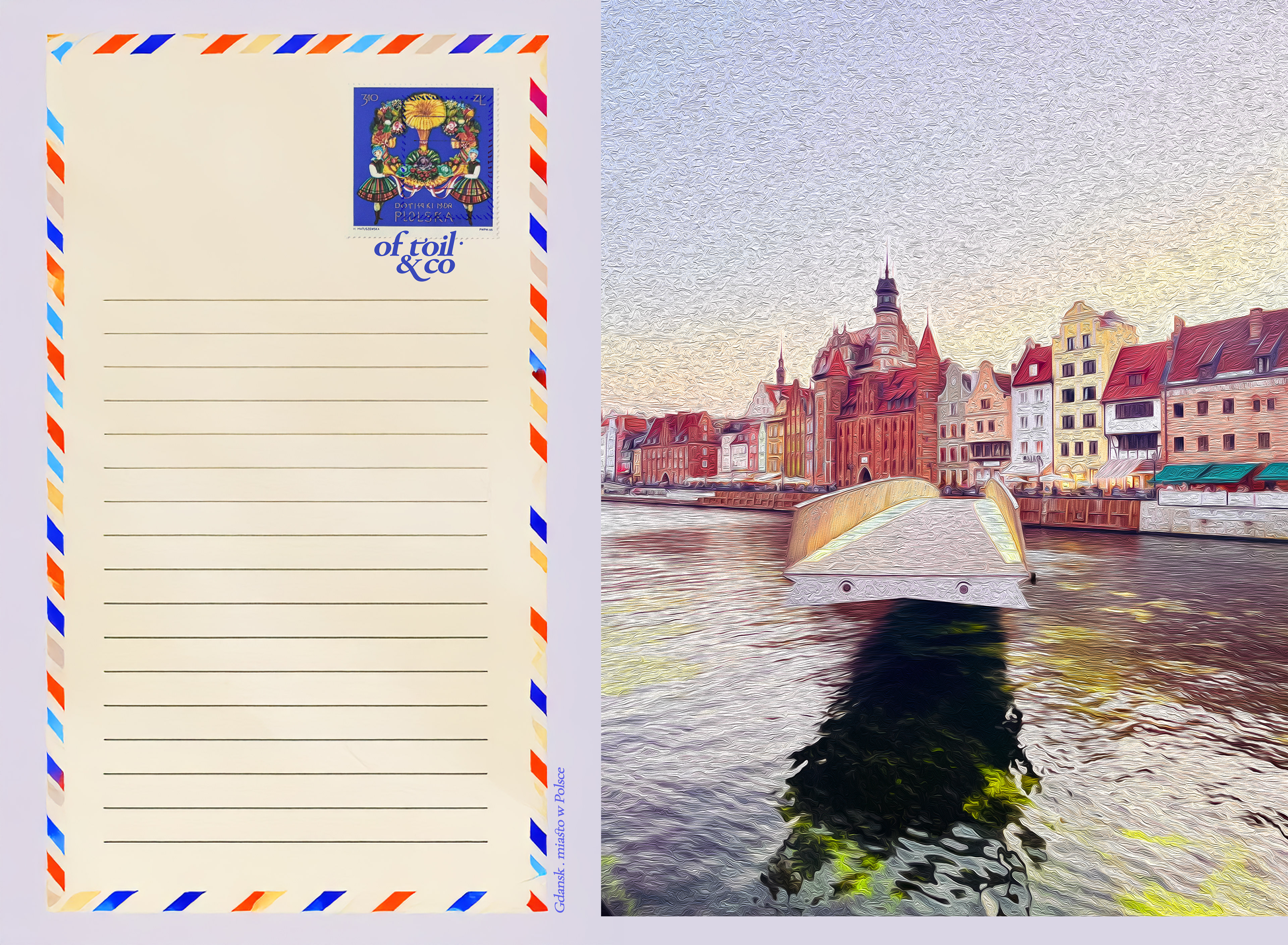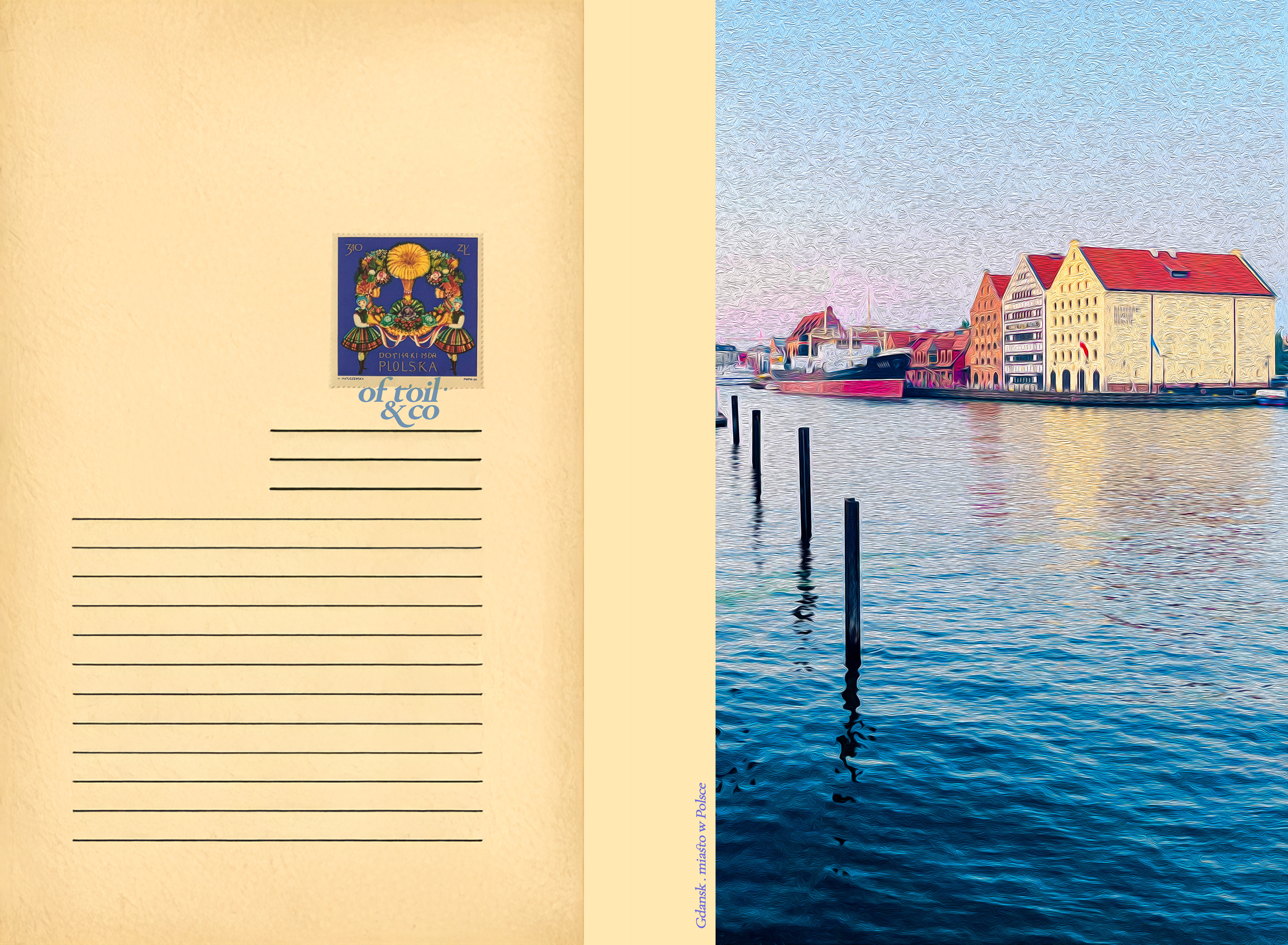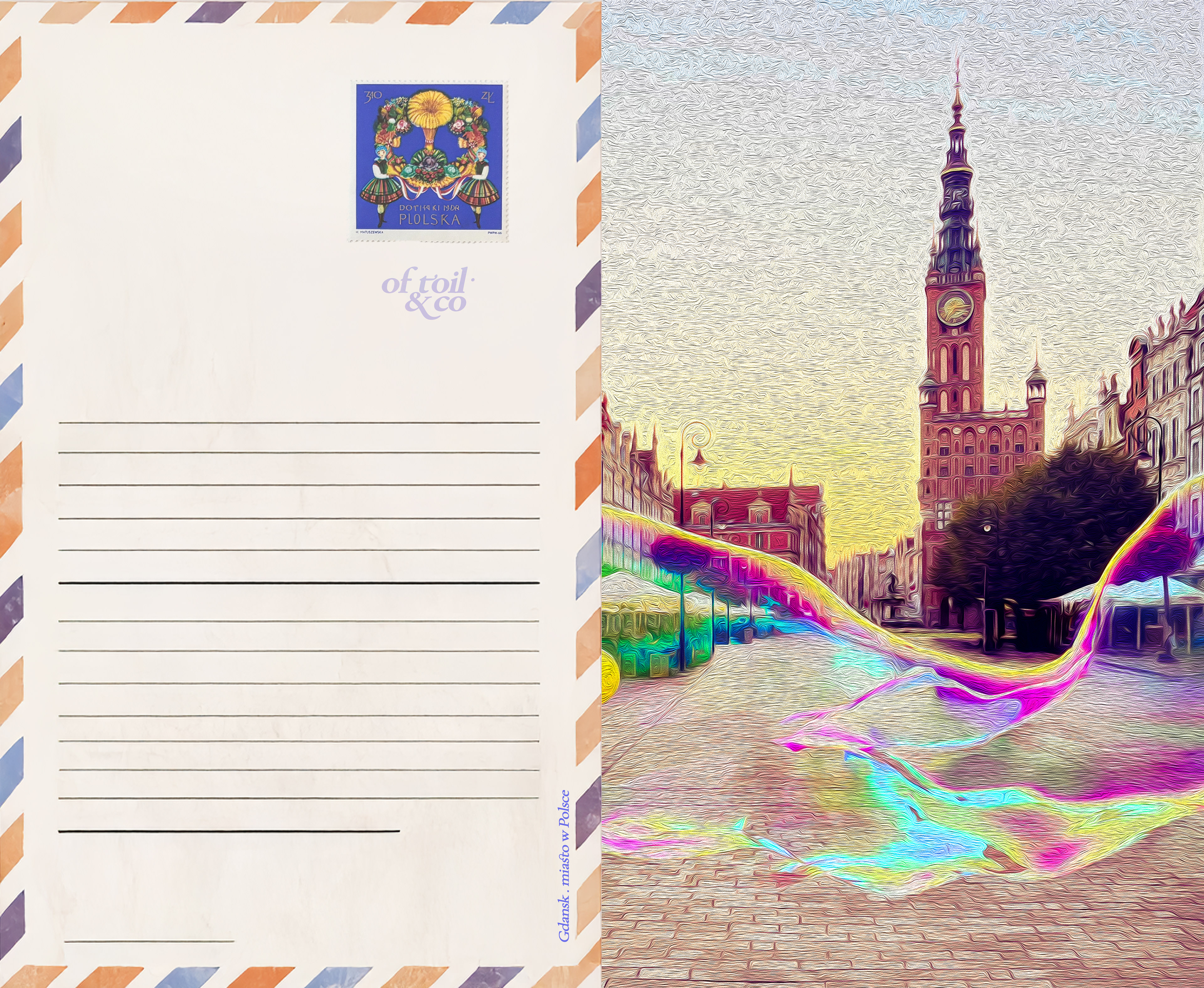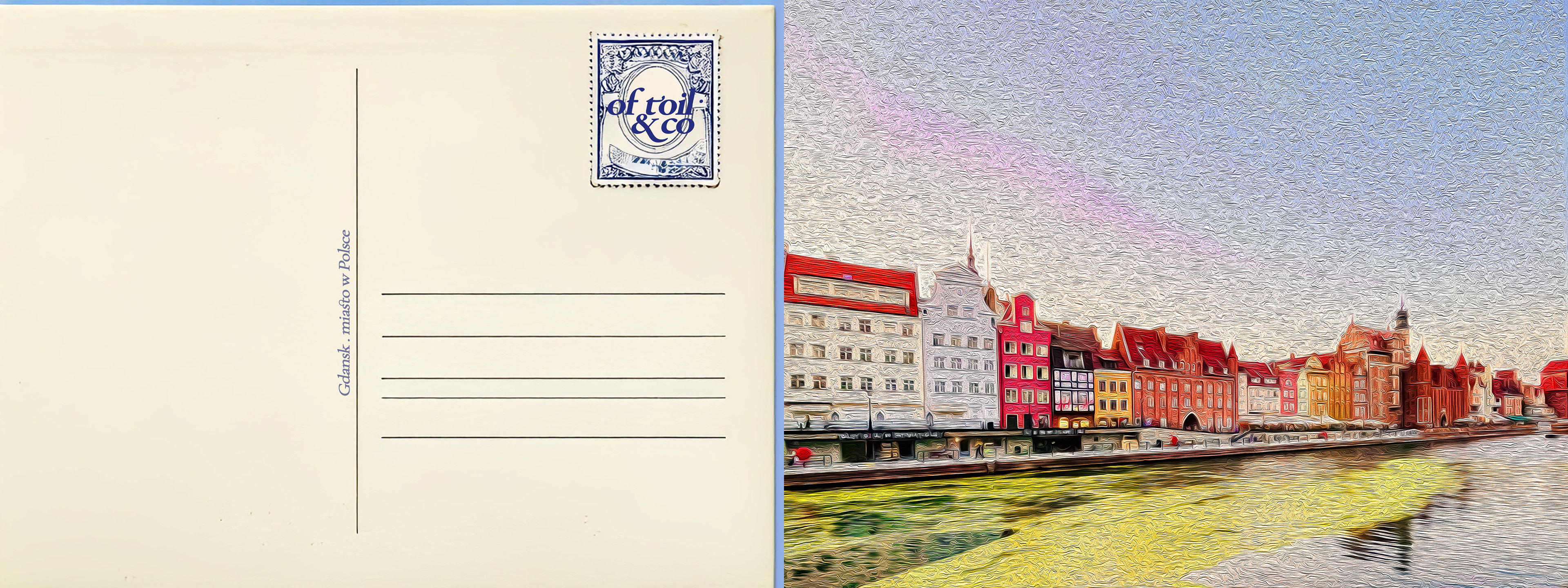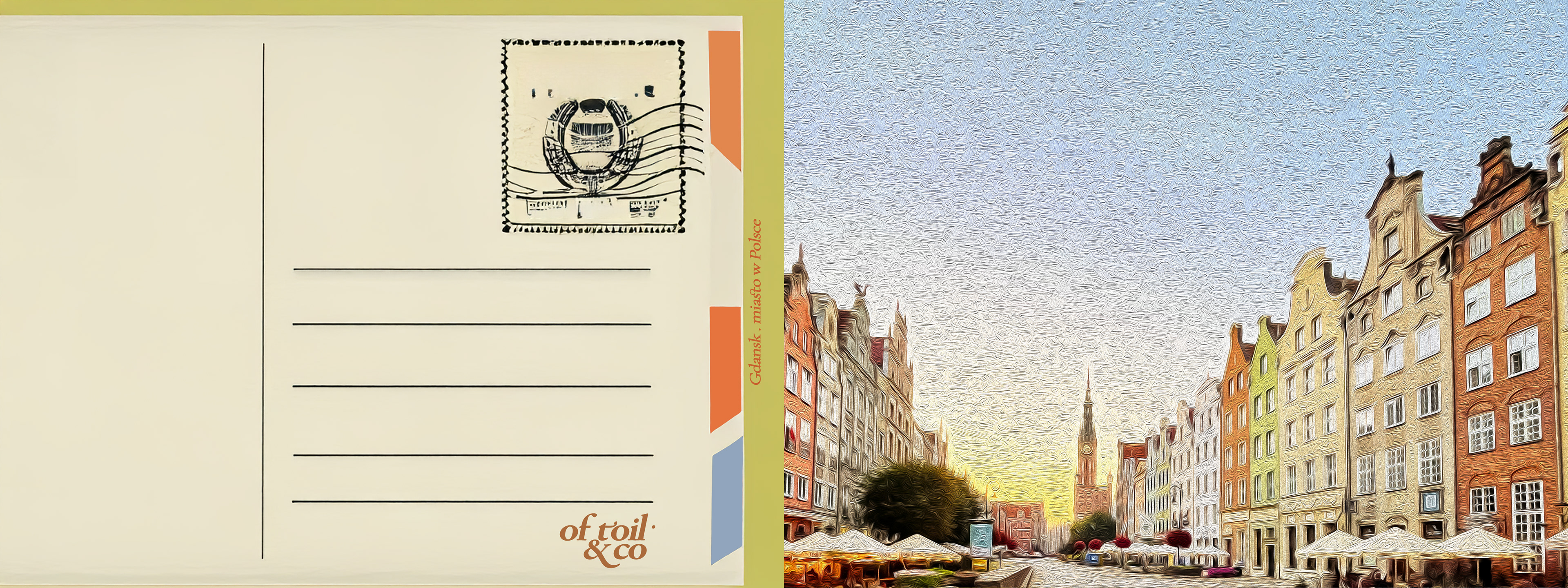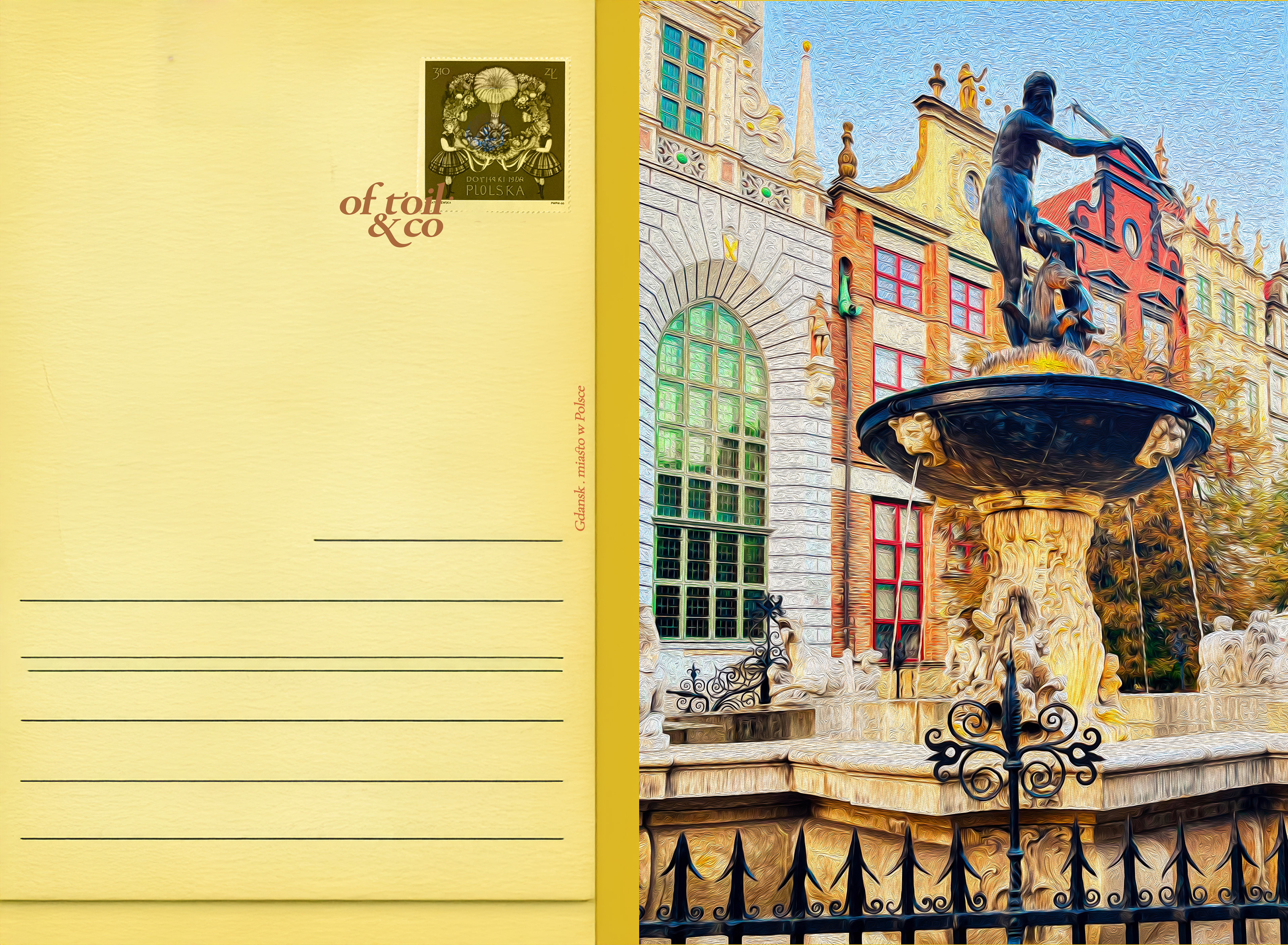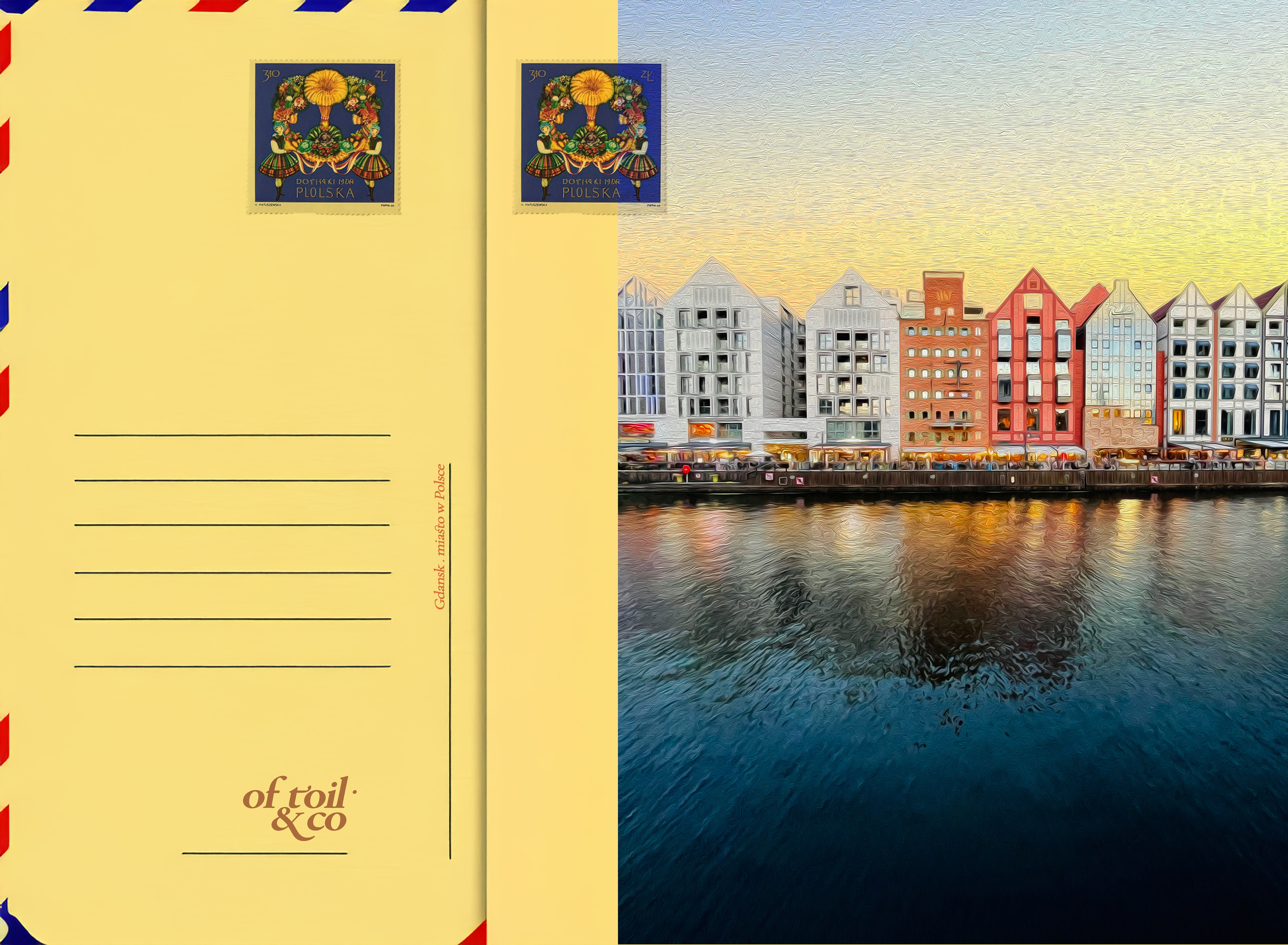
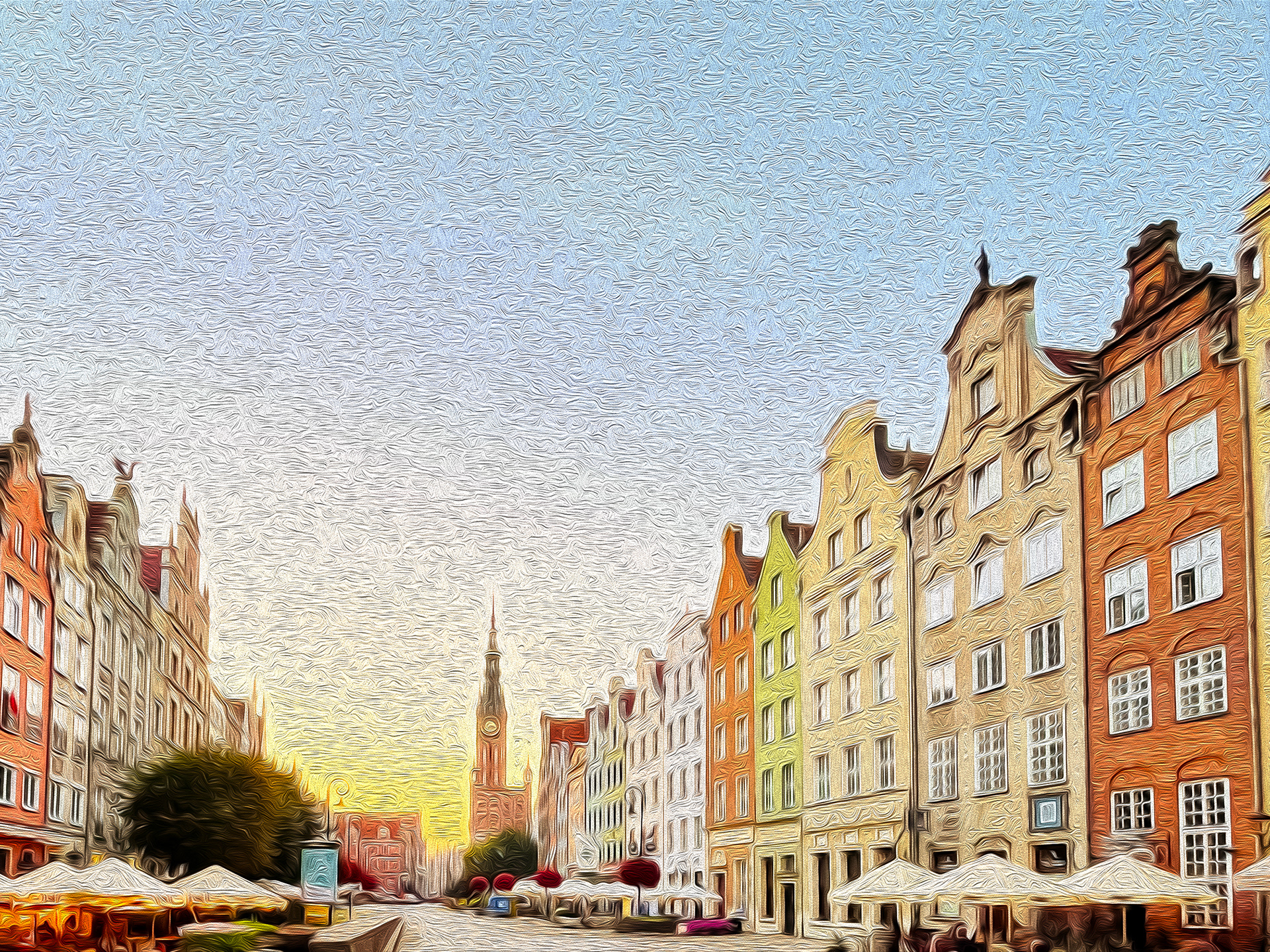
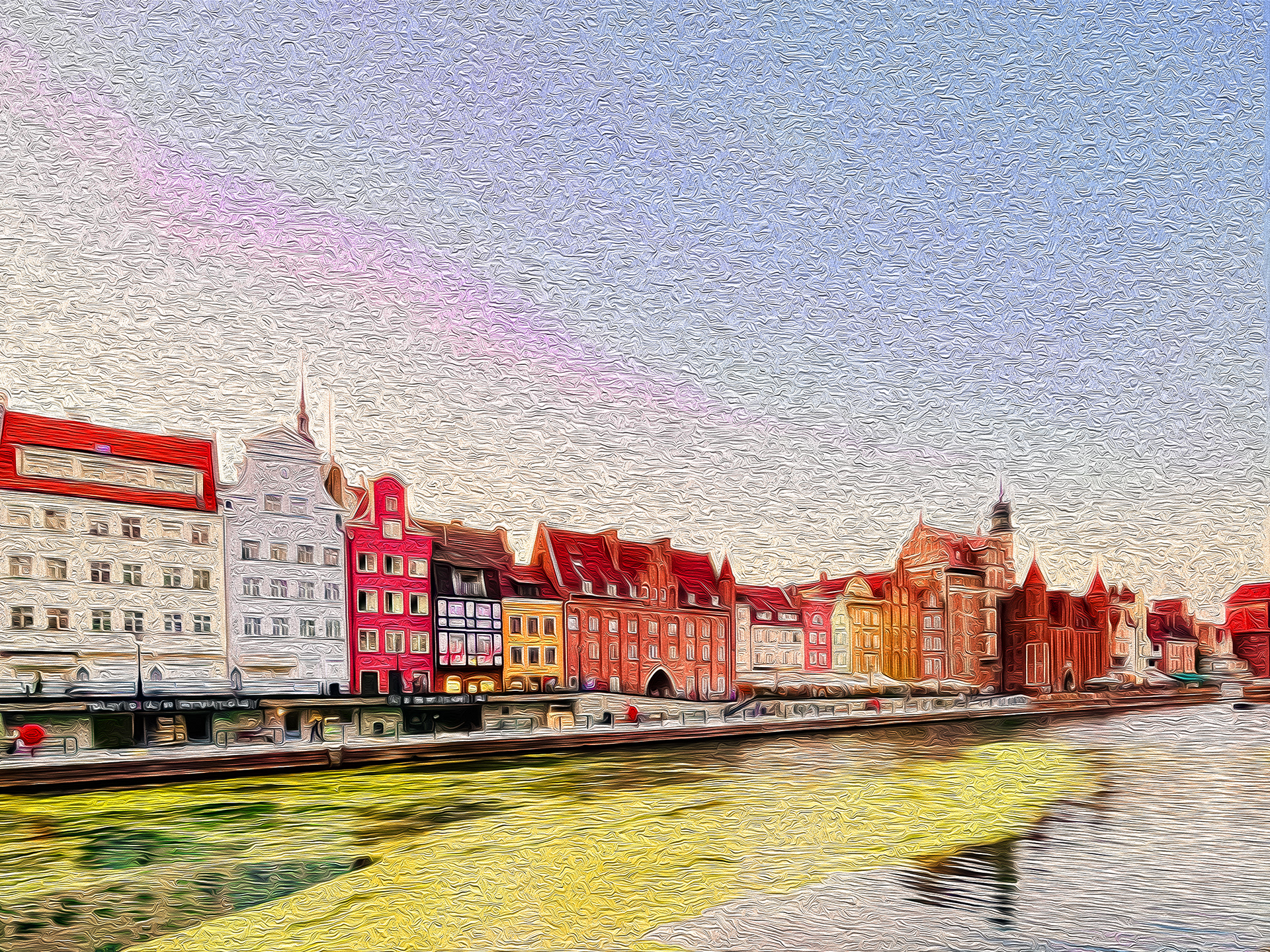
Gdańsk is a city formed at the intersection of land and water, faith and trade. Its earliest recorded mention appears in 997, when the missionary Wojciech—later Saint Adalbert—passed through the settlement at the mouth of the Motława River. In the account of the monk Jan Kanapariusz, the name urbs Gydannyzc marks its first written trace. From the beginning, Gdańsk existed in circulation: of people, beliefs, and goods.
By the late tenth century, a fortified port had emerged. Slavic inhabitants lived alongside merchants and craftsmen, shaping a city defined by coexistence. Under the Pomeranian dukes and later through Lübeck rights, Gdańsk developed as a self-governing urban organism. Political upheavals—most notably the 1308 takeover by the Teutonic Order—left lasting marks, yet did not halt growth. Infrastructure such as the Radunia Canal and Great Mill dates to this period.
From the fourteenth to seventeenth century, as part of the Hanseatic League, Gdańsk became a major Northern European port. After its incorporation into the Polish Crown in 1454, the city secured broad autonomy through the “Great Privilege” of 1457, balancing economic strength with political independence.
The Reformation reshaped its spiritual life. Protestant yet tolerant, Gdańsk became a refuge for diverse communities, reinforcing its cosmopolitan character. Though often resistant to authority, it remained strategically loyal in times of conflict.
The modern era brought decline through partitions, shifting sovereignties, and war. After the First World War, Gdańsk became a Free City under the League of Nations, a fragile status that ended with the outbreak of the Second World War at Westerplatte in 1939. By 1945, much of the city lay in ruins.
Reconstruction followed as interpretation rather than replication. In the postwar period, Gdańsk emerged as a symbol of resistance, marked by the protests of 1970 and the Solidarity movement of 1980, which helped reshape Europe’s political landscape.
Today, Gdańsk continues to evolve with an acute awareness of its past. Its motto—Nec temere, nec timide (“without fear, but with caution”)—remains a guiding principle. This series records the city not as spectacle, but as a place shaped by exchange, endurance, and memory.
⸻
Curated. Editorial. Collectible.
Designed for the age of intelligent creation.OfToil Studio produces AI-generated visual assets developed with the precision of a designer and the sensibility of an art director. Each work is built from a narrative core — a fusion of concept, craft, and intelligent automation — ready for deployment across the publishing, design, and advertising industries.
Applications
Editorial design · book publishing · campaign concepting · brand identity · visual research · experiential design · web & motion · exhibition and poster work · fine art reproduction
Available Formats
High-resolution stills · print-ready artwork · layered source files · bespoke commissions. Each asset is crafted with an editorial eye and is available via custom licensing, or direct collaboration through OfToil Studio’s creative archive.
Applications
Editorial design · book publishing · campaign concepting · brand identity · visual research · experiential design · web & motion · exhibition and poster work · fine art reproduction
Available Formats
High-resolution stills · print-ready artwork · layered source files · bespoke commissions. Each asset is crafted with an editorial eye and is available via custom licensing, or direct collaboration through OfToil Studio’s creative archive.