
“Gunia Project began with ethnographic exploration of Ukrainian cultural heritage -- with a desire not only to preserve it, but to share it with the world."
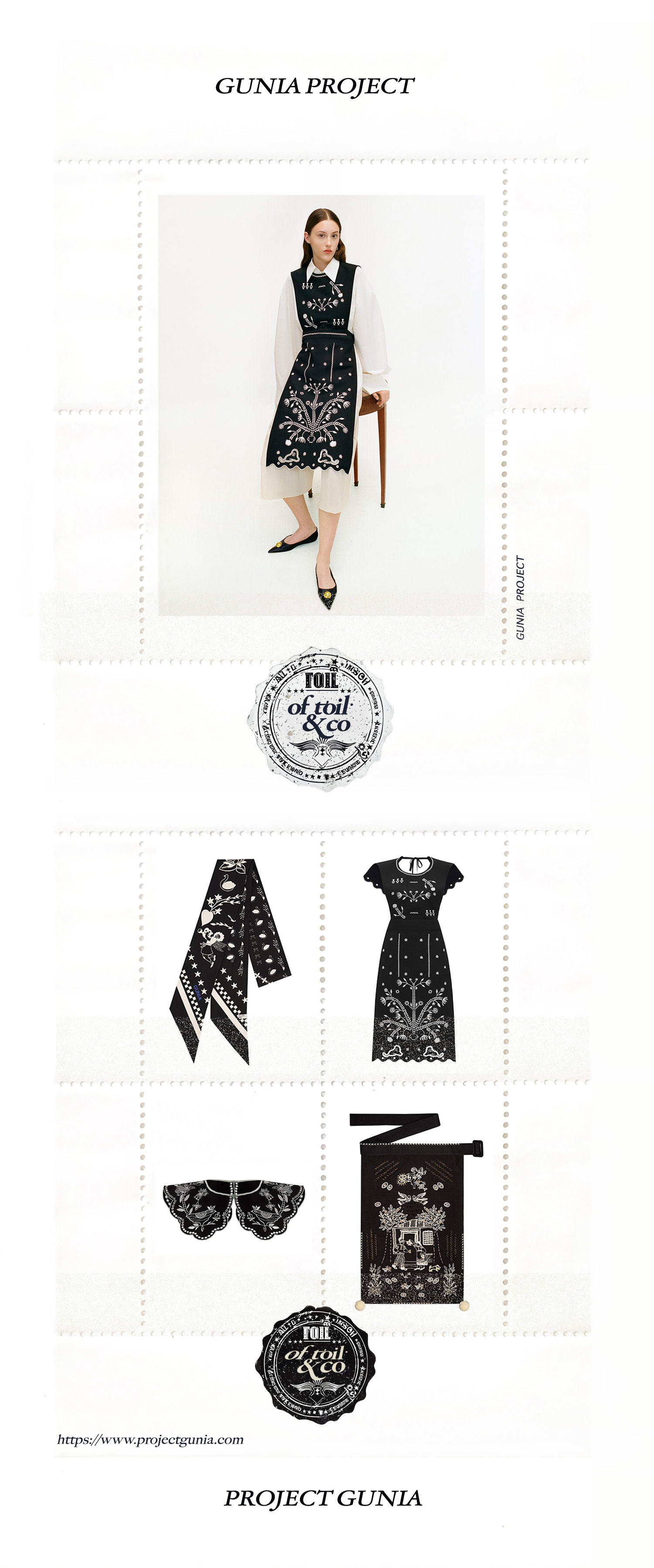
“Inspiration lies in naive art, iconography, traditional craftsmanship, folk symbols, and ritual practices. Every collection starts with ethnographic research: we explore museum archives, speak with artisans, and delve into the origins, meanings, and techniques behind each object — reinterpreting them through a contemporary lens.”.
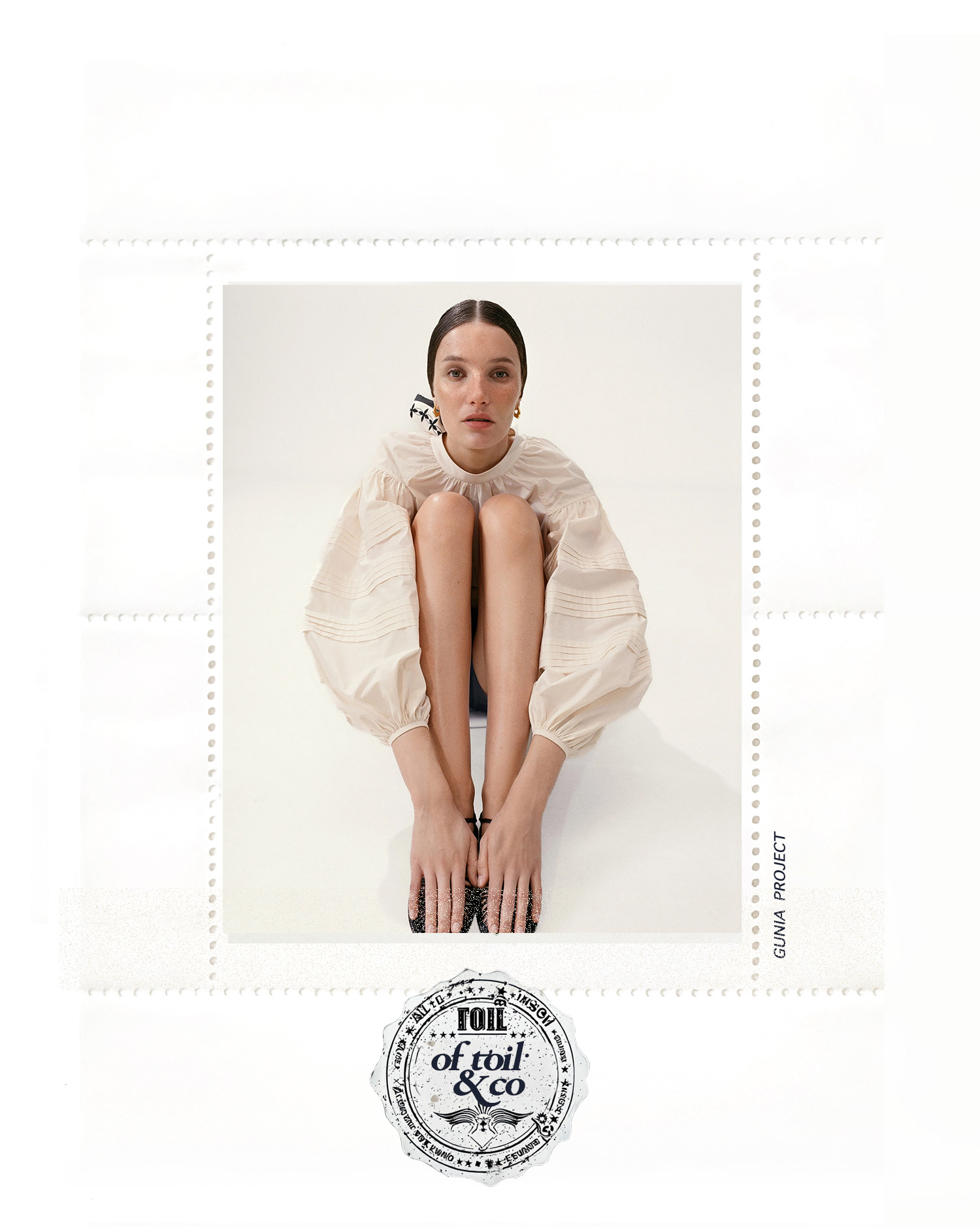
“The brand’s philosophy is rooted in continuity. Gunia Team collaborate with master artisans who pass down their knowledge through practice and tradition.These are the stories they tell through ceramics, wood, woven and knitted textiles, blown glass, embroidered accessories, wickerwork, and jewelry.”
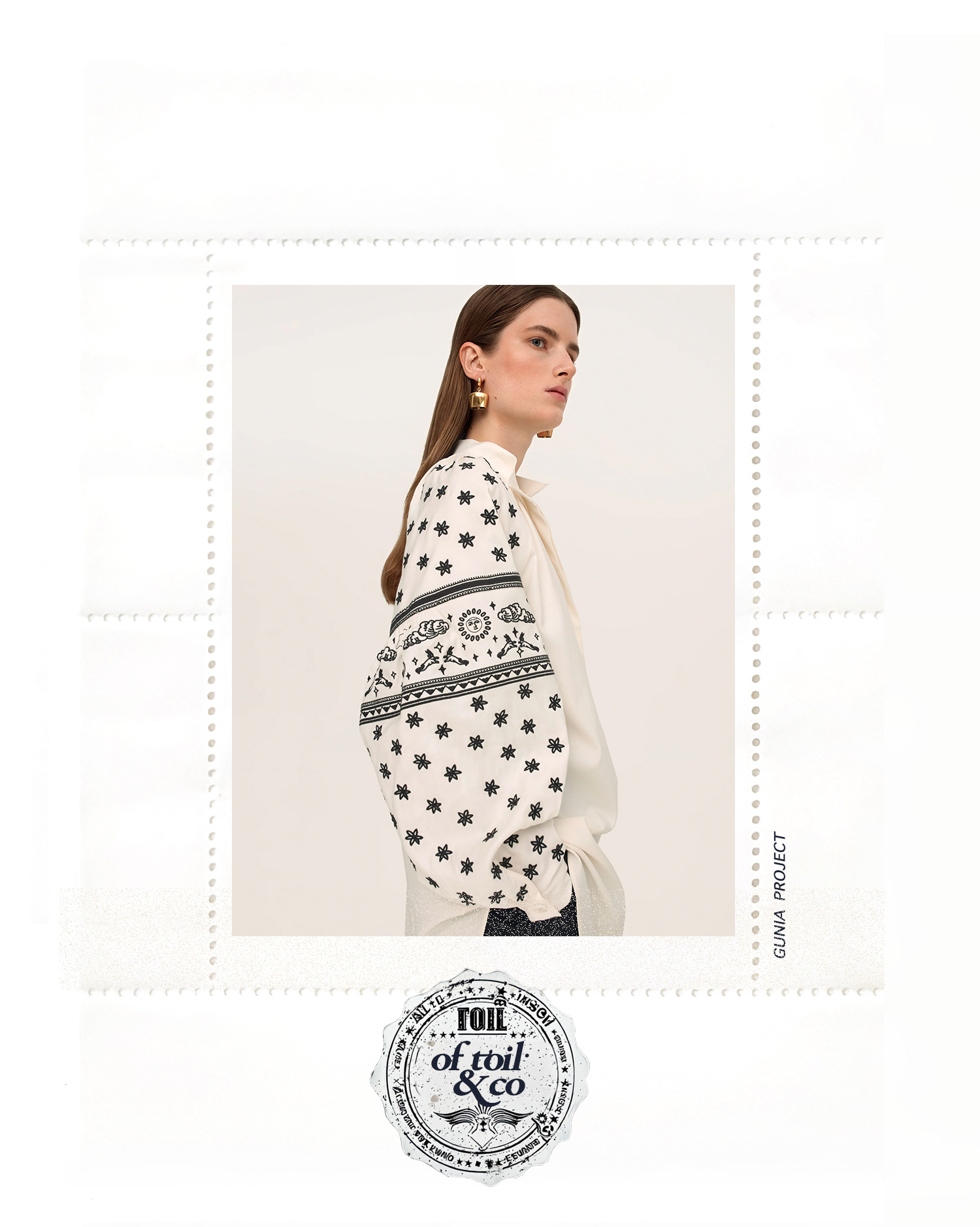
Gunia Project was founded by designers Natalia Kamenska and Maria Gavryliuk, who met while working in the fashion industry. The project began with ethnographic expeditions across Ukraine — discovering traditional crafts, meeting local artisans, and exploring museum archives and making a deep research of cultural heritage of different Ukrainian regions.
The first object created was the gunia, a traditional Carpathian coat, handwoven from sheep’s wool. It became a symbol of the brand and gave it its name.
Afterwards came the first collections: silk scarves inspired by embroidered towels from the archive of the Ivan Honchar Museum, and a clothing and accessories line, including a scarf inspired by vytynanka, a traditional paper-cutting technique. Over time, it became one of GUNIA’s most recognisable items.
In 2019, the founders decided to turn what had been a passion project into a brand that could translate heritage into contemporary design, making traditions a part of everyday life. The first collection of the brand included naive icon-inspired ceramics, guta glass, and silk scarves, presented at the National Museum of Ukrainian Folk Decorative Art.
“I’ve always been drawn to objects with history: things that carry meaning, memory, or ritual. Reinterpreting them, giving them new form, and placing them in unexpected contexts has always felt natural to me like turning carpets into coats.
Working with cultural heritage has long been a part of how I think and create, so it was only natural that this fascination eventually took shape through GUNIA”
Natalia Kamenska,
creative director and co-founder of Gunia Project
Working with cultural heritage has long been a part of how I think and create, so it was only natural that this fascination eventually took shape through GUNIA”
Natalia Kamenska,
creative director and co-founder of Gunia Project
photos & text curtesy of Gunia Project

